Pregunta 1
Arvind Narayanan
x.com/random_walkerComputer scientist who studies how AI spreads through society, expects substantial but gradual change and favors resilience and liability rules.
¿Cómo cambiará la IA el mundo?
Horizontal: su perspectiva Doom–Bloom expresada. Vertical: escala de la transformación.
Doom–Bloom: 59 de 100. Escala de la transformación: 69 de 100. Rangos de interpretación: de 50 a 75 en horizontal y de 64 a 75 en vertical. Son coordenadas de interpretación, no probabilidades de eventos.
≈6%
Inferido a partir de sus respuestas simuladas, no de un número que haya dado. Rango plausible: 3–12%.
Trabajo e instituciones
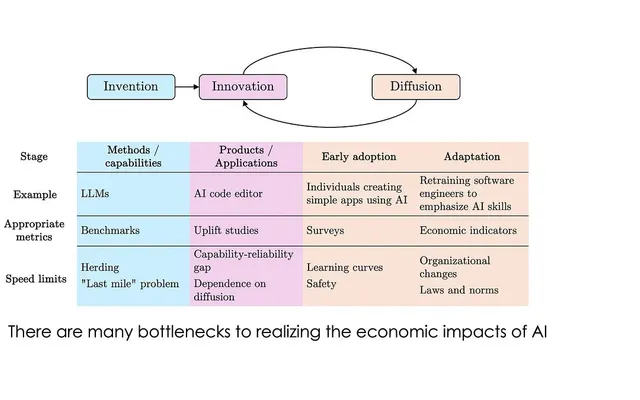
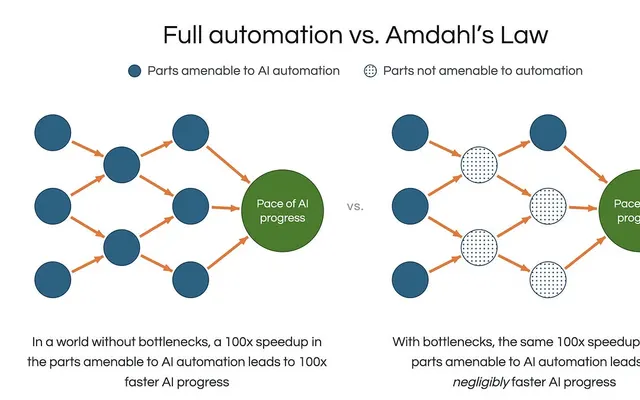
I expect AI to transform work and society substantially over decades, but not through a single laboratory breakthrough that instantly determines everyone’s future.
Respuesta 1
Agrupados por hito, sin espaciarlos ni ordenarlos por fechas inferidas. La IA general y la IA sobrehumana conservan sus definiciones.
Un supuesto central
Those institutional processes will shape the net impact as much as model capability does.Respuesta 2
Si este supuesto resultara distinto, ¿cómo cambiaría su perspectiva?
Una pregunta sin resolver
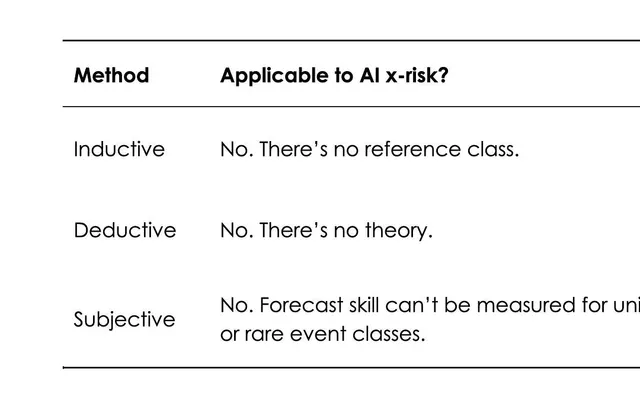
Current extinction-risk probabilities are too unreliable and misleading for policy; that is not the same as saying the risk is zero.Respuesta 4
¿Qué le ayudaría a distinguir aquí entre los desenlaces plausibles?
Más detalles
Se esperan beneficios sustanciales, con condiciones importantes o límites en su distribución.
67 / 100
Rango de interpretación de 67 a 67 en la escala cualitativa.
Se espera que los daños graves o generalizados sean una parte significativa del futuro.
66 / 100
Rango de interpretación de 67 a 67 en la escala cualitativa.
Las decisiones humanas tienen una influencia significativa, aunque muy condicionada.
59 / 100
Rango de interpretación de 50 a 75 en la escala cualitativa.
Restringir los usos de la IA mencionados hasta que existan protecciones o permisos previos.
Posición simulada: Permitir los usos de la IA mencionados con rendición de cuentas y protecciones específicas.
Reducir al mínimo las restricciones a los usos de la IA mencionados.
Estas interpretaciones conservan las condiciones que se indicaron. Los beneficios y los daños pueden ser considerables a la vez. Los rangos describen cómo leemos sus respuestas simuladas, no intervalos de confianza estadísticos.
Visiones similares
Líderes de opinión cuyas visiones simuladas son las más cercanas a la de Arvind Narayanan
Evaluación simulada
Fuentes
Artículos, entrevistas y textos usados para fundamentar a este usuario simulado.
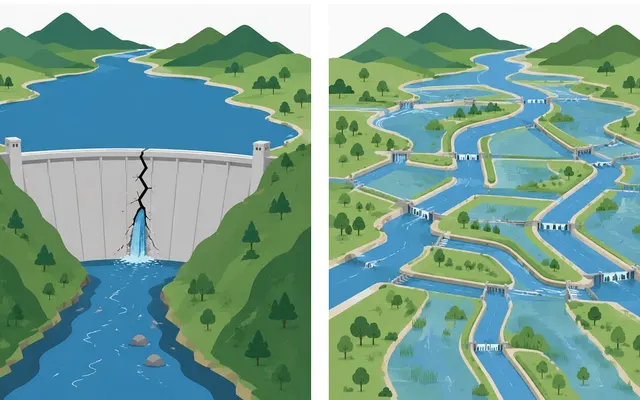
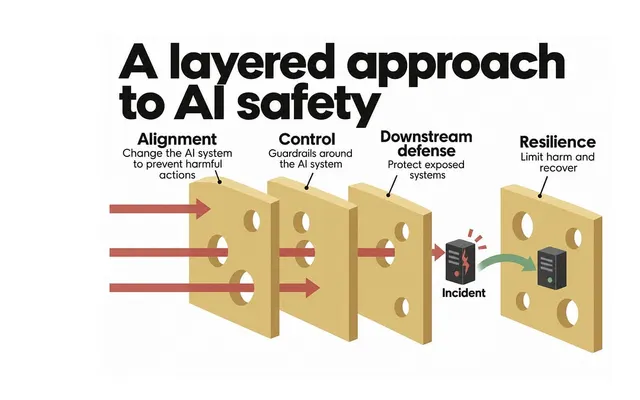
Narayanan and Kapoor distinguish slow economic adoption from misuse, which need not wait for organizational change. They advocate societal resilience, defensive access and ordinary governance while allowing some temporary restrictions. Rejecting broad nonproliferation does not mean dismissing cyber or biological harm.

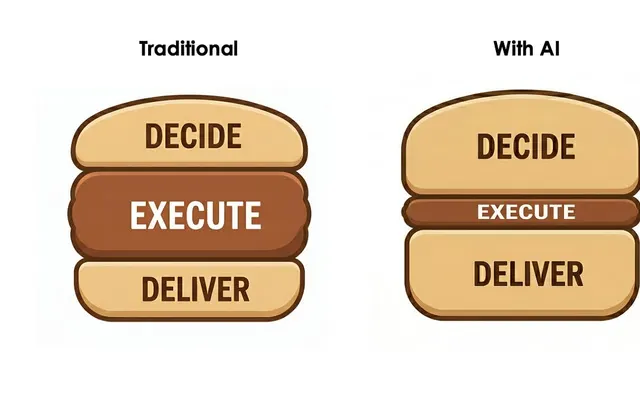
Coauthored essay distinguishes deciding, executing and delivering software. Coding can become much faster while organizational responsibility and deciding what to build remain bottlenecks. Aggregate demand may stay healthy even as individual careers become turbulent; this is an argued forecast, not a guarantee.

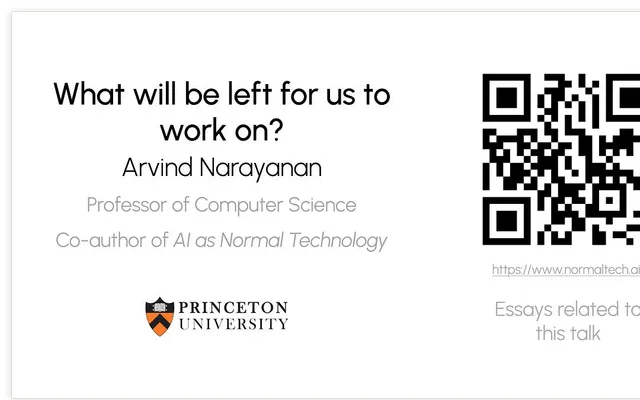
Narayanan’s annotated ICML keynote takes recursive self-improvement seriously as a possible discontinuity while rejecting a single laboratory milestone that instantly eliminates jobs. Foresees radically different work and human-AI collaboration. Preserves openness to change rather than making normal technology an impossibility claim.

With Sayash Kapoor. Separates invention, application development and adoption; expects societal diffusion over decades and emphasizes institutions and resilience. Normal does not mean trivial.

With Kapoor. Two shadow research evaluations found substantial judgment and revision failures. Explicitly acknowledges the tiny sample, nonblind review and possible researcher bias; does not establish a permanent capability ceiling.

With Kapoor. Treats recent incidents as both alignment and security failures; advocates liability, monitoring and restricted permissions. Rejects imminent-catastrophe alarmism while arguing that current investment in safeguards is inadequate.

Repost, with a new preface, of the July 2024 essay coauthored with Sayash Kapoor; full text read. They argue AI x-risk forecasts are far too unreliable to be useful for policy and are in fact highly misleading; the preface calls the whole p(doom) culture actively counterproductive to a broader conception of safety. A methodological refusal for policy use, not a claim that the risk is zero.

¿Dónde te ubicas?
Mapear mi visión de la IA