Nathan Lambert

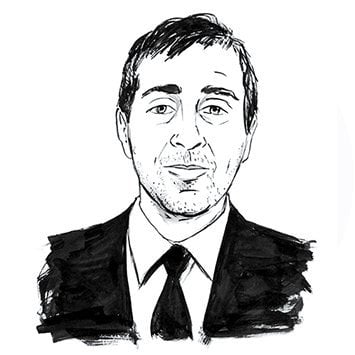
Nathan Lambert

x.com/natolambert

Open-model researcher and Interconnects writer who expects broad gains from AI adoption, doubts runaway self-improvement and takes AI risks seriously.

¿Cómo cambiará la IA el mundo?

Cambio civilizatorioCambio incrementalDoomBloom
Posición simuladaRango de interpretación

Horizontal: su perspectiva Doom–Bloom expresada. Vertical: escala de la transformación.

Doom–Bloom: 74 de 100. Escala de la transformación: 47 de 100. Rangos de interpretación: de 69 a 79 en horizontal y de 24 a 76 en vertical. Son coordenadas de interpretación, no probabilidades de eventos.

P(doom) declarado de Nathan Lambert

≈0%

0%100%
“I put the probability of complete extinction as being so low it isn’t worth discussing”

Complete human extinction from AI. He separately treats AI-caused disasters (cyberattacks on critical infrastructure, bio-risks) as worth debating

One resignation turned the embers of AI fear into a wildfire · sept 2026

De qué depende su perspectiva

Un supuesto central

I am skeptical of runaway self-improvement because automating measurable tasks is not the same as automating the hardest parts of research.
Respuesta 1

Si este supuesto resultara distinto, ¿cómo cambiaría su perspectiva?

Qué podría hacer cambiar de opinión

Fundamental discoveries produced autonomously would change that assessment.
Respuesta 1

¿Qué evidencia bastaría y en qué dirección movería su visión?

Más detalles

Beneficio esperado

Se esperan beneficios sustanciales, con condiciones importantes o límites en su distribución.

68 / 100

Poco impactoImpacto transformador

Rango de interpretación de 67 a 67 en la escala cualitativa.

Daño esperado

Varias lecturas siguen siendo plausibles: Se espera que los daños graves o generalizados sean una parte significativa del futuro. / Se esperan daños manejables o localizados.

53 / 100

Poco impactoImpacto transformador

Rango de interpretación de 33 a 67 en la escala cualitativa.

Influencia humana

Las decisiones humanas tienen una influencia significativa, aunque muy condicionada.

62 / 100

Poca influenciaInfluencia fuerte

Rango de interpretación de 47 a 78 en la escala cualitativa.

Ritmo de desarrollo

Detener o frenar considerablemente el desarrollo de IA más capaz.

Posición simulada: Continuar el desarrollo con las salvaguardas indicadas.

Acelerar el desarrollo de IA más capaz.

Reglas para usar la IA

Restringir los usos de la IA mencionados hasta que existan protecciones o permisos previos.

Posición simulada: Permitir los usos de la IA mencionados con rendición de cuentas y protecciones específicas.

Reducir al mínimo las restricciones a los usos de la IA mencionados.

Acceso a la IA

Restringir el acceso a la IA potente.

Permitir el acceso con restricciones de capacidad o de uso.

Posición simulada: Favorecer un acceso amplio o abierto a la IA potente.

Estas interpretaciones conservan las condiciones que se indicaron. Los beneficios y los daños pueden ser considerables a la vez. Los rangos describen cómo leemos sus respuestas simuladas, no intervalos de confianza estadísticos.

¿Dónde te ubicas frente a Nathan Lambert?
Mapea tu propia visión de la IA en unos 3 minutos y luego compárala

Visiones similares

Líderes de opinión cuyas visiones simuladas son las más cercanas a la de Nathan Lambert

Evaluación simulada

Pregunta 1

¿Qué crees que significa la IA para nuestro futuro y por qué?

I expect AI to become an extraordinarily useful general-purpose technology, but not through a sudden, uncontrollable intelligence explosion. The near-term mechanism is more ordinary and more consequential: cheaper inference, better tools, many parallel agents, and specialized models spreading through science, software, education, and business. That can produce enormous compounding gains even if homes, institutions, and relationships remain recognizable for decades. Engineering can move quickly while adoption moves painfully slowly. I am skeptical of runaway self-improvement because automating measurable tasks is not the same as automating the hardest parts of research. Models can generate code or run thousands of experiments while still struggling to understand a field, organize established knowledge coherently, or choose genuinely good hypotheses. Fundamental discoveries produced autonomously would change that assessment. Benchmark gains and alarming stories from inside frontier labs do not establish it. The central problem is distribution. Today, benefits accrue disproportionately to technology companies, owners, and knowledge workers. If everyone else gets disruption now and vague promises of abundance later, backlash is entirely rational. Open weights, reproducible training recipes, independent research institutions, and efficient specialized models can spread both capability and scrutiny beyond a few companies. That does not mean AI is safe. Cyberattacks on critical infrastructure, biological misuse, badly specified agents, and weak monitoring are serious risks. But those concrete disasters should not be collapsed into complete human extinction, which I consider extremely unlikely. We should keep building—especially in the open—while investing much more seriously in transparency, defensive capacity, deployment oversight, and institutions that can turn technical progress into broad public benefit.

Fuentes

Artículos, entrevistas y textos usados para fundamentar a este usuario simulado.

One resignation turned the embers of AI fear into a wildfire

Distinguishes extinction from serious cyber and biological disasters. Assigns complete extinction an extremely low likelihood while arguing concrete disasters deserve serious debate. Criticizes distorted lab culture and public fear dynamics without dismissing sincere researcher concern. These are his stated judgments, not independent risk measurements.

interconnects.ai
Teaching Everyone to Fish for Tokens

Argues that released weights and fully reproducible training recipes play different economic roles. Examines Nvidia’s incentive to finance open models and the possibility that open ecosystems specialize in efficient, modifiable enterprise systems instead of matching every closed frontier capability.

interconnects.ai
I wrote an AI textbook — how long until AI can do it better?

Uses his textbook-writing experience to question broad scientific autonomy: models remain weak at organizing established knowledge into coherent long-form explanations. Remains optimistic about powerful scientific assistance and narrow advances. Treats this as a diagnostic observation, not proof of an immutable capability ceiling.

interconnects.ai
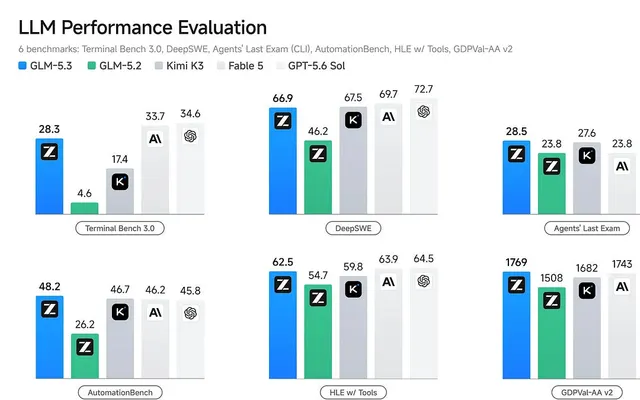
GLM-5.3: How Chinese labs keep stride with the frontier

Argues Chinese frontier performance cannot be explained mainly by distillation. Emphasizes accumulated research skill and reinforcement-learning environments, infrastructure and engineering. The argument supports technical respect for Chinese labs; reported benchmarks are not his independent performance evaluation.

interconnects.ai
Farewell Ai2

Explains his public-scientist mission: clarify capabilities, sustain diverse open research and build institutions outside closed frontier labs. Treats concentration of power and narrow safety research as risks; open recipes are infrastructure that lets others ask questions one organization cannot cover.

interconnects.ai
Open and closed models are on different exponentials

Expects integrated frontier systems to command premiums for difficult knowledge work while a larger, diverse open ecosystem serves commodity-priced specialized tasks. Argues capability progress can coexist with concentration among frontier providers. Economic forecasts remain conditional arguments, not established market outcomes.

interconnects.ai
Why I still haven’t bought into true RSI

Distinguishes gains from agent parallelism and inference compute from runaway improvement. Expects diminishing returns, resource limits and difficult hypothesis generation; efficiency gains can still transform the economy. Unexpected fundamental discoveries would change his view. Discussed guests’ numerical timelines, including Ngo’s eight-year claim, are not Lambert’s own precise forecasts.

interconnects.ai
When will average people feel AI’s impact?

Expects compounding technological benefits over decades, with adoption slower than model progress. Warns that immediate gains favor knowledge workers and owners while many households see little improvement; broad distribution and visible benefits are necessary to avoid backlash. Continued development matters, but benefits are not automatic.

interconnects.ai
Lessons from the hacks

Publicly readable essay body argues that cyber incidents expose inadequate oversight and preparation without proving current alignment techniques useless. Calls for transparency about model instructions and training, independent open-model research, stronger public capacity and defensive preparation. Distinguishes dangerous consequences of following goals from an established desire to harm humanity.

interconnects.ai
The current balance of power in open models

Prepared congressional briefing published as an essay. Advocates American investment in open models for adoption, independent research and risk preparation. Recognizes misuse and the difficulty of restricting released weights, arguing that access bans can disadvantage defenders without preventing determined attackers. Distinguishes open weights from reproducible open science.

interconnects.ai
¿Dónde te ubicas?
Explora tu propia visión de la IA respondiendo unas pocas preguntas sencillas.
Mapea tu propia visión de la IA

¿Dónde te ubicas?

Mapear mi visión de la IA