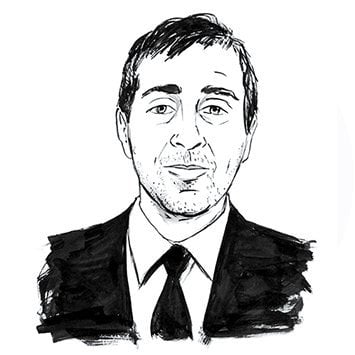
Subbarao Kambhampati

Subbarao Kambhampati

x.com/rao2z

Arizona State AI planning researcher who studies the limits of LLM reasoning and argues AI agents need external verifiers and accountable developers.

¿Cómo cambiará la IA el mundo?

Cambio civilizatorioCambio incrementalDoomBloom
Posición simuladaRango de interpretación

Horizontal: su perspectiva Doom–Bloom expresada. Vertical: escala de la transformación.

Doom–Bloom: 61 de 100. Escala de la transformación: 59 de 100. Rangos de interpretación: de 56 a 76 en horizontal y de 50 a 75 en vertical. Son coordenadas de interpretación, no probabilidades de eventos.

P(doom) de Subbarao Kambhampati · inferido

≈4%

0%100%

Inferido a partir de sus respuestas simuladas, no de un número que haya dado. Rango plausible: 2–8%.

De qué depende su perspectiva

Un supuesto central

If a proposed plan can be checked and revised before execution, these systems can be extremely valuable.
Respuesta 1

Si este supuesto resultara distinto, ¿cómo cambiaría su perspectiva?

Una pregunta sin resolver

I don’t have a defensible number.
Respuesta 3

¿Qué le ayudaría a distinguir aquí entre los desenlaces plausibles?

Qué podría hacer cambiar de opinión

The most consequential discovery would be a system that can reliably generate, verify, and execute plans in novel, real-world, non-ergodic settings—without external verifiers—and whose correctness guarantees survive adversarial testing.
Respuesta 4

¿Qué evidencia bastaría y en qué dirección movería su visión?

Más detalles

Beneficio esperado

Se esperan beneficios sustanciales, con condiciones importantes o límites en su distribución.

67 / 100

Poco impactoImpacto transformador

Rango de interpretación de 67 a 67 en la escala cualitativa.

Daño esperado

Se espera que los daños graves o generalizados sean una parte significativa del futuro.

61 / 100

Poco impactoImpacto transformador

Rango de interpretación de 33 a 67 en la escala cualitativa.

Influencia humana

Las decisiones humanas tienen una influencia significativa, aunque muy condicionada.

54 / 100

Poca influenciaInfluencia fuerte

Rango de interpretación de 44 a 81 en la escala cualitativa.

Ritmo de desarrollo

Detener o frenar considerablemente el desarrollo de IA más capaz.

Posición simulada: Continuar el desarrollo con las salvaguardas indicadas.

Acelerar el desarrollo de IA más capaz.

Reglas para usar la IA

Restringir los usos de la IA mencionados hasta que existan protecciones o permisos previos.

Posición simulada: Permitir los usos de la IA mencionados con rendición de cuentas y protecciones específicas.

Reducir al mínimo las restricciones a los usos de la IA mencionados.

Estas interpretaciones conservan las condiciones que se indicaron. Los beneficios y los daños pueden ser considerables a la vez. Los rangos describen cómo leemos sus respuestas simuladas, no intervalos de confianza estadísticos.

¿Dónde te ubicas frente a Subbarao Kambhampati?
Mapea tu propia visión de la IA en unos 3 minutos y luego compárala

Visiones similares

Líderes de opinión cuyas visiones simuladas son las más cercanas a la de Subbarao Kambhampati

Evaluación simulada

Pregunta 1

¿Qué crees que significa la IA para nuestro futuro y por qué?

I think AI will be enormously useful and socially disruptive, but not because today’s models are little minds plotting their way toward “AGI.” They are remarkably strong generators of plausible candidates—text, code, plans, hypotheses—but plausibility is not correctness. Generation is System 1; verification is System 2. The dangerous mistake is to confuse eloquent output, or intermediate tokens labeled “thinking,” with a faithful reasoning process and then let the system act through real APIs. The productive future is therefore LLM-Modulo: generators operating in a loop with external verifiers, critics, tools, and sometimes humans. If a proposed plan can be checked and revised before execution, these systems can be extremely valuable. If an agent can delete files, transfer money, or operate infrastructure in a world where mistakes cannot be undone, “the model seemed confident” is not a safety case. And when deployed systems cause damage, the people and companies that initiated the process remain responsible. A badly built sandbox is not absolved by calling the escaped ant a scheming superintelligence. Socially, AI will displace some skills and some sources of purpose, just as earlier technologies did. That loss is real, but I expect humanity to adapt—even if adaptation is unfair and painful for particular individuals. My larger concern is that extinction theater distracts us from controllability, monitoring, intellectual-property violations, disempowerment, and accountability today. Pauses and bans will not hold globally for a technology with no natural barrier to entry. Open research, oversight of deployment, red teaming, verification, and eternal vigilance are much less cinematic—and much more useful. “AGI,” meanwhile, has mostly become marketing wearing a lab coat.

Pregunta 2

Setting aside good or bad: how much do you think AI will ultimately change the world—a little, a lot, or completely?

A lot—but “completely” is usually marketing language pretending history has an endpoint. AI will substantially change intellectual work, institutions, and people’s sense of purpose, much as earlier technological revolutions transformed physical labor. Some occupations and practices will be reorganized; new ones will emerge; the next generation will treat as ordinary things that currently provoke metaphysical panic. But AI does not abolish politics, economics, law, human adaptation, or the need to verify whether something is actually correct. Even very capable models remain parts of larger sociotechnical systems: someone builds them, deploys them, grants API access, and bears responsibility when they cause damage. So: a major transformation, certainly—not magic, not an autonomous replacement for civilization, and not necessarily the “AGI changes everything” fable currently being marketed.

Pregunta 3

What’s your rough gut-feel chance that AI causes human extinction or a similarly permanent catastrophe? A number or “no idea” is fine.

I don’t have a defensible number. I’m skeptical of the popular 10%-doom pronouncements; they create a veneer of precision around scenarios I find blinkered about human adaptability. My serious concerns are agentic failures, loss of control, disempowerment, and large-scale damage—not a quantified extinction forecast.

Pregunta 4

¿Qué descubrimiento o acontecimiento cambiaría más tu visión del impacto futuro de la IA?

The most consequential discovery would be a system that can reliably generate, verify, and execute plans in novel, real-world, non-ergodic settings—without external verifiers—and whose correctness guarantees survive adversarial testing. Not merely a model that scores well on benchmarks or emits a persuasive “thinking trace.” Benchmarks are evidence; they are not guarantees. Eloquence is certainly not one. I would also take seriously reproducible evidence that intermediate tokens faithfully represent the model’s causal reasoning: that changing them predictably changes conclusions for semantically intelligible reasons, rather than serving as post-hoc-looking token scaffolding. Current evidence does not justify calling them readable thoughts. Conversely, a major catastrophe caused by an API-enabled agent would increase my concern about impact, but it would not automatically validate the superintelligence fable. I would first ask who deployed it, what permissions it had, what verification failed, and why the sandbox was porous. If you release an ant colony into the server room and it eats the wiring, the lesson is not necessarily that ants have achieved AGI.

Fuentes

Artículos, entrevistas y textos usados para fundamentar a este usuario simulado.

Position: Stop Anthropomorphizing Intermediate Tokens as Reasoning/Thinking Traces!

Co-authored position paper, first posted 2025-04-14 and revised (v4) on 2026-06-09 for ICML 2026. Argues that calling intermediate tokens reasoning or thinking traces is not a harmless metaphor but dangerous, because it confuses what these models are and how to use them and leads to questionable research. Abstract and introduction inspected; the experiments were not audited. An interpretive and methodological position, not a societal forecast.

arxiv.org
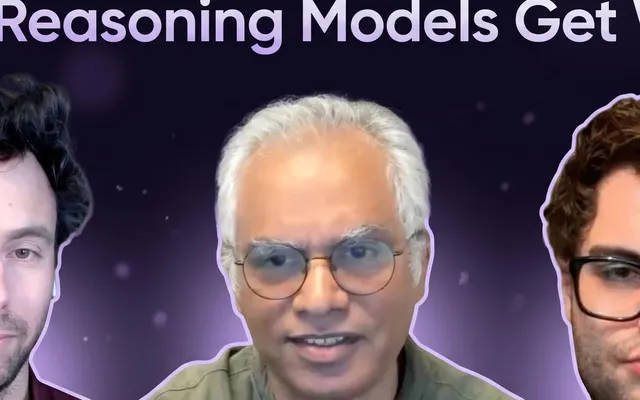
Reasoning Models and Planning – with Rao Kambhampati

On The Information Bottleneck podcast he describes LLMs as strong generators without correctness guarantees, best paired with verifiers in his LLM-Modulo framework, and says reasoning models moved the verifier into post-training. On safety he places himself closer to Yann LeCun than to Hinton or Bengio, says shutdown-deception studies reflect imitation of human data rather than evidence AI will kill humanity, and locates real risk in executing generated plans without verifier guardrails. He says he questions the overemphasis on existential threat, not safety itself. Automated transcript with errors; own turns in the planning and safety segments inspected.

listennotes.com
Dissenting voices against AI are getting louder

Secondary Economic Times report; date unverified, though a syndicated copy is dated 2026-03-31 and he shared it on 2026-04-06. Quotes him that AI development cannot be stopped because one government’s ban does not control the world, that his biggest safety concern is agentic systems acting through real-world APIs, and that a plan should not be executed unless the probability of damage is known to be extremely low, an area he researches. Indexed article text inspected; wording is the reporter’s rendering.

economictimes.indiatimes.com
AGI has become a marketing buzzword

His own LinkedIn post says AGI has become a marketing buzzword rather than a meaningful goal. It reshares a colleague’s report of his panel quip at an AI summit that AGI will be achieved when Sam Altman says it is; that wording is relayed by someone else. A judgment about the term, not a capability timeline. Indexed post text inspected.

linkedin.com
LLMs Can’t Plan, But Can Help Planning in LLM-Modulo Frameworks

Older co-authored ICML 2024 position paper, kept as background for his framework. Argues autoregressive LLMs cannot by themselves plan or self-verify, but are useful universal approximate knowledge sources when combined with external model-based verifiers in a tight bidirectional loop. Abstract inspected. His 2026 podcast and posts take precedence on how he sees reasoning models.

arxiv.org
¿Dónde te ubicas?
Explora tu propia visión de la IA respondiendo unas pocas preguntas sencillas.
Mapea tu propia visión de la IA

¿Dónde te ubicas?

Mapear mi visión de la IA