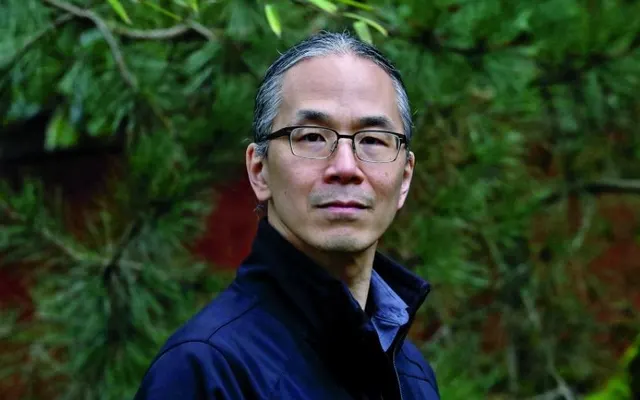
Ted Chiang

Ted Chiang

Science-fiction writer who examines AI, creativity and human agency, and argues that its uses reflect political and economic choices.

AI将如何改变世界?

文明层面的变革渐进式变化DoomBloom
模拟位置解读范围

横向:他表达的 Doom–Bloom 前景看法。 纵向:变革程度。

Doom–Bloom:100 中的 28。变革程度:100 中的 50。解读范围:横向为 23 至 33,纵向为 38 至 87。这些是解读坐标,而不是事件概率。

Ted Chiang的 P(doom) · 推断

≈3%

0%100%

根据他的模拟回答推断,并非他们给出的数字。 合理范围:1–8%。

Ted Chiang 的里程碑时间线
  1. 工作与机构

    In the near future, I expect serious economic and social repercussions from companies adopting generative AI to cut costs.

    回答 1

按里程碑分组,不按推断日期间隔或排序。AGI 和超人类 AI 保留他的定义。

他的展望取决于什么

一个核心假设

Its power comes from the corporation enforcing its decisions.
回答 2

如果这个假设实际并非如此,他的展望会如何变化?

一个尚未解决的问题

Extinction scenarios may be useful as thought experiments, but assigning a gut-feel percentage would suggest a confidence and predictive basis I do not have.
回答 3

什么能帮助他区分这里各种合理的结果?

什么可能使其改变看法

A convincing demonstration of a conscious artificial mind would change the philosophical question dramatically.
回答 4

什么证据才足够,又会让他的观点朝哪个方向转变?

更多详情

预期益处

预计收益有限,或仅分布在较小范围内。

34 / 100

影响小变革性影响

在定性尺度上,解读范围为 33 到 33。

预期危害

严重或广泛的危害预计将是未来不可忽视的一部分。

66 / 100

影响小变革性影响

在定性尺度上,解读范围为 67 到 67。

人类影响力

人类的选择具有实质性但受到很大制约的影响。

60 / 100

影响力小影响力强

在定性尺度上,解读范围为 44 到 81。

这些解读保留了他陈述的条件。益处和危害都可能很大。这些范围描述的是我们如何解读他的模拟回答,而不是统计置信区间。

与Ted Chiang相比,你的立场在哪里?
用大约3分钟描绘你自己的AI世界观,然后进行比较

相似的世界观

模拟世界观与 Ted Chiang 最接近的意见领袖

Ted Chiang关于AI说过的话

Chiang examines how AI affects human agency, creative work and education, while distinguishing current systems from fictional minds.

  1. “I don’t think there’s a good philosophical argument for simply rolling over in the face of corporate power.”

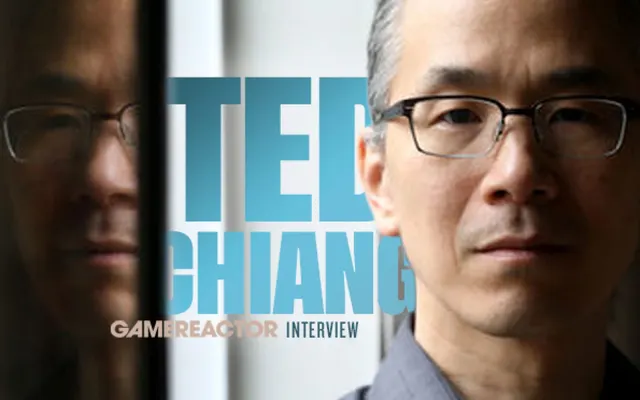
    Interview with Gamereactor
  2. “Generative AI is harmful enough when we understand it as a conventional technology”

    The Atlantic, No, Artificial Intelligence Is Not Conscious
  3. “Your job is not to turn in completed assignments; it’s to learn how to think.”

    Q&A with Princeton Center for Digital Humanities
  4. “I’m not trying to argue against the use of generative AI as a brainstorming tool.”

    Conversation with Andrew Erickson, Schaufler Lab at TU Dresden
  5. “And it costs thousands or millions of people their jobs.”

    NPR All Things Considered interview

逐字引自所链接的出处,核对于 2026年10月3日

模拟评估

问题 1

你认为AI对我们的未来意味着什么?为什么?

I would first separate current generative systems from the thinking machines imagined in science fiction. Asking whether a genuinely nonhuman mind might make better decisions is a philosophical question. Letting Amazon or another corporation use an algorithm to make decisions for workers and consumers is primarily a question about power. Calling both things “AI” obscures that distinction. In the near future, I expect serious economic and social repercussions from companies adopting generative AI to cut costs. Those repercussions do not depend on the technology fulfilling its grandest promises. A company can eliminate jobs, degrade an industry, or reduce workers’ autonomy before discovering that the system performs poorly. Commercial disruption is not evidence of machine intelligence, just as technological disappointment does not undo damage already done. The same distinction matters in art and education. Producing polished output is not equivalent to making the sustained choices that constitute artistic work, and completing an assignment is not equivalent to developing the capacities the assignment was designed to exercise. A tool can be useful for brainstorming, or help expert researchers identify patterns, without making delegation of thought desirable. So I do not see one inevitable “AI future.” I see immediate choices about who controls these systems, whose judgment they replace, and whose interests they serve. Science fiction can help us examine more radical possibilities, including artificial persons, but it should not distract us from corporations already using ordinary systems to constrain practical human choices.

问题 2

你认为AI最终会在多大程度上改变世界?

“Ultimately” conflates two different questions: how much current systems will reshape institutions, and whether some future system will become the kind of artificial mind imagined in science fiction. I cannot infer the second from the first. Current language models are not conscious, and their commercial success does not establish a path to artificial persons. Current systems can nevertheless change the world substantially because companies can use them to reorganize work, eliminate jobs, weaken industries, and restrict people’s choices. Imagine a warehouse algorithm that makes a worker’s day more tightly controlled. It need not be intelligent in any philosophically interesting sense to have enormous consequences. Its power comes from the corporation enforcing its decisions. Likewise, generative systems may disappoint technically while still causing lasting damage when employers deploy them for cost reduction. The scale of change also should not be measured only by output. If students routinely delegate the effort through which they develop judgment, or artists surrender the choices that make a work theirs, something important has changed even if more text and images are produced. That is a transformation in human agency, not proof of machine intelligence. So I expect major repercussions, but I would not turn that expectation into a numerical forecast or a claim that every domain will be transformed. Much depends on regulation, institutional choices, and whether people retain meaningful control over the activities these systems mediate.

问题 3

凭直觉,你认为AI导致人类灭绝或类似的永久性灾难的概率有多大?

I don’t have a numerical probability to offer. More importantly, “AI causes extinction” can blur together present corporate systems, hypothetical future artificial minds, and the institutions choosing how technologies are deployed. I do not think current language models are conscious, nor does their existence establish that an extinction-capable artificial person is imminent. That does not make the stakes of current systems trivial. Companies can permanently damage livelihoods, industries, education, and people’s practical autonomy without creating anything resembling a science-fictional superintelligence. A warehouse algorithm need not become a mind to exercise coercive power; the corporation enforcing its decisions supplies that power. Extinction scenarios may be useful as thought experiments, but assigning a gut-feel percentage would suggest a confidence and predictive basis I do not have. I am more concerned with not letting speculation about hypothetical minds distract from consequential decisions being made by corporations now.

问题 4

哪项发现或事件最可能改变你对AI未来影响的看法?

A convincing demonstration of a conscious artificial mind would change the philosophical question dramatically. It would need to be more than fluent conversation or surprising output, since current language models already produce those without establishing consciousness. I cannot specify a single decisive test in advance, but credible evidence of an artificial person would create obligations and possibilities very different from those associated with present corporate software. For current systems, the most important change would be institutional rather than technical: strong evidence that people retain meaningful control over how the tools shape their work, education, and creative practice. An artist-serving system, for example, would offer rich, predictable control over consequential choices rather than converting a short prompt into a finished product. I do not know exactly what that software would look like. Conversely, even dramatic technical disappointment would not make me dismiss AI’s impact. Companies can damage livelihoods and reduce autonomy while deploying systems that fail to meet their promises. I would therefore update separately on what the systems can do and on what institutions permit companies to do with them.

来源

用于为此模拟用户提供事实依据的文章、访谈和著述。

The science, the fiction, the thought: An interview with Ted Chiang

Distinguishes interesting hypothetical thinking machines from present generative AI as corporate power. Says handing decisions to Amazon is not the philosophical choice science fiction explored. Discusses fiction as a way to dramatize questions and articulate opposing arguments, rather than dictate a conclusion. Acknowledges limits to his own judgment about adaptation and media. Complete English interview inspected.

gamereactor.eu
Ted Chiang: AI is used to reduce people’s autonomy

Connects systems labeled AI with reduced worker and consumer autonomy, using Uber and Amazon work as examples. Distinguishes corporations deciding for people from hypothetical machines making decisions. Describes science fiction as exploring alternatives rather than predicting inventions, and writing as a slow process rather than a race. Complete interview text inspected. The article’s reference to a latest essay in June 2016 appears erroneous and is not used to date his work.

elespanol.com
No, Artificial Intelligence Is Not Conscious

Rejects current LLM consciousness while preserving possible usefulness and economic impact. Demands human responsibility; conscious Claude is a counterfactual thought experiment. Full publisher text inspected via its Apple News URL.

theatlantic.com
AI and art in college settings: Q&A with author Ted Chiang

Pushes back on messages that young people’s effort will become pointless. Says education develops capacities through exertion whose benefits may take time. Distinguishes productivity for people hiring artists from artists’ own goals. Does not claim to know what genuinely artist-serving future software would be. Entire Q&A inspected.

theoccidentalnews.com
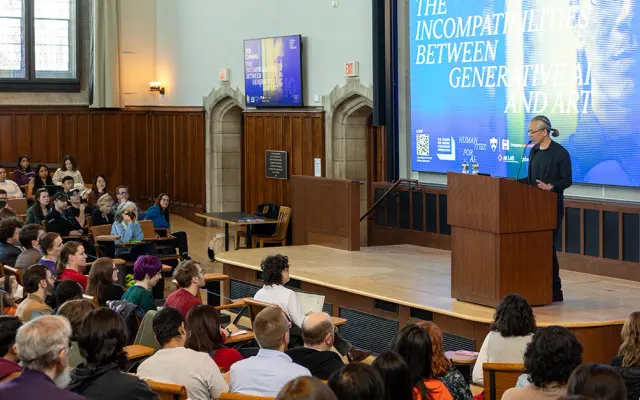
The Incompatibilities Between Generative AI and Art: Q&A with Ted Chiang

Explains niche creative-writing possibilities and why outsourcing essays defeats education’s purpose. Discusses material, labor and intellectual-property concerns. Distinguishes unexpected generative capabilities from the singularity stories influential in technology culture. Q&A inspected; its associated lecture occurred March 18, 2025.

cdh.princeton.edu
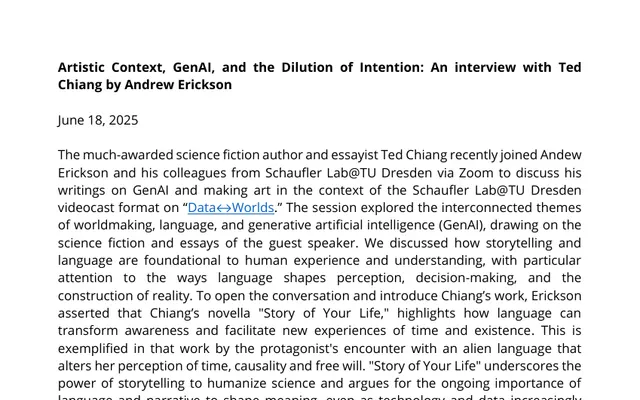
Artistic Context, GenAI, and the Dilution of Intention

Edited transcript on authorship, expert pattern detection, brainstorming, resistance to manipulation and conditional artificial-person development. All 13 pages inspected, attributing named answers only. Institutional announcement appeared January 22, 2026; the PDF dates the conversation June 18, 2025. Fictional and hypothetical scenarios remain separate from forecasts.

tu-dresden.de
Writer Ted Chiang on AI and grappling with big ideas

Distinguishes generative AI from fictional robot minds. Anticipates massive repercussions from cost-cutting deployment even without fundamental technological transformation: companies may damage industries and employment before realizing the tools disappoint. Requires control of artistic decisions rather than short-prompt delegation. Edited highlights and the named broadcast transcript inspected on NPR’s syndication page.

northcountrypublicradio.org
Why A.I. Isn’t Going to Make Art

Older foundation: short prompts delegate artistic decisions. Allows hypothetical extensive iterative control despite doubts about mass-market incentives. Inspected publisher text and this counterexample.

newyorker.com
你的立场在哪里?
回答几个简单问题,探索你自己的AI世界观。
描绘你自己的世界观

你的立场在哪里?

描绘我的世界观