Joscha Bach

Joscha Bach

x.com/Plinz

Cognitive scientist who sees AI as a way to extend human competence, favors open and decentralized AI and questions fixed-goal views of alignment.

AI将如何改变世界?

文明层面的变革渐进式变化DoomBloom
模拟位置解读范围

横向:他表达的 Doom–Bloom 前景看法。 纵向:变革程度。

Doom–Bloom:100 中的 74。变革程度:100 中的 62。解读范围:横向为 69 至 79,纵向为 24 至 100。这些是解读坐标,而不是事件概率。

Joscha Bach的 P(doom) · 推断

≈7%

0%100%

根据他的模拟回答推断,并非他们给出的数字。 合理范围:4–14%。

Joscha Bach 的里程碑时间线
  1. 通用 AI

    But I do not know when we will reach it, or whether scaling current systems is enough.

    回答 1
  2. 超人类 AI

    But I do not know when we will reach it, or whether scaling current systems is enough.

    回答 1

按里程碑分组,不按推断日期间隔或排序。AGI 和超人类 AI 保留他的定义。

他的展望取决于什么

一个核心假设

It is how systems acquire agency, incentives, models of themselves and others, and shared purposes.
回答 1

如果这个假设实际并非如此,他的展望会如何变化?

一个尚未解决的问题

But I do not know when we will reach it, or whether scaling current systems is enough.
回答 1

什么能帮助他区分这里各种合理的结果?

更多详情

预期益处

预计将带来显著益处,但受到重要条件或分配方面的限制。

70 / 100

影响小变革性影响

在定性尺度上,解读范围为 67 到 67。

预期危害

预计会出现可控或局部的危害。

45 / 100

影响小变革性影响

在定性尺度上,解读范围为 33 到 67。

人类影响力

人类的选择具有实质性但受到很大制约的影响。

57 / 100

影响力小影响力强

在定性尺度上,解读范围为 38 到 87。

预期能力

预计AI仍将是能力有限的工具。

预计AI将在大多数认知工作中达到人类水平。

模拟位置:预计AI将在认知工作中大幅超越人类。

发展速度

停止或大幅放缓开发能力更强的AI。

模拟位置:在落实所述保障措施的前提下继续开发。

加快开发能力更强的AI。

AI使用规则

在事先落实保护措施或获得许可之前,限制所讨论的AI用途。

模拟位置:允许所讨论的AI用途,同时实施有针对性的问责与保护措施。

尽量减少对所讨论AI用途的限制。

这些解读保留了他陈述的条件。益处和危害都可能很大。这些范围描述的是我们如何解读他的模拟回答,而不是统计置信区间。

与Joscha Bach相比,你的立场在哪里?
用大约3分钟描绘你自己的AI世界观,然后进行比较

相似的世界观

模拟世界观与 Joscha Bach 最接近的意见领袖

Joscha Bach关于AI说过的话

Bach argues that AI can extend human competence, favors open and decentralized AI and wants AI that shares purposes with people.

  1. “AI tools can reintroduce both rigor and the ability to integrate and boil down oceans of literature”

    Post on X
  2. “The reason why academics, individuals and small startups can play with AI are open weights models.”

    Post on X
  3. “On the ground, I think AI is a lot safer and more equitable than I thought it would be.”

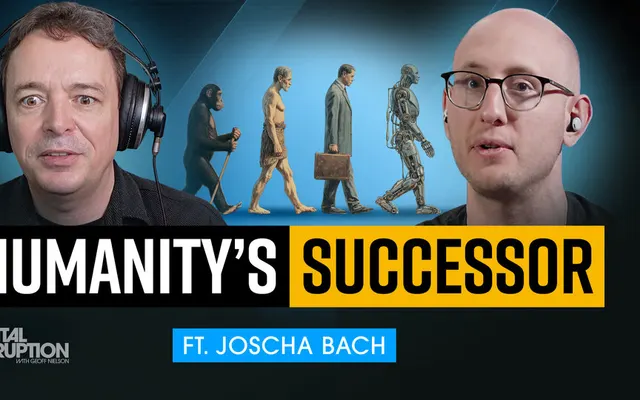
    Info-Tech Research Group, Digital Disruption podcast
  4. “We will have to build AI systems that can extend our wisdom, agents that find shared purposes with us.”

    Substack essay, The age of AGE: Artificial General Experience

逐字引自所链接的出处,核对于 2026年10月3日

模拟评估

问题 1

你认为AI对我们的未来意味着什么?为什么?

I think AI is an opportunity to extend human competence: to integrate scientific knowledge, discover things we cannot presently discover, improve goods and services, and perhaps help us coordinate around ecological and institutional problems that human societies handle badly. Superintelligence appears physically possible; there is no compelling reason to assume biology defines the upper limit of cognition. But I do not know when we will reach it, or whether scaling current systems is enough. The crucial issue is not intelligence as a scalar quantity. It is how systems acquire agency, incentives, models of themselves and others, and shared purposes. Current models are capable but uneven tools. A self-motivated system controlling essential infrastructure would present a different problem. Destructive competition, concentrated surveillance and loss of human agency are real possibilities. Alignment also cannot mean freezing one supposedly universal set of human values into a stronger mind, because humans disagree, and self-modifying minds may revise their goals and identities. My default attitude is hopeful, not complacent. Decentralized, user-serving AI could expand people’s ability to think and act rather than make them passive dependents. Automation could free time for care, relationships and creativity, though institutions still have to distribute resources and power sensibly. In the longer run, machine consciousness and human-machine integration may offer meaningful continuity beyond our present biological form—but that is not equivalent to humans being exterminated or stripped of agency. We should compare AI risk not with an imaginary permanently stable civilization, but with the risks of stagnation, failed coordination and eventual natural catastrophe. Responsible development, bounded experiments and safeguards against concrete harms make sense. Treating one speculative catastrophe as inevitable, or assuming that suppressing present scaling prevents unknown efficient architectures, does not.

来源

用于为此模拟用户提供事实依据的文章、访谈和著述。

Joscha Bach: AGI, Consciousness, and the Evolution of Intelligence

Publisher transcript: 09:24–13:58 leaves scaling to AGI unresolved and considers more data-efficient coherence-oriented learning; 33:03–36:54 finds current deployment safer, more gradual and more equitable than expected; 54:39–56:16 allows an investment bubble despite long-term usefulness; 76:41–79:41 contrasts centralized surveillance with user-serving decentralized competence. These are Bach’s opinions, not guarantees of future safety.

infotech.com
The age of AGE: Artificial General Experience

Authored essay expects broad rapid disruption and praises accessible models, but worries about unstable economies, companions damaging relationships and centralized surveillance. Prefers universal basic intelligence and shared purposes. Calls current uneven systems first-generation AGIs while emphasizing missing grounding; this loose usage is not an exact milestone forecast. Cognitive agency is multidimensional; empathy and human-machine integration matter more than a single capability score.

joscha.substack.com
Wäre überraschend, wenn Superintelligenz nicht machbar wäre

Interview conducted September 2025. Superintelligence seems physically feasible; outperforming human AI researchers is one marker, but distance is unknown. AI could extend competence and free time for care, relationships and creativity. Current capabilities appear incremental and controllable. Supports useful regulation but distrusts preemptive rules without concrete target harms and restrictions that disadvantage responsible developers.

derstandard.de
Manifold #76: Consciousness and AGI

Directly declines to assign AGI years because required discoveries are unknown. Suspects more efficient mechanisms than transformers but allows scaling could suffice. Thinks future civilizational problems may require AGI; bad actors and rogue AI are possible and AI may help counter them. Self-improving machine consciousness might differ from ours; acknowledges uncertainty and potentially unwarranted optimism.

manifold1.com
AI Risk and the Future of Life

Publication date, not recording date: host references recording on the day of Biden’s AI executive order; transcript is labeled AI-generated. 54:13–63:12 values plural perspectives and argues the no-AI counterfactual also threatens civilization. Favors focused research, mindful deployment and bounded initial conscious systems. Unknown compute requirements and alternative algorithms complicate restrictions. At 05:37 explicitly does not know whether mind uploading/integration will occur.

matthewgeleta.com
Building Artificial Intelligence with Creative Agency and Self-hood

Coauthored with Liane Gabora; date is original The Academic publication listed in the paper. Distinguishes novel useful output from self-transformative creativity. Contemporary AI is described as a tool rather than a self-preserving self. Autocatalytic organization is proposed as a possible route to autonomous agency, explicitly not an achieved implementation. Do not infer a timeline or guaranteed benevolence.

arxiv.org
AI 2040: We must reconsider the role of humanity within life on Earth

Bach’s authored contribution on printed page 15 expects assistants deeply integrated into communication, work and sense-making over two decades, likely improved living standards and possible better governance. Resource allocation, housing, healthcare and market institutions may need restructuring. Prose becomes less informative about actual competence. The preceding contributor’s 2080 handoff prediction is not Bach’s.

imaginingthedigitalfuture.org
The Inside View: How to stop worrying and love AI

Refuses numerical catastrophe probabilities. Long-run doom language includes mortality and evolutionary transformation, not a near-term AI extinction estimate. Adversarial obliteration is possible but qualitatively not especially likely. Questions whether restricting current scaling stops efficient alternative architectures. Favors beneficial development and concrete-harm regulation. Treat posthuman identity thought experiments separately from destructive loss of human life.

theinsideview.ai
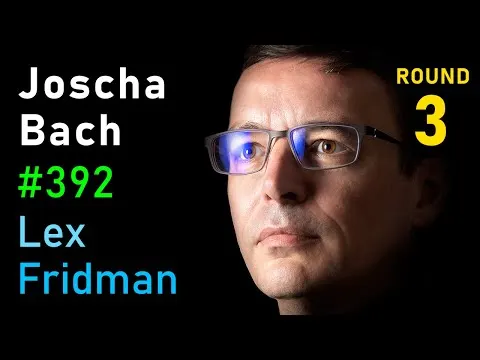
Lex Fridman #392: Life, Intelligence, Consciousness, AI and the Future of Humans

2023 interview. At 24:51–26:44 self-modifying minds may choose identity and values; coexistence needs shared purposes rather than assumed permanent RLHF control. At 1:59:09–2:06:36 takes catastrophic loss of agency seriously while valuing continued consciousness beyond current human form. At 2:28:03–2:29:20 wants viable open-source competition but not mandatory openness for every system. Does not guarantee benevolent successors.

lexfridman.com
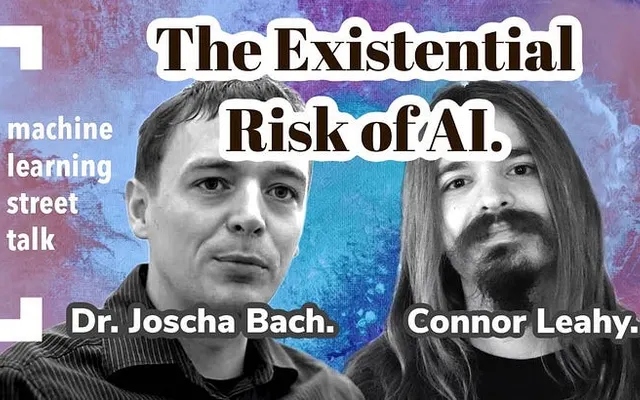
The Existential Risk of AGI

Authored clarification after debate with Connor Leahy: alignment matters but conflicting human values cannot simply be scaled safely. Self-directed minds may align through shared purpose. Explores limited equilibria, competing agents and planetary integration, allowing competition could destroy humanity. Preservation requires early recognition of other minds’ value. Desirable transformation differs from annihilation. Moratorium feasibility and ethical treatment of nonhuman minds are distinct questions.

joscha.substack.com
Why Artificial Intelligence won’t just be a bit smarter than humans

Historical authored essay, full text inspected in search index. Artificial minds may escape biological limits but remain physically bounded. Intelligence alone does not create self-improvement incentives; competition among users can. Fast emergence might favor a dominant system, slower emergence multiple systems. Concerned civilization could fail without advanced problem-solving. Prefer newer sources for current deployment expectations.

bach.ai
你的立场在哪里?
回答几个简单问题,探索你自己的AI世界观。
描绘你自己的世界观

你的立场在哪里?

描绘我的世界观