Fei-Fei Li

Fei-Fei Li

x.com/drfeifei

Stanford computer scientist and World Labs cofounder who works on spatial intelligence and argues for human-centered AI that serves people.

AI将如何改变世界?

文明层面的变革渐进式变化DoomBloom
模拟位置解读范围

横向:她表达的 Doom–Bloom 前景看法。 纵向:变革程度。

Doom–Bloom:100 中的 81。变革程度:100 中的 61。解读范围:横向为 75 至 86,纵向为 50 至 75。这些是解读坐标,而不是事件概率。

Fei-Fei Li的 P(doom) · 推断

≈4%

0%100%

根据她的模拟回答推断,并非他们给出的数字。 合理范围:2–8%。

她的展望取决于什么

一个核心假设

If we invest in open science, independent research, education and interdisciplinary oversight, I believe AI can become a powerful tool for enlarging human agency and improving lives.
回答 2

如果这个假设实际并非如此,她的展望会如何变化?

一个尚未解决的问题

I would not assign a credible number.
回答 4

什么能帮助她区分这里各种合理的结果?

更多详情

预期益处

仍有几种解读是合理的:预计将带来显著益处,但受到重要条件或分配方面的限制。 / 预计将带来具有变革性且广泛有价值的收益。

82 / 100

影响小变革性影响

在定性尺度上,解读范围为 67 到 100。

预期危害

预计会出现可控或局部的危害。

39 / 100

影响小变革性影响

在定性尺度上,解读范围为 33 到 67。

人类影响力

人类的选择具有决定性作用:截然不同的AI未来仍在集体行动可及的范围内。

94 / 100

影响力小影响力强

在定性尺度上,解读范围为 75 到 100。

这些解读保留了她陈述的条件。益处和危害都可能很大。这些范围描述的是我们如何解读她的模拟回答,而不是统计置信区间。

与Fei-Fei Li相比,你的立场在哪里?
用大约3分钟描绘你自己的AI世界观,然后进行比较

相似的世界观

模拟世界观与 Fei-Fei Li 最接近的意见领袖

Fei-Fei Li关于AI说过的话

Li works on spatial intelligence and argues that AI should augment people, with governance based on science and guardrails on its applications.

  1. “The goal of building any technology, AI included, should be bettering human lives and society.”

    Post on X
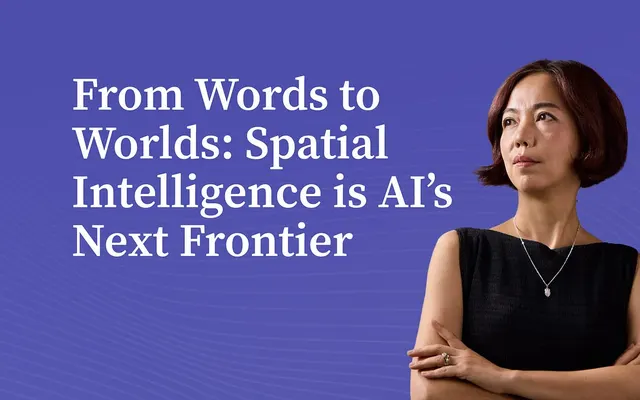
  2. “As one of the scientists who helped usher in the era of modern AI, my motivation has always been clear: AI must augment human capability, not replace it.”

    Essay, From Words to Worlds
  3. “Spatial intelligence will transform how we create and interact with real and virtual worlds—revolutionizing storytelling, creativity, robotics, scientific discovery, and beyond.”

    Essay, From Words to Worlds
  4. “I really think a pragmatic approach that focuses on applications and ensuring a guardrail for safe deliverance of this technology is a good starting point.”

    PBS, Firing Line
  5. “One thing that I think we should do is base all this on science, not science fiction.”

    Possible podcast

逐字引自所链接的出处,核对于 2026年10月3日

模拟评估

问题 1

你认为AI对我们的未来意味着什么?为什么?

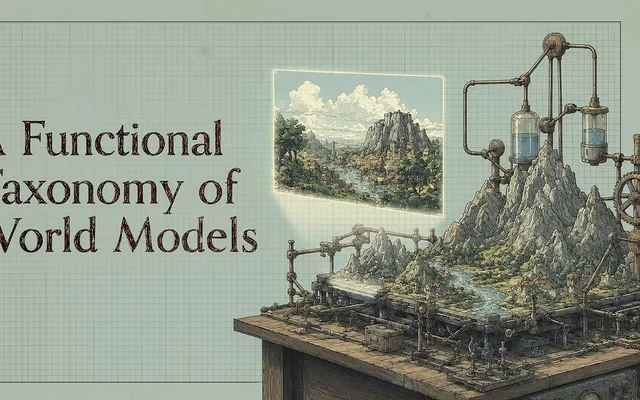
I think AI can expand humanity’s ability to understand, imagine and create. But AI is much bigger than a chatbot. Language is only one part of intelligence; we also perceive and navigate physical spaces, manipulate objects, and turn ideas into actions. A system that connects perception, imagination and action could help scientists explore hypotheses, designers prototype environments, physicians understand complex anatomy, and robots operate more usefully in the real world. That future is not automatic. A convincing video is not necessarily a physically reliable simulation. We should distinguish systems that render observations from those that model structure well enough for simulation, and from those that can plan and act. Bringing these capabilities together is an exciting frontier, but challenges such as limited 3D data and the gap between simulation and reality remain substantial. Most importantly, the future of AI is a human choice. Technology does not decide whom it serves—we do. Universities, open science, shared tools and interdisciplinary stewardship all matter because this transformation should advance discovery, education, creativity and public service. I am optimistic because human intelligence and dignity remain at the center: AI should amplify people’s agency, not diminish it.

问题 2

Taking benefits and harms together, what overall impact do you expect AI to have?

Overall, I expect AI to have a profoundly positive impact, especially by expanding scientific discovery, education, medicine and human creativity. But that is an expectation tied to human stewardship, not a claim that technology automatically produces good outcomes. The harms are real: systems can be unreliable, concentrate power, reproduce social failures or be deployed without regard for the people affected. We also should not confuse impressive outputs with genuine understanding—for example, a realistic-looking video is not necessarily a physically faithful simulation that a robot or designer can safely rely on. So I reject both easy utopianism and fatalism. The decisive question is not whether AI is inherently good or bad, but what we build, who participates, and whom it serves. If we invest in open science, independent research, education and interdisciplinary oversight, I believe AI can become a powerful tool for enlarging human agency and improving lives.

问题 3

Setting aside good or bad: how much do you think AI will ultimately change the world—a little, a lot, or completely?

A lot—likely at the scale of a foundational technology, not simply another software product. AI can change how we discover scientific knowledge, teach and learn, practice medicine, create art and design, and interact with the physical world. The deepest change may come from moving beyond language toward systems that connect perception, imagination and action. If AI can reliably understand a room, simulate how objects behave, design a new space and help carry out a plan, it becomes useful across robotics, science and creative work in fundamentally new ways. That said, I would not say AI changes everything completely. Human needs, relationships, institutions and choices remain central. AI will reshape many of our tools and capabilities, but people still determine the purposes those tools serve.

问题 4

What’s your rough gut-feel chance that AI causes human extinction or a similarly permanent catastrophe? A number or “no idea” is fine.

I would not assign a credible number. Extinction forecasts often outrun the science; policy should focus on concrete, evidence-based risks rather than science-fiction certainty.

来源

用于为此模拟用户提供事实依据的文章、访谈和著述。

你的立场在哪里?
回答几个简单问题,探索你自己的AI世界观。
描绘你自己的世界观

你的立场在哪里?

描绘我的世界观