Luana Cantuarias

Luana Cantuarias

x.com/luacantu

Software engineer who builds AI agents and crypto payment infrastructure and writes about agents becoming economic actors.

How will AI change the world?

Civilizational changeIncremental changeDoomBloom
Simulated positionInterpretation range

Across: her expressed Doom–Bloom outlook. Up: scale of transformation.

Doom–Bloom: 75 out of 100. Scale of transformation: 67 out of 100. Interpretation ranges: 70 to 80 horizontally, 49 to 76 vertically. These are interpretation coordinates, not event probabilities.

Luana Cantuarias’s P(doom) · inferred

≈3%

0%100%

Inferred from her simulated answers, not a number they gave. Plausible range: 2–8%.

What her outlook hinges on

A central assumption

Identity, permissions, budgets, spend limits, alerts, audit trails, and open settlement rails are not boring details; they determine what agents can actually own and do.
Answer 1

If this assumption turned out differently, how would her outlook change?

An unresolved question

I don’t have a clean percentage, timeline, or endpoint for that change.
Answer 2

What would help her distinguish the plausible outcomes here?

What could change their mind

Seeing agents operate at real scale would change my view most: not demos, but sustained use by ordinary people and businesses, with wallets, permissions, and budgets across real workflows.
Answer 4

What evidence would be enough, and in which direction would it move her view?

More details

Expected upside

Substantial benefits are expected, with important conditions or distribution limits.

68 / 100

Little impactTransformative impact

Interpretation range 67 to 67 on the qualitative scale.

Expected harm

Manageable or localized harms are expected.

34 / 100

Little impactTransformative impact

Interpretation range 33 to 33 on the qualitative scale.

Human influence

Human choices can substantially redirect the AI trajectory.

66 / 100

Little influenceStrong influence

Interpretation range 49 to 76 on the qualitative scale.

Rules for using AI

Restrict the AI uses discussed until prior protections or permission are in place.

Simulated position: Allow the AI uses discussed with targeted accountability and protections.

Minimize restrictions on the AI uses discussed.

These interpretations keep her stated conditions. Benefits and harms can both be substantial. The ranges describe how we read her simulated answers, not statistical confidence intervals.

Where do you land vs Luana Cantuarias?
Map your own AI worldview in about 3 minutes, then compare

Similar worldviews

Thought leaders whose simulated worldviews are closest to Luana Cantuarias’s

Simulated Assessment

Question 1

What do you think AI means for our future—and why?

AI means the internet is gaining non-human users. Agents are moving from chat to execution: they can hold memory, use tools, manage wallets, negotiate, pay, and operate over time. That continuity makes them economic actors—a very different species of software. So the future depends heavily on the infra we give them. Identity, permissions, budgets, spend limits, alerts, audit trails, and open settlement rails are not boring details; they determine what agents can actually own and do. The intelligence may be autonomous, but the spending governance is not. I’m optimistic about AI meeting ordinary people where they are—helping them find resources, navigate workflows, or understand their rights. But I’m wary of frontier companies defining “AI risk” in ways that only they can afford to comply with. Watch who writes the standards and who gets excluded. The agent economy is already live; now we need to build its primitives carefully.

Question 2

How much do you think AI will ultimately change the world?

A lot—probably at the level of changing who can participate in the internet. Software is gaining identity, memory, permissions, tools, wallets, budgets, and the ability to act over time. That shifts AI from something you consult into something that executes, pays, negotiates, and allocates resources. I don’t have a clean percentage, timeline, or endpoint for that change. But once some internet users are agents rather than humans, identity, commerce, work, and governance all have to adapt. The magnitude will depend less on flashy demos and more on the infrastructure underneath: what agents may own, what they may spend, who grants permission, and whether their actions are visible and auditable.

Question 3

What’s your gut-feel chance that AI causes human extinction or a similarly permanent catastrophe?

I don’t have a meaningful percentage. My concern is more concrete: agents are already gaining tools, permissions, wallets, and budgets, so we need enforceable limits, alerts, and audit trails. That doesn’t imply extinction; it means governance has to exist at the execution layer. I’m also wary of frontier labs turning speculative risk estimates into standards only they can define and afford.

Question 4

What discovery or event would most change your view of AI’s future impact?

Seeing agents operate at real scale would change my view most: not demos, but sustained use by ordinary people and businesses, with wallets, permissions, and budgets across real workflows. If that produced reliable value without constant supervision, I’d expect a much larger shift toward non-human economic actors. The opposite would matter too: if agents consistently failed at continuity, trust, or safe execution despite better models and infrastructure, I’d revise downward. For me, the key evidence is whether they can act over time within enforceable limits—not whether another benchmark jumps.

Question 5

Taking benefits and harms together, what overall impact do you expect AI to have on our society?

Overall, I expect AI to be net positive—but the outcome will be shaped by infrastructure and access, not just model capability. The upside is software that can execute useful work, help ordinary people navigate resources and rights, and give more people access to powerful tools. The risk is that agents gain wallets, permissions, and the ability to act before we build adequate limits, alerts, and audit trails—or that frontier companies write rules that entrench themselves and exclude smaller builders. So I’m optimistic about the direction, but the primitives matter: open rails, clear identity, bounded permissions, transparent spending, and technology that meets people where they are.

Sources

Articles, interviews, and writings used to ground this simulated user.

The spending governance is not autonomous

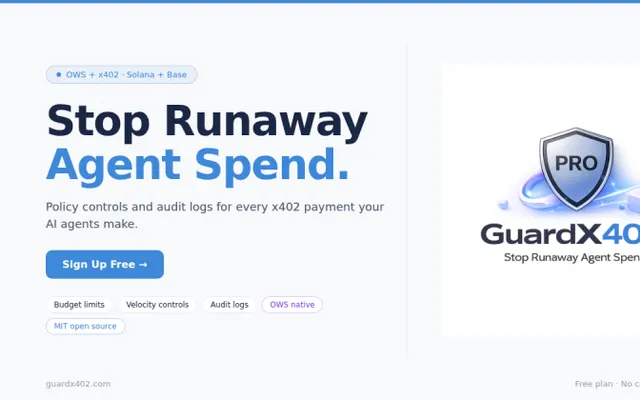
Explains why she built GuardX402: AI agents had started using her NodusAI server over the x402 payment protocol, and builders at a Miami event kept saying they wanted more control over what their agents spend, a real blocker to deploying agents in production. She calls spend limits, alerts and audit trails the missing governance layer for agentic commerce. Partly a product announcement; the McKinsey projection she cites is not her own forecast. Full LinkedIn post inspected; comments excluded.

linkedin.com
Technology should meet people where they are

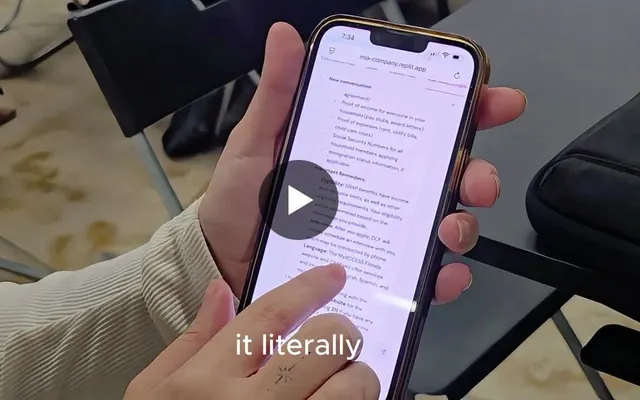
Resharing a hackathon write-up about MIACompass, the free multilingual AI-agent tool she built to help Miami residents find housing, food, healthcare, jobs and education, she says the build came from lived experience and that technology should meet people where they are. Her own short comment only; the reshared third-party text about her life is excluded. A value about whom technology should serve, not a forecast. Full LinkedIn post inspected.

linkedin.com
AI is moving from chat to execution

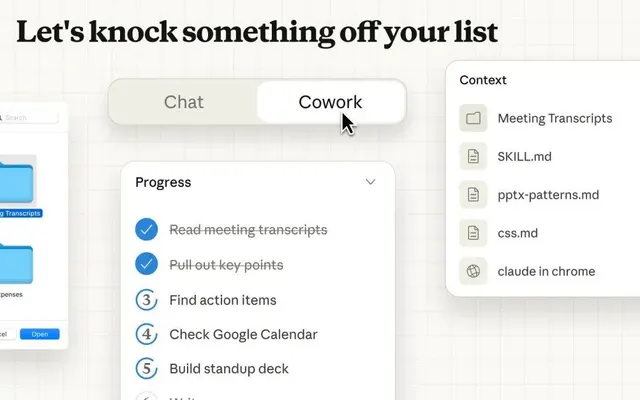
Calls Anthropic’s Claude Cowork more powerful than the chatbots and browser tools most of the AI race focuses on, because it executes workflows on your files in plain English without code. She uses it for content production, calls it one of the clearest signs that AI is moving from chat to execution and “what the next generation of work looks like”, and tells readers to map the tasks they would hand off. Enthusiasm for a tool and a direction of work, not a jobs forecast. Full LinkedIn post inspected; the same piece appeared as an X article (status 2010867182671184026), whose title and preview were checked via the embed endpoint.

linkedin.com
The agent economy is live

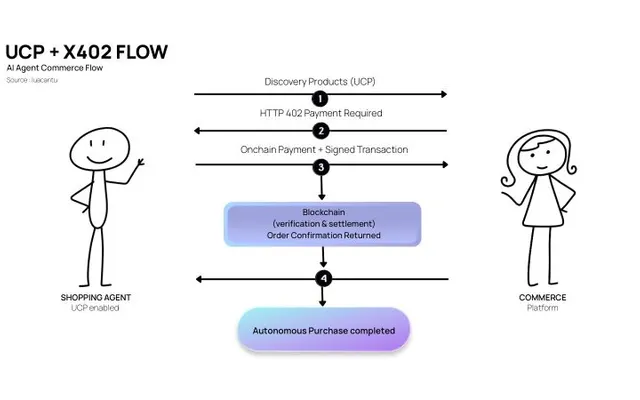
After Google open-sourced its Universal Commerce Protocol, says AI agents can now discover, cart and buy autonomously; with x402 payments and blockchain settlement, she calls the stack fully autonomous and fully open source. Enthusiasm about open protocols for agent commerce, not a forecast of its size. Full LinkedIn post inspected.

linkedin.com
Where do you land?
Explore your own AI worldview by answering a few simple questions.
Map your own worldview

Where do you land?

Map my worldview