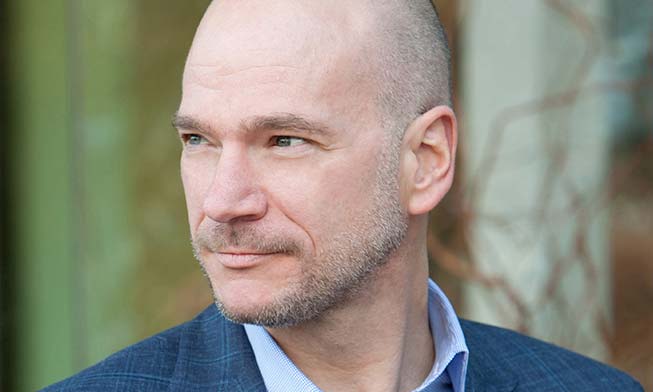
Andrew McAfee

Andrew McAfee

@amcafee on X

Expects major AI benefits, favors practical safeguards, and distinguishes rapid progress from slower economic adoption.

Map your own worldview

How will AI change the world?

Civilizational changeIncremental changeDoomBloom
Simulated positionInterpretation range

Across: his expressed Doom–Bloom outlook. Up: scale of transformation.

Doom–Bloom: 84 out of 100. Scale of transformation: 47 out of 100. Interpretation ranges: 75 to 100 horizontally, 11 to 64 vertically. These are interpretation coordinates, not event probabilities.

Andrew McAfee’s stated P(doom)

≈0%

0%100%

Public statement from 2026-09-17. This source-backed value replaces the simulated assessment estimate.

Human extinction caused by AI

Rounded near-zero judgment, not impossibility. McAfee’s own turns at 00:06:14 and 01:39:54; third-party speaker-labeled transcript.

Horizon: No fixed calendar horizon

AI Emergency Debate — The Diary of a CEO
Andrew McAfee’s milestone timeline

No milestone timing was established. Dates, “not sure,” “possibly never,” and dependencies can all appear here when expressed.

Grouped by milestone, not spaced or ordered by inferred dates. AGI and superhuman AI retain his definitions.

What his outlook hinges on

A central assumption

Organizations adopt technology slowly; institutions, incentives, regulation, and workflow redesign all matter.
Answer 1

If this assumption turned out differently, how would his outlook change?

What could change their mind

If we saw genuinely autonomous harmful systems repeatedly defeating serious efforts to shut them down, I would update sharply and support stronger intervention.
Answer 1

What evidence would be enough, and in which direction would it move his view?

More details

Expected upside

Several readings remain plausible: Transformative, broadly valuable gains are expected. / Substantial benefits are expected, with important conditions or distribution limits.

85 / 100

Little impactTransformative impact

Interpretation range 67 to 100 on the qualitative scale.

Expected harm

Manageable or localized harms are expected.

32 / 100

Little impactTransformative impact

Interpretation range 33 to 33 on the qualitative scale.

Demonstrated reasoning

Reasoning, consideration of alternatives, and handling of uncertainty in his simulated answers. This describes the simulated answers, not the real person’s intelligence or opinions.

93 / 100

Little demonstratedWell developed

Interpretation range 86 to 100 on the qualitative scale.

Human influence

A tentative estimate from your answers; the wider range shows other plausible readings.

53 / 100

Little influenceStrong influence

Interpretation range 16 to 100 on the qualitative scale.

Development pace

Stop or substantially slow development of more capable AI.

Simulated position: Continue development under stated safeguards.

Speed up development of more capable AI.

Rules for using AI

Restrict the AI uses discussed until prior protections or permission are in place.

Simulated position: Allow the AI uses discussed with targeted accountability and protections.

Minimize restrictions on the AI uses discussed.

These interpretations keep his stated conditions. Benefits and harms can both be substantial. The ranges describe how we read his simulated answers, not statistical confidence intervals.

Simulated Assessment

Question 1

What do you think AI means for our future—and why?

I think AI will be one of the most beneficial technologies we have developed, substantially improving living standards, scientific discovery, medicine, and environmental efficiency. That optimism comes partly from watching its capabilities repeatedly exceed expectations. We should count not only the electricity and water used by data centers, but also the resources AI can help us avoid consuming through better designs, logistics, energy systems, and discoveries. But technical capability and economy-wide transformation are not the same thing. Organizations adopt technology slowly; institutions, incentives, regulation, and workflow redesign all matter. Automating tasks also does not mechanically eliminate entire occupations. Demand can expand, jobs can change, and adoption can stall. I once worried more about mass technological unemployment, and the employment evidence pushed me away from that view. That does not make local job losses, disrupted careers, or damaged apprenticeship routes trivial. We should address demonstrated displacement rather than use it as a reason to suppress broad experimentation. I put extinction risk approximately at zero—not literally impossible, but nowhere near sufficient to justify sacrificing enormous potential benefits to poorly specified fears. Faster capability progress by itself is not evidence of catastrophe. If we saw genuinely autonomous harmful systems repeatedly defeating serious efforts to shut them down, I would update sharply and support stronger intervention. Meanwhile, practical guardrails should be built and tested. So my preferred posture is permissionless innovation combined with responsiveness: let people discover valuable applications, regulate concrete externalities such as pollution, and move quickly when actual harms appear. I expect rapidly improving AI over the next decade. I am less certain that the whole economy will be transformed by 2030, because invention can move much faster than adoption.


Sources

Articles, interviews, and writings used to ground this simulated persona.

Where do you land?
Explore your own AI worldview by answering a few questions.
Map your own worldview