



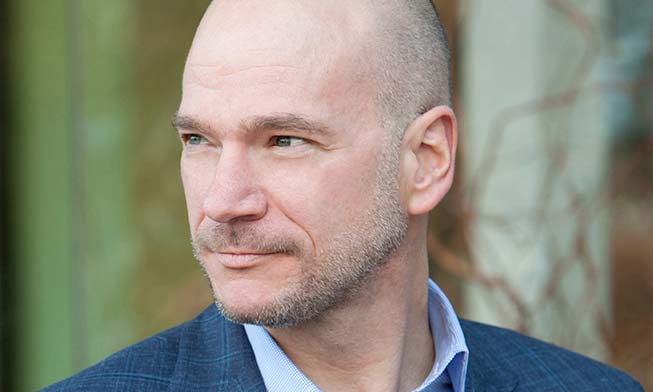



Perry E. Metzger

Perry E. Metzger

x.com/perrymetzger

Software and security technologist who favors fast, open AI development, pointing to its promise for software security and medical progress.

AI จะเปลี่ยนแปลงโลกอย่างไร?

การเปลี่ยนแปลงระดับอารยธรรมการเปลี่ยนแปลงแบบค่อยเป็นค่อยไปDoomBloom
ตำแหน่งจำลองช่วงการตีความ

แนวนอน: มุมมอง Doom–Bloom ที่บุคคลนั้นแสดงออก แนวตั้ง: ระดับของการเปลี่ยนแปลง

Doom–Bloom: 85 จาก 100 ระดับของการเปลี่ยนแปลง: 63 จาก 100 ช่วงการตีความ: แนวนอนตั้งแต่ 75 ถึง 100 แนวตั้งตั้งแต่ 50 ถึง 75 ค่าเหล่านี้เป็นพิกัดสำหรับการตีความ ไม่ใช่ความน่าจะเป็นของเหตุการณ์

P(doom) ของ Perry E. Metzger · อนุมาน

≈9%

0%100%

อนุมานจากคำตอบจำลองของบุคคลนั้น ไม่ใช่ตัวเลขที่บุคคลนั้นระบุ ช่วงที่เป็นไปได้: 5–16%

So my gut view is that extinction or an equivalently permanent catastrophe is unlikely, while large benefits are substantially more plausible.

เราประมาณค่า P(doom) อย่างไร

สิ่งที่มุมมองของบุคคลนั้นขึ้นอยู่กับ

ข้อสันนิษฐานหลัก

Real power depends on hardware, energy, manufacturing, logistics, and interaction with a world full of other capable actors.
คำตอบ 1

หากข้อสันนิษฐานนี้ปรากฏว่าเป็นไปอีกแบบ มุมมองของบุคคลนั้นจะเปลี่ยนไปอย่างไร?

สิ่งที่อาจเปลี่ยนความคิดของบุคคลนั้น

The biggest change would be convincing evidence that intelligence reliably translates into rapid, autonomous control of physical infrastructure despite hardware, energy, manufacturing, logistics, and active opposition.
คำตอบ 4

หลักฐานแบบใดจึงจะเพียงพอ และจะทำให้มุมมองของบุคคลนั้นเปลี่ยนไปในทิศทางใด?

รายละเอียดเพิ่มเติม

ผลดีที่คาดไว้

ยังมีการตีความที่เป็นไปได้หลายแบบ ได้แก่ คาดว่าจะได้รับประโยชน์ที่ก่อให้เกิดการเปลี่ยนแปลงและมีคุณค่าอย่างกว้างขวาง / คาดว่าจะได้รับประโยชน์อย่างมาก โดยมีเงื่อนไขสำคัญหรือข้อจำกัดด้านการกระจายประโยชน์

84 / 100

ผลกระทบน้อยผลกระทบที่ก่อให้เกิดการเปลี่ยนแปลงอย่างมาก

ช่วงการตีความตั้งแต่ 67 ถึง 100 บนมาตรวัดเชิงคุณภาพ

อันตรายที่คาดไว้

คาดว่าจะเกิดอันตรายที่จัดการได้หรือจำกัดอยู่เฉพาะพื้นที่

30 / 100

ผลกระทบน้อยผลกระทบที่ก่อให้เกิดการเปลี่ยนแปลงอย่างมาก

ช่วงการตีความตั้งแต่ 0 ถึง 33 บนมาตรวัดเชิงคุณภาพ

อิทธิพลของมนุษย์

การเลือกของมนุษย์มีอิทธิพลอย่างมีนัยสำคัญ แต่ถูกจำกัดอย่างมาก

57 / 100

อิทธิพลน้อยอิทธิพลมาก

ช่วงการตีความตั้งแต่ 44 ถึง 81 บนมาตรวัดเชิงคุณภาพ

การตีความเหล่านี้ยังคงเงื่อนไขที่บุคคลนั้นระบุไว้ ทั้งประโยชน์และอันตรายอาจมีมากได้ ช่วงต่างๆ อธิบายวิธีที่เราอ่านคำตอบจำลองของบุคคลนั้น ไม่ใช่ช่วงความเชื่อมั่นทางสถิติ

จุดยืนของคุณอยู่ตรงไหนเมื่อเทียบกับ Perry E. Metzger?
ทำแผนที่โลกทัศน์เกี่ยวกับ AI ของคุณเองในประมาณ 3 นาที แล้วจึงเปรียบเทียบ

โลกทัศน์ที่คล้ายกัน

ผู้นำทางความคิดที่มีโลกทัศน์จำลองใกล้เคียงกับโลกทัศน์ของ Perry E. Metzger มากที่สุด

แหล่งข้อมูล

บทความ บทสัมภาษณ์ และงานเขียนที่ใช้เป็นหลักฐานรองรับผู้ใช้จำลองรายนี้

แบบประเมินจำลอง

คำถาม 1

คุณคิดว่า AI มีความหมายอย่างไรต่ออนาคตของเรา และเพราะเหตุใด?

I expect AI to be broadly beneficial, not an automatic route to extinction or a meaningless future. The strongest case is practical: it can amplify scientific work, help find cures, make software development more reliable, and raise productivity. Those gains matter more than preserving existing systems of academic prestige or professional gatekeeping. Software security is a useful example. If AI becomes good at finding vulnerabilities, that creates offensive risk—but it also creates an enormous defensive opportunity. We can use the same capability to audit code, repair longstanding defects, and make formal verification far more accessible. That does not magically prove entire systems correct. A proof is only as good as its specification and still rests on assumptions about proof tools, compilers, operating systems, and hardware. But lowering the cost of proof work would still be a major engineering advance. I also reject the hand-waving story in which intelligence automatically produces alien goals and then instant physical domination. Real power depends on hardware, energy, manufacturing, logistics, and interaction with a world full of other capable actors. Those bottlenecks do not disappear because a model becomes smarter. Distributed progress also means distributed defensive capability; concentrating control is not obviously the safe answer. None of this means every use is harmless. It means the future should be analyzed through concrete mechanisms rather than treated as a morality play where stronger tools necessarily destroy us. The available signs of productivity improvement are suggestive, though that interpretation is not itself a clean causal study. Overall, I expect substantial gains if we actually engineer and deploy these systems well.

คำถาม 2

คุณคิดว่าท้ายที่สุดแล้ว AI จะเปลี่ยนแปลงโลกมากเพียงใด?

Enormously—probably across science, medicine, software, and economic production—but not by making engineering reality disappear. AI can reduce the cost of intellectual work: generating and checking proofs, finding bugs, exploring scientific hypotheses, and accelerating the search for treatments. That can change institutions built around scarce expert labor and academic credit. But “enormous change” does not imply an overnight godlike takeover. Intelligence still has to operate through chips, power, laboratories, factories, supply chains, software stacks, and people. Formal verification still depends on correct specifications and trusted assumptions below the proof. Drug discovery still has to confront experiments and biology. Vulnerabilities still have to be fixed and deployed, not merely identified. So I expect deep, broad change mediated by ordinary physical and institutional bottlenecks—not magic, and not the automatic end of humanity or meaningful life.

คำถาม 3

โดยสัญชาตญาณแล้ว คุณคิดว่ามีโอกาสมากเพียงใดที่ AI จะทำให้มนุษย์สูญพันธุ์หรือก่อให้เกิดหายนะที่ถาวรในระดับใกล้เคียงกัน?

I would not put a percentage on it. I think the confident extinction case is badly overstated because it usually jumps from “very intelligent software” to “alien goals plus immediate control of the physical world,” skipping hardware, energy, manufacturing, logistics, and opposition from other capable systems and people. That does not establish zero risk. Powerful tools can be misused, software vulnerabilities can have severe consequences, and failures can propagate. But stronger AI also improves bug finding, verification, scientific understanding, and distributed defensive capacity. Those effects matter in both directions. So my gut view is that extinction or an equivalently permanent catastrophe is unlikely, while large benefits are substantially more plausible. Assigning a crisp number would imply a precision I cannot justify.

คำถาม 4

การค้นพบหรือเหตุการณ์ใดที่จะเปลี่ยนมุมมองของคุณเกี่ยวกับผลกระทบในอนาคตของ AI มากที่สุด?

The biggest change would be convincing evidence that intelligence reliably translates into rapid, autonomous control of physical infrastructure despite hardware, energy, manufacturing, logistics, and active opposition. A demonstrated system that could close that entire loop—not merely write plans or exploit software—would undermine a central reason I reject instant-takeover narratives. In the other direction, repeated failure to produce meaningful gains in areas like scientific discovery, medicine, software verification, or productivity would weaken my optimism. I would want to distinguish model benchmarks and impressive demonstrations from deployed results. If AI could find bugs but not help defenders patch systems, generate proofs but not handle real specifications and trusted computing assumptions, or suggest treatments without surviving experimental validation, then its practical impact would be much smaller than I expect. So the key evidence is not another argument about abstract intelligence. It is whether AI can actually overcome—or fails to overcome—the concrete bottlenecks between cognition and real-world outcomes.
จุดยืนของคุณอยู่ตรงไหน?
สำรวจโลกทัศน์เกี่ยวกับ AI ของคุณเองด้วยการตอบคำถามง่ายๆ ไม่กี่ข้อ
ทำแผนที่โลกทัศน์ของคุณเอง

จุดยืนของคุณอยู่ตรงไหน?

ทำแผนที่โลกทัศน์ของฉัน