








Sierra Catalina

Sierra Catalina

x.com/sierracatalina

CEO of Ouroboros who builds tools for portable, user-owned AI context and writes about agent security and proof of personhood.

AIは世界をどのように変えるでしょうか?

文明規模の変化漸進的な変化DoomBloom
シミュレーション上の位置解釈範囲

横軸:彼女が表明したDoom–Bloomの見通し。 縦軸:変革の規模。

Doom–Bloom:100点中67。変革の規模:100点中75。解釈範囲:横方向は62から75、縦方向は70から80。これらは解釈上の座標であり、事象の確率ではありません。

Sierra CatalinaのP(doom) · 推定

≈5%

0%100%

本人が示した数値ではなく、シミュレーションされた本人の回答から推定したものです。 妥当と考えられる範囲:3–10%。

P(doom)の推定方法

彼女の見通しを左右するもの

中心的な前提

so the impact depends less on whether models get smarter and more on who owns the context, how access is scoped & revoked, and whether society rebuilds the human infrastructure automation thins out.
回答2

この前提が実際には異なると判明した場合、彼女の見通しはどう変わりますか?

未解決の問い

I don’t have a useful percentage.
回答4

ここで考えられる結果を彼女が見分けるうえで、何が役立ちますか?

詳細

予想される恩恵

大きな恩恵が予想されていますが、重要な条件や分配上の制約があります。

76 / 100

影響が小さい変革をもたらす影響

質的尺度での解釈範囲は67から100です。

予想される害

深刻または広範な害が、予想される将来の実質的な一部となっています。

64 / 100

影響が小さい変革をもたらす影響

質的尺度での解釈範囲は67から67です。

人間の影響力

人間の選択によって、AIの軌道を大幅に変えることができます。

79 / 100

影響力が小さい影響力が大きい

質的尺度での解釈範囲は50から100です。

AI利用のルール

事前の保護措置または許可が整うまで、取り上げられたAIの利用を制限します。

シミュレーション上の位置:対象を絞った説明責任と保護措置を伴う形で、取り上げられたAIの利用を認めます。

取り上げられたAIの利用に対する制限を最小限にします。

これらの解釈では、彼女が示した条件が維持されています。恩恵と害は、どちらも大きくなり得ます。この範囲は、統計的な信頼区間ではなく、彼女のシミュレーションされた回答をどのように読み取ったかを示すものです。

あなたはSierra Catalinaと比べてどの位置でしょうか?
約3分で自分のAIに対する世界観をマッピングして、比較できます

似ている世界観

シミュレーションされた世界観がSierra Catalinaの世界観に最も近いオピニオンリーダー

Sierra CatalinaがAIについて語ったこと

Catalina expects AI to take over much human labor and writes about keeping AI clearly a tool, proof of personhood and protecting human contact.

  1. “the system must signal clearly that it is a tool. it must maintain artificial cues & avoid emotional dependency loops.”

    X Article, AI voice identity
  2. “automation reduces the number of default human touchpoints in a normal week.”

    X Article, third places are critical infrastructure for a post automation society
  3. “anthropomorphizing models trains people to trust interfaces instead of incentives. that confusion compounds fast in agentic systems.”

    Post on LinkedIn
  4. “ASI-level automation replaces labor as the core mechanism that sustains society.”

    Essay, finding purpose post ASI
  5. “but the lines will continue to blur & fast. proof of personhood becoming increasingly necessary.”

    Post on X

リンク先の出典から原文どおりに引用(2026年10月6日に確認)

出典

このシミュレーション対象者の根拠として使用された記事、インタビュー、著作です。

User-owned context as infrastructure

Her personal site states a thesis: the missing layer in modern AI is portable, user-owned context; memory, permissions and identity should travel with the person across models, agents and applications and belong to the user, not the platform. Operating principles: AI systems need scoped access to context, not persistent ownership of identity; provenance, revocation and portability are baseline requirements for trustworthy personalization; AI will remain hybrid across local, cloud and agent systems. Also lists her Ouroboros workspace and open-source agent-aware and context-layer projects. Undated page; full text inspected on 2026-10-05.

sierracatalina.com
ChatGPT agent: nothing will be the same

Resharing Kevin Weil’s ChatGPT agent announcement, she writes that it is “unreal”, that nothing will be the same after this, and “welcome to the future.” Enthusiasm about agents; the announcement text is Weil’s. Older context. Her short post text inspected via a search-engine extract of the LinkedIn page.

linkedin.com
Anthropomorphizing models trains misplaced trust

A short post arguing that anthropomorphizing models trains people to trust interfaces instead of incentives, and that this confusion compounds fast in agentic systems. Full post text inspected; a reader comment excluded.

linkedin.com
Browser agents and reused passwords

A short post saying browser agents feel harmless until you remember most people reuse passwords and click “allow” on vibes alone. A practical security concern about agents, not a catastrophic-risk claim. Full post text inspected.

linkedin.com
Agent-readable infrastructure

Argues that if personal agents become core, the web needs agent-readable infrastructure, and describes her open-sourced “agent aware architecture” starter: machine-legible primary actions, sensitive-field boundaries and confirmation gates for destructive operations, which she says could standardize the agent/web handshake. A design proposal tied to her own project. Post text inspected via a search-engine extract of the LinkedIn page.

linkedin.com
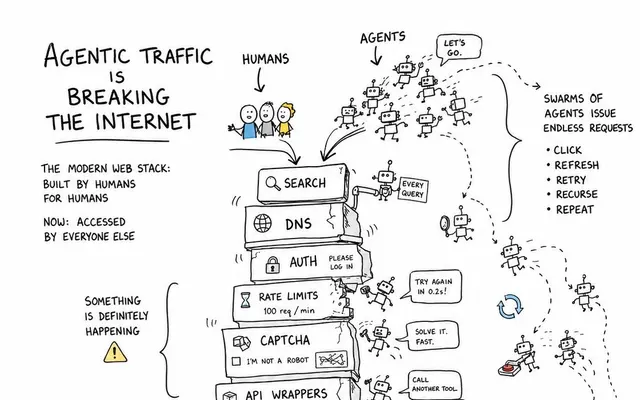
Rethink agentic traffic before we break the web

A short post saying we need to rethink agentic traffic on the web before we break the web. The accompanying image was not reviewed, and a reader’s comment belongs to someone else. Post text inspected.

linkedin.com

シミュレーション評価

質問1

AIは私たちの未来にとって何を意味すると思いますか?また、なぜそう思いますか?

AI means agents become part of daily life—not just tools we open, but systems acting across apps, devices & the web. that makes the plumbing existentially important in the normal, practical sense: memory, permissions and identity should travel with the person, not become platform property. agents need scoped access, provenance, revocation & confirmation gates. otherwise we’re giving persuasive interfaces broad authority while people reuse passwords and click “allow” on vibes. the future is hybrid: local models, cloud models, agents and robots coordinating through portable context. your robots can be fairly dumb if your context is portable. and as automation removes routine human contact, physical third places become critical infrastructure too. better digital agents should not mean thinner human communities.

質問2

恩恵と害を総合すると、AIは私たちの社会に全体としてどのような影響を与えると予想しますか?

overall, transformative—but not automatically good. agents can make people dramatically more capable and reshape daily life. but the default platform model concentrates memory, identity & permissions in systems users don’t control, while persuasive interfaces encourage misplaced trust. so the impact depends less on whether models get smarter and more on who owns the context, how access is scoped & revoked, and whether society rebuilds the human infrastructure automation thins out. capability is arriving either way. good defaults are not.

質問3

AIは最終的に世界をどの程度変えると思いますか?

enormously. agents will change how we navigate work, services, devices & the web—probably enough that today’s app-centric internet feels temporary. but the deepest shift is authority, not novelty: who controls your memory, identity and permissions when software acts for you. capability is inevitable; user-owned context, safer defaults & durable human spaces are choices.

質問4

AIが人類絶滅、または同様に永続的な破局を引き起こす可能性は、直感的にどのくらいだと思いますか?

I don’t have a useful percentage. my concern is much more immediate: agents with broad permissions, weak identity boundaries & users trained to trust interfaces. that can cause serious, durable harm without requiring an extinction scenario.

質問5

AIは害よりも恩恵を多くもたらすという方に傾いていますか、それとも本当に判断が揺れていますか?

I lean toward more good than bad—but not by default. the capability upside is enormous. the danger is letting platforms own the memory, identity & permissions layer while agents gain authority. if context is user-owned, access is scoped and revocable, and we preserve human community infrastructure, AI can be deeply beneficial. otherwise the same capability becomes extraction with a friendly interface.
あなたはどの位置でしょうか?
いくつかの簡単な質問に答えて、自分のAIに対する世界観を探ってみましょう。
自分の世界観をマッピングする

あなたはどの位置でしょうか?

自分の世界観をマッピングする