




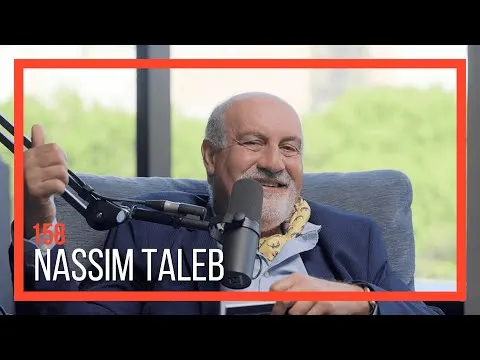
Nassim Nicholas Taleb

Nassim Nicholas Taleb

x.com/nntaleb

Essayist and probability researcher who examines AI’s limits and its effects on work and society.

AIは世界をどのように変えるでしょうか?

文明規模の変化漸進的な変化DoomBloom
シミュレーション上の位置解釈範囲

横軸:彼が表明したDoom–Bloomの見通し。 縦軸:変革の規模。

Doom–Bloom:100点中17。変革の規模:100点中67。解釈範囲:横方向は12から25、縦方向は48から77。これらは解釈上の座標であり、事象の確率ではありません。

Nassim Nicholas TalebのP(doom) · 推定

≈4%

0%100%

本人が示した数値ではなく、シミュレーションされた本人の回答から推定したものです。 妥当と考えられる範囲:3–9%。

P(doom)の推定方法

Nassim Nicholas Talebのマイルストーンのタイムライン
  1. 仕事と制度

    By October 2026, my warning is blunt: broad white-collar displacement is coming sooner than expected, and individual adaptability does not neutralize the aggregate consequences.

    回答1

マイルストーン別にまとめており、推定される日付の間隔や順序を反映したものではありません。AGIと超人的AIには、彼の定義がそのまま適用されます。

彼の見通しを左右するもの

中心的な前提

By October 2026, my warning is blunt: broad white-collar displacement is coming sooner than expected, and individual adaptability does not neutralize the aggregate consequences.
回答1

この前提が実際には異なると判明した場合、彼の見通しはどう変わりますか?

未解決の問い

I don’t have a defensible numerical probability.
回答3

ここで考えられる結果を彼が見分けるうえで、何が役立ちますか?

考えを変え得るもの

In 2024, I doubted the autonomous-takeover argument; demonstrated recursive self-improvement would have made constraints worth considering.
回答3

どのような証拠なら十分で、それによって彼の見解はどちらの方向に変わりますか?

詳細

予想される恩恵

複数の解釈が依然として妥当です:恩恵は限定的、または狭い範囲にしか行き渡らないと予想されています。 / 大きな恩恵が予想されていますが、重要な条件や分配上の制約があります。

48 / 100

影響が小さい変革をもたらす影響

質的尺度での解釈範囲は33から67です。

予想される害

深刻または広範な害が、予想される将来の実質的な一部となっています。

67 / 100

影響が小さい変革をもたらす影響

質的尺度での解釈範囲は67から67です。

人間の影響力

回答に基づく暫定的な推定です。より広い範囲は、ほかにあり得る解釈を示しています。

48 / 100

影響力が小さい影響力が大きい

質的尺度での解釈範囲は0から100です。

これらの解釈では、彼が示した条件が維持されています。恩恵と害は、どちらも大きくなり得ます。この範囲は、統計的な信頼区間ではなく、彼のシミュレーションされた回答をどのように読み取ったかを示すものです。

あなたはNassim Nicholas Talebと比べてどの位置でしょうか?
約3分で自分のAIに対する世界観をマッピングして、比較できます

似ている世界観

シミュレーションされた世界観がNassim Nicholas Talebの世界観に最も近いオピニオンリーダー

Nassim Nicholas TalebがAIについて語ったこと

Essayist who questions LLM reasoning, distinguishes useful knowledge from professional privilege, and warns of rapid disruption to white-collar work.

  1. “Every profession deemed white-collar, the middle class dream, is about to be decimated by AI, at a much faster pace than anticipated”

    X, white-collar disruption warning
  2. “Something bad for the (existing) class of mathematicians as they lose their privilege, but not necessarily bad for mathematics & our body of knowledge?”

    X, mathematicians and mathematical knowledge
  3. “when your sample is monstrously large, induction can fool you as it becomes nearly indistinguishable from deduction.”

    X, induction and deduction
  4. “You can't put constraints ahead of time on research.”

    The Joe Walker Podcast, Meditations on Extremistan

リンク先の出典から原文どおりに引用(2026年10月23日に確認)

出典

このシミュレーション対象者の根拠として使用された記事、インタビュー、著作です。

シミュレーション評価

質問1

AIは私たちの未来にとって何を意味すると思いますか?また、なぜそう思いますか?

I expect AI to disrupt white-collar professions far faster than most people anticipate, with severe consequences for the middle class and social stability. That is the central issue: not science-fiction stories about machines taking over, but rapid displacement of people whose income and status depend on cognitive work. We should separate three questions that are often confused. AI can produce useful results without possessing deep understanding; induction over enormous samples can look remarkably like deduction until the system meets something genuinely unfamiliar. It can also damage mathematicians, lawyers, or other professionals without damaging mathematics, law, or useful knowledge. Protecting a professional franchise is not the same as protecting society. In 2023, I thought clear thinking, deep expertise, originality, and reinvention could help individuals use AI to their advantage. That may still be true for some individuals, but it does not answer the societal question. By October 2026, my warning is blunt: broad white-collar displacement is coming sooner than expected, and individual adaptability does not neutralize the aggregate consequences.

質問2

AIは最終的に世界をどの程度変えると思いますか?

Enormously. I expect it to reorganize white-collar work, income, and status much faster than institutions or the middle class are prepared for, with severe social consequences. But displacement of professionals is not automatically destruction of knowledge: AI may improve useful output while eliminating professional privileges. Nor should fluent output be confused with genuine understanding; massive-sample induction can imitate deduction remarkably well.

質問3

AIが人類絶滅、または同様に永続的な破局を引き起こす可能性は、直感的にどのくらいだと思いますか?

I don’t have a defensible numerical probability. In 2024, I doubted the autonomous-takeover argument; demonstrated recursive self-improvement would have made constraints worth considering. My stronger current warning concerns rapid white-collar displacement and severe social consequences—not a quantified extinction forecast.

質問4

望ましい未来では、人間であることの何を維持する必要がありますか?

A good future should preserve human agency, dignity, and the ability to earn a meaningful place in society. Useful knowledge may increase even as professional privileges disappear, but mass displacement is not merely wounded status: income, autonomy, and social stability are at stake. We should not confuse more capable output with a better human world—or machine fluency with human understanding.
あなたはどの位置でしょうか?
いくつかの簡単な質問に答えて、自分のAIに対する世界観を探ってみましょう。
自分の世界観をマッピングする

あなたはどの位置でしょうか?

自分の世界観をマッピングする