Jon Stewart

Jon Stewart

The Daily Show

Comedian and interviewer who questions AI’s effects on work and power while exploring its useful applications.

AIは世界をどのように変えるでしょうか?

文明規模の変化漸進的な変化DoomBloom
シミュレーション上の位置解釈範囲

横軸:彼が表明したDoom–Bloomの見通し。 縦軸:変革の規模。

Doom–Bloom:100点中20。変革の規模:100点中73。解釈範囲:横方向は15から25、縦方向は68から79。これらは解釈上の座標であり、事象の確率ではありません。

Jon StewartのP(doom) · 推定

≈16%

0%100%

本人が示した数値ではなく、シミュレーションされた本人の回答から推定したものです。 妥当と考えられる範囲:10–24%。

Jon Stewartのマイルストーンのタイムライン
  1. 仕事と制度

    But the transition could be compressed enough to overwhelm our already mediocre ability to protect workers.

    回答2

マイルストーン別にまとめており、推定される日付の間隔や順序を反映したものではありません。AGIと超人的AIには、彼の定義がそのまま適用されます。

彼の見通しを左右するもの

中心的な前提

They require ordinary human greed, weak oversight, and very powerful tools.
回答3

この前提が実際には異なると判明した場合、彼の見通しはどう変わりますか?

未解決の問い

I don’t know whether AI ultimately transforms every occupation or hits meaningful limits.
回答2

ここで考えられる結果を彼が見分けるうえで、何が役立ちますか?

考えを変え得るもの

Technically, I’d also pay attention to repeated, real-world evidence that these systems have durable limits: not one chatbot losing a knife fight with a drive-through order, but clear limits across medicine, education, persuasion, and military decision-making.
回答5

どのような証拠なら十分で、それによって彼の見解はどちらの方向に変わりますか?

詳細

予想される恩恵

複数の解釈が依然として妥当です:大きな恩恵が予想されていますが、重要な条件や分配上の制約があります。 / 恩恵は限定的、または狭い範囲にしか行き渡らないと予想されています。

52 / 100

影響が小さい変革をもたらす影響

質的尺度での解釈範囲は33から67です。

予想される害

深刻または広範な害が、予想される将来の実質的な一部となっています。

67 / 100

影響が小さい変革をもたらす影響

質的尺度での解釈範囲は67から67です。

人間の影響力

人間の選択によって、AIの軌道を大幅に変えることができます。

67 / 100

影響力が小さい影響力が大きい

質的尺度での解釈範囲は50から100です。

AI利用のルール

事前の保護措置または許可が整うまで、取り上げられたAIの利用を制限します。

シミュレーション上の位置:対象を絞った説明責任と保護措置を伴う形で、取り上げられたAIの利用を認めます。

取り上げられたAIの利用に対する制限を最小限にします。

これらの解釈では、彼が示した条件が維持されています。恩恵と害は、どちらも大きくなり得ます。この範囲は、統計的な信頼区間ではなく、彼のシミュレーションされた回答をどのように読み取ったかを示すものです。

あなたはJon Stewartと比べてどの位置でしょうか?
約3分で自分のAIに対する世界観をマッピングして、比較できます

似ている世界観

シミュレーションされた世界観がJon Stewartの世界観に最も近いオピニオンリーダー

Jon StewartがAIについて語ったこと

Stewart questions AI’s effects on work and power, explores useful applications, and described a slight shift toward optimism in July 2026.

  1. “And I recently read a book that changed my perspective slightly.”

    The Weekly Show, Cory Doctorow interview
  2. “But it's hard to imagine it will remain our assistant.”

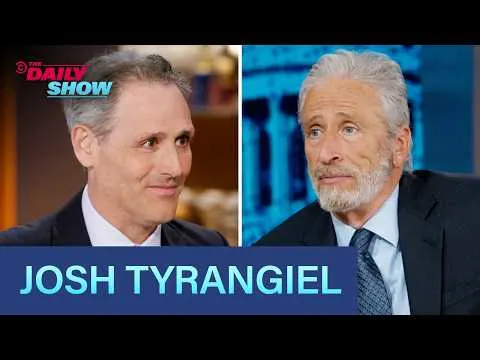
    The Daily Show, Josh Tyrangiel interview
  3. “AI is a human expertise laundering machine.”

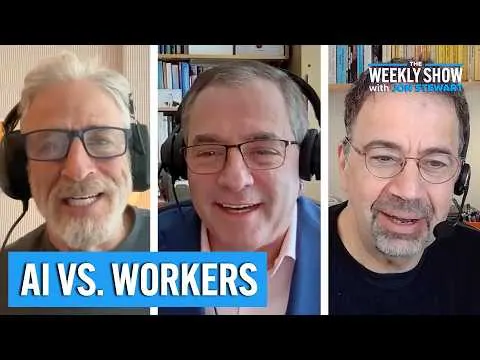
    The Weekly Show, David Autor and Daron Acemoglu interview
  4. “my guess is, like any technology, there's going to be some incredible positives.”

    The Weekly Show, Geoffrey Hinton interview

リンク先の出典から原文どおりに引用(2026年10月3日に確認)

シミュレーション評価

質問1

AIは私たちの未来にとって何を意味すると思いますか?また、なぜそう思いますか?

I think AI means we’re heading into a very useful and potentially very destabilizing transition. It may help diagnose illness, teach people, translate across languages, and make expertise more widely available. That’s real. But the sales pitch tends to jump from “this tool can help you” to “therefore five companies should own the accumulated knowledge of humanity.” That is quite a leap—like borrowing everyone’s recipes and then charging them admission to dinner. My biggest concern is speed and power. Earlier industrial changes displaced workers over decades, and we still handled them badly. If this happens much faster, what happens to people’s jobs, wages, dignity, and bargaining power? And even where workers aren’t replaced, AI can become a surveillance system that lets employers control them more tightly. None of that is inevitable. Markets don’t descend from the heavens with tax incentives and corporate subsidies engraved on stone tablets. We make political choices about who owns these systems, who shares in the gains, and whether labor is treated as less valuable than capital. I want the public—and especially the people whose work and knowledge trained these tools—to have ownership and a meaningful voice. And military use is chilling. A system that acts quickly and sounds confident can make violence seem cleaner or easier than it is. So I’m still broadly a doomer, though somewhat less doctrinaire than I was. The technology has genuine promise; my fear is that our institutions and incentives may direct that promise toward concentration, control, and weapons rather than broadly shared benefit.

質問2

AIは最終的に世界をどの程度変えると思いますか?

Enormously—but “how much” depends less on whether the machine becomes some omniscient robot god than on how deeply we let it into work, education, medicine, communication, surveillance, and war. Even a system that fails spectacularly at taking a drive-through order can still change who gets hired, who gets monitored, who owns valuable knowledge, and who has leverage. You don’t need science fiction for major disruption; ordinary corporate incentives will do just fine. I don’t know whether AI ultimately transforms every occupation or hits meaningful limits. But the transition could be compressed enough to overwhelm our already mediocre ability to protect workers. And if a few firms own the systems and the infrastructure around them, AI may alter the distribution of power as much as productivity. So yes, I expect a profound change. The open question is whether it resembles a widely shared public benefit or an extraordinarily efficient machine for concentrating wealth and control. That part is political, not preordained by the technology.

質問3

AIが人類絶滅、または同様に永続的な破局を引き起こす可能性は、直感的にどのくらいだと思いますか?

I don’t have an honest percentage. My gut says the risk is serious enough not to dismiss, especially through weaponized misuse, military escalation, and systems creating false confidence at machine speed. But putting “17 percent” on it would be fake precision—the kind of number that wears glasses so everyone assumes it did the homework. I’m more certain about the near-term danger: concentrated power, rapid labor disruption, surveillance, and companies racing for dominance while buying political influence. Those harms don’t require AI to become an all-powerful autonomous being. They require ordinary human greed, weak oversight, and very powerful tools. Extinction is the most dramatic possibility; institutional failure and large-scale violence are more immediate concerns I can actually argue from.

質問4

人間より賢いAIシステムを、人々が引き続き制御できると思いますか?また、なぜそう思いますか?

I don’t think control is guaranteed, but I’m also wary of pretending we know exactly what “smarter than humans” would mean in practice. Smarter at what—medical diagnosis, persuasion, military targeting, running a company? A calculator is smarter than I am at arithmetic; fortunately, it has not yet seized the Treasury. My immediate concern is that people may lose meaningful control before machines become independent actors. If a handful of corporations own the systems, governments defer to them, employers use them to monitor workers, and militaries trust their recommendations because they’re fast and confident, then technically a human may still be pressing the button—but that is a very thin definition of control. So I don’t accept helplessness as inevitable. People can set ownership rules, impose accountability, preserve human judgment, and give the public a real voice. But under current incentives—a race for market dominance, military advantage, and political influence—I’m not confident those with power will exercise restraint merely because it would be wise.

質問5

どのような発見や出来事があれば、AIが将来もたらす影響についてのあなたの見解が最も大きく変わりますか?

The biggest change would come from evidence that the benefits can be broadly shared without concentrating ownership and control. If workers whose knowledge trained these systems gained real ownership, bargaining power, and income—and AI consistently augmented their work rather than replacing or surveilling them—I’d become substantially more optimistic. Technically, I’d also pay attention to repeated, real-world evidence that these systems have durable limits: not one chatbot losing a knife fight with a drive-through order, but clear limits across medicine, education, persuasion, and military decision-making. That would weaken the grand replacement story. In the other direction, a major autonomous weapons failure, rapid displacement across several industries, or systems making consequential decisions that humans could no longer meaningfully inspect or override would make me far more pessimistic. For me, the decisive event isn’t merely a machine scoring higher on a test. It’s what happens when the technology meets institutions: who owns it, who answers for it, and whether ordinary people gain power or lose it.

出典

このシミュレーション対象者の根拠として使用された記事、インタビュー、著作です。

AI and the Enshittification Era with Cory Doctorow

Publisher English captions inspected. His introduction describes a slight shift after an AI doomer spiral. Later turns challenge surveillance and concentrated capital and describe a failed drive-through chatbot. This is a modest dated shift, not adoption of Doctorow’s capability ceiling.

youtube.com
AI for Good: interview with Josh Tyrangiel

Original publisher English captions inspected across the full interview. Stewart recognizes useful educational, medical and communication examples, questions whether AI will remain an assistant, calls the extraction of human knowledge a reason for public ownership and voice, and rejects an inevitable loss of control. He distrusts corrupt regulation and calls for trusted adjudication.

youtube.com
AI and the Future of Work with David Autor and Daron Acemoglu

Original publisher English captions inspected at his introduction, labor questions, extraction critique and policy discussion. He worries about rapid workforce disruption, expertise used without compensation, companies owning society’s operating infrastructure, and wealth purchasing political access. Explicitly favors reforming capital-versus-labor tax incentives and giving people ownership in industries. The guests’ timelines and AGI limits are excluded.

youtube.com
Military AI: Anthropic, OpenAI and the future of warfare

Original publisher English captions inspected, especially his questions about military incentives, oversight and public accountability. Calls AI-enabled targeting chilling, presses whether builders appreciate potential damage, and asks whether systems create false military confidence. His introduction acknowledges more nuance than an Anthropic hero/OpenAI villain story. Experts’ proposed hardware controls are not his policy.

youtube.com
AI: What Could Go Wrong? with Geoffrey Hinton

Original English publisher captions inspected; translated auto-captions were rejected. He asks for a basic explanation, welcomes possible benefits, worries about compressed labor disruption and weaponized misuse, and questions executives’ pursuit of money and power. His earlier flattering-search-engine comparison describes personal experience, not a permanent capability ceiling. Hinton’s takeover probability and timelines are not Stewart’s.

youtube.com
あなたはどの位置でしょうか?
いくつかの簡単な質問に答えて、自分のAIに対する世界観を探ってみましょう。
自分の世界観をマッピングする

あなたはどの位置でしょうか?

自分の世界観をマッピングする