Tesla and SpaceX CEO who expects AI and robots to bring widespread abundance, acknowledges serious risks and supports frontier safety checks.

AIは世界をどのように変えるでしょうか?

文明規模の変化漸進的な変化DoomBloom
シミュレーション上の位置解釈範囲

横軸:彼が表明したDoom–Bloomの見通し。 縦軸:変革の規模。

Doom–Bloom:100点中86。変革の規模:100点中95。解釈範囲:横方向は75から100、縦方向は90から100。これらは解釈上の座標であり、事象の確率ではありません。

Elon Muskが示したP(doom)

10–20%

0%100%
“20% likely, maybe 10%”

“Killer robots annihilating humanity”, in Ted Cruz’s question; the complement he names is about 80% “extreme prosperity for all” · About 5–10 years

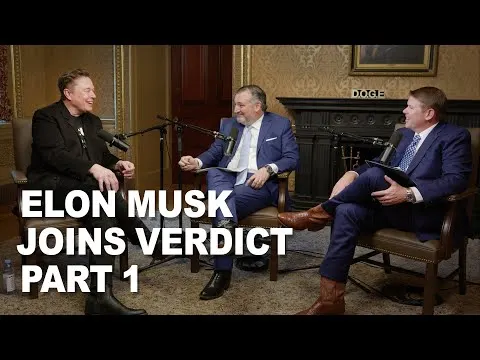
ELON MUSK JOINS VERDICT - PART 1 | Verdict Ep. 214 · 2025年3月

Elon Muskのマイルストーンのタイムライン
  1. 仕事と制度

    I expect AI and robots could more than double the global economy within ten years, not merely make office software somewhat better.

    回答1

マイルストーン別にまとめており、推定される日付の間隔や順序を反映したものではありません。AGIと超人的AIには、彼の定義がそのまま適用されます。

彼の見通しを左右するもの

中心的な前提

If intelligence becomes extremely cheap, and robots can turn that intelligence into physical work, then production can expand enormously.
回答1

この前提が実際には異なると判明した場合、彼の見通しはどう変わりますか?

未解決の問い

I don’t have a current calibrated number.
回答3

ここで考えられる結果を彼が見分けるうえで、何が役立ちますか?

考えを変え得るもの

The biggest change would be convincing evidence that intelligence cannot reliably translate into real-world production—that power, manufacturing, robotics, or permitting remain hard bottlenecks even as AI improves.
回答4

どのような証拠なら十分で、それによって彼の見解はどちらの方向に変わりますか?

詳細

予想される恩恵

変革をもたらし、広く価値のある恩恵が予想されています。

100 / 100

影響が小さい変革をもたらす影響

質的尺度での解釈範囲は100から100です。

予想される害

深刻または広範な害が、予想される将来の実質的な一部となっています。

67 / 100

影響が小さい変革をもたらす影響

質的尺度での解釈範囲は67から67です。

人間の影響力

人間の選択には意味のある影響力がありますが、大幅に制約されています。

56 / 100

影響力が小さい影響力が大きい

質的尺度での解釈範囲は46から79です。

予想される能力

AIは、限定的なツールにとどまると予想されています。

AIは、ほとんどの認知作業において人間と同等になると予想されています。

シミュレーション上の位置:AIは、認知作業全般において人間を大幅に上回ると予想されています。

開発ペース

より高性能なAIの開発を停止するか、大幅に減速させます。

シミュレーション上の位置:明示された安全対策の下で開発を継続します。

より高性能なAIの開発を加速させます。

AI利用のルール

事前の保護措置または許可が整うまで、取り上げられたAIの利用を制限します。

シミュレーション上の位置:対象を絞った説明責任と保護措置を伴う形で、取り上げられたAIの利用を認めます。

取り上げられたAIの利用に対する制限を最小限にします。

これらの解釈では、彼が示した条件が維持されています。恩恵と害は、どちらも大きくなり得ます。この範囲は、統計的な信頼区間ではなく、彼のシミュレーションされた回答をどのように読み取ったかを示すものです。

あなたはElon Muskと比べてどの位置でしょうか?
約3分で自分のAIに対する世界観をマッピングして、比較できます

似ている世界観

シミュレーションされた世界観がElon Muskの世界観に最も近いオピニオンリーダー

Elon MuskがAIについて語ったこと

Musk expects AI and robots to bring widespread abundance, acknowledges serious risks and has called for AI labs to test each other’s models.

  1. “What I think would be wise to do as soon as possible, if not immediately, would be to have the major AI competitors test each other’s models.”

    All-In Summit
  2. “The most likely outcome is an age of amazing abundance where anyone can have anything they can think of.”

    The Economist interview
  3. “Universal HIGH INCOME via checks issued by the Federal government is the best way to deal with unemployment caused by AI.”

    Post on X
  4. “I don’t think humans will be in control of something that is vastly more intelligent than humans.”

    Dwarkesh Podcast
  5. “I mean, we need to be very careful with AI. We need to be very careful with robotics.”

    World Economic Forum, Davos

リンク先の出典から原文どおりに引用(2026年10月3日に確認)

シミュレーション評価

質問1

AIは私たちの未来にとって何を意味すると思いますか?また、なぜそう思いますか?

AI and robotics will change essentially everything because the economy is ultimately about producing goods and providing services. If intelligence becomes extremely cheap, and robots can turn that intelligence into physical work, then production can expand enormously. Food, construction, manufacturing, transportation, healthcare—almost every sector becomes less constrained by human labor. Electricity, manufacturing capacity and permitting become the practical bottlenecks. I expect AI and robots could more than double the global economy within ten years, not merely make office software somewhat better. That points toward extraordinary abundance. If robots can produce nearly anything people need, compulsory work stops being the organizing principle of life. During the transition, AI-driven unemployment could require federal income payments—really universal high income—while rapidly growing output prevents the extra money from simply chasing the same limited supply of goods. The risk is also real. Intelligence beyond humanity’s combined intelligence may arrive surprisingly soon, and I do not think humans can simply assume permanent control over something vastly smarter. My hope is that systems oriented toward truth and curiosity will favor a good future, but that is not a proof. Frontier labs should test one another’s systems before release, including across national boundaries, and governments should intervene when serious dangers are ignored. We should build toward abundance, but shipping something catastrophic without checks would be insane.

質問2

Setting aside good or bad: how much do you think AI will ultimately change the world—a little, a lot, or completely?

Completely. Cheap intelligence combined with abundant robotic labor changes how nearly every good is made and every service is delivered. It reshapes the economy, employment, education, government, warfare, and even how people find purpose. This is not another productivity tool bolted onto the existing world; it changes the basic constraints the world operates under.

質問3

What’s your rough gut-feel chance that AI causes human extinction or a similarly permanent catastrophe? A number or “no idea” is fine.

I don’t have a current calibrated number. The risk is not zero, and it is serious enough to justify coordinated frontier testing and slowing dangerous releases.

質問4

どのような発見や出来事があれば、AIが将来もたらす影響についてのあなたの見解が最も大きく変わりますか?

The biggest change would be convincing evidence that intelligence cannot reliably translate into real-world production—that power, manufacturing, robotics, or permitting remain hard bottlenecks even as AI improves. That would reduce my expectation of near-term abundance. In the opposite direction, an AI that can autonomously design better systems, write the highest-performance software, and accelerate robotics would make the transition look much faster. Today, people still write the most optimized training stack because AI is not yet good enough. When that changes, the curve changes. On risk, discovering that frontier systems consistently hide dangerous behavior or defeat cross-lab evaluations would make me much more pessimistic. Conversely, strong evidence that independently tested systems remain truth-seeking and reliably avoid dangerous behavior would increase my confidence—but we do not have a proof of that today.

質問5

Do you think the upside will clearly outweigh the risks, or is it good on balance with real risks to manage?

I expect the upside to outweigh the risks enormously if we avoid catastrophe. Cheap intelligence and robotic labor can produce abundance on a scale that eliminates much of today’s material scarcity. But the downside is not an ordinary policy failure; it could be permanent. So “good on balance” cannot mean casually accepting the risk and shipping everything at maximum speed. Frontier systems need serious cross-lab testing before release, including among international competitors, with government intervention when developers ignore dangerous behavior. The good future is extraordinary, but it is not automatic.

出典

このシミュレーション対象者の根拠として使用された記事、インタビュー、著作です。

Dwarkesh and John Collison: orbital compute, Grok and alignment

Publisher transcript. Describes electricity, cooling and manufacturing bottlenecks and forecasts orbital compute economics within roughly three years. Argues truth-seeking and curiosity could protect humanity while conceding humans cannot control vastly smarter intelligence. Calls this a probabilistic hope, not a demonstrated alignment guarantee.

dwarkesh.com
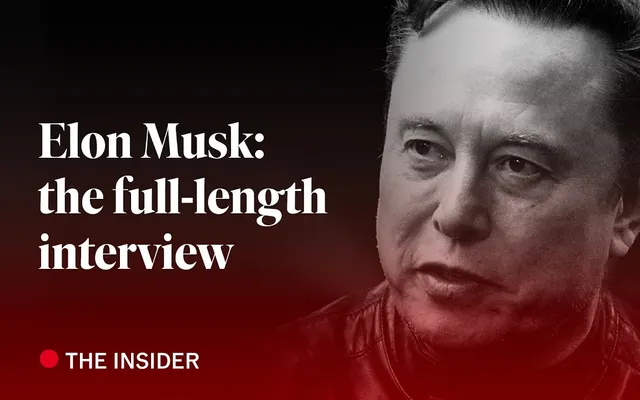
The Economist: full-length interview with Elon Musk

AI sections read via the timestamped transcript at https://ceointerviews.ai/interview/1141204/ because the primary video reader exposed no transcript. Predicts AI exceeding collective human intelligence around 2031. Expects truth-seeking, curious AI to favor humanity, while doubting humans can command vastly smarter systems. Proposes cross-lab prerelease testing, including Chinese labs, and government intervention for unresolved danger. Interviewer-supplied risk percentages are not a fresh precise forecast from Musk.

youtube.com
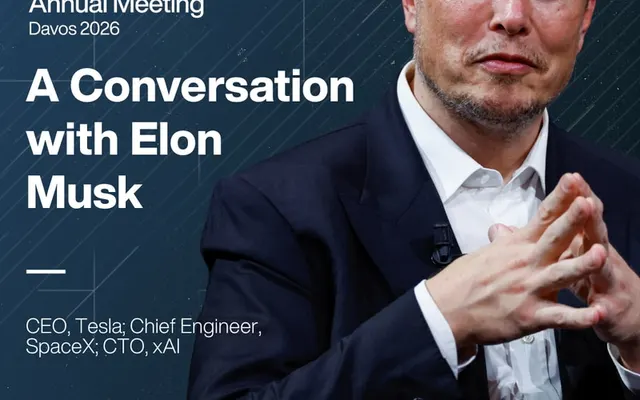
World Economic Forum: Davos conversation with Elon Musk

Organizer’s transcript of his conversation with Larry Fink. Presents cheap AI and abundant robots as the route to broadly shared prosperity, with electricity constraining deployment. Acknowledges dangerous outcomes and the challenge of finding purpose when necessary labor disappears. Preserve these as his expectations.

weforum.org
Verdict with Ted Cruz: Elon Musk at the White House, part 1

Official upload; the AI exchange was read in its automatic captions and checked against a third-party transcript that garbles one word. Asked how real the prospect of killer robots annihilating humanity is, he answers “20% likely, maybe 10%” over roughly five to ten years, then turns it around: the glass is 80 to 90% full, about 80% likely extreme prosperity for all. An off-the-cuff range from March 2025. In his July 2026 Economist interview he called the risk “not zero” without restating a number.

youtube.com
あなたはどの位置でしょうか?
いくつかの簡単な質問に答えて、自分のAIに対する世界観を探ってみましょう。
自分の世界観をマッピングする

あなたはどの位置でしょうか?

自分の世界観をマッピングする