






Julia Galef

Julia Galef

x.com/juliagalef

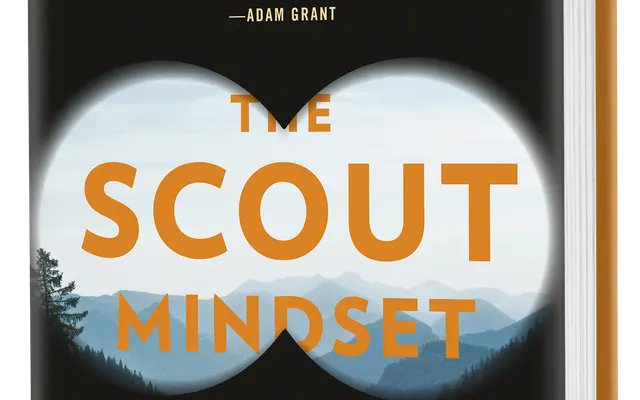
Author of “The Scout Mindset” who writes about reasoning well and changing one’s mind, and has explored why people disagree about advanced AI.

Bagaimana AI akan mengubah dunia?

Perubahan peradabanPerubahan bertahapDoomBloom
Titik tengah rentang yang belum ditentukanRentang interpretasi

Mendatar: pandangan Doom–Bloom yang mereka ungkapkan. Ke atas: skala transformasi.

Doom–Bloom: 50 dari 100. Skala transformasi: 50 dari 100. Rentang interpretasi: 45 hingga 55 secara horizontal, 0 hingga 100 secara vertikal. Ini adalah koordinat interpretasi, bukan probabilitas kejadian.

P(doom) Julia Galef

Belum diestimasi

Jawaban simulasi mereka tidak cukup membahas risiko katastrofik untuk memperkirakannya.

Cara kami mengestimasi P(doom)

Hal-hal yang menentukan pandangan mereka

Pertanyaan yang belum terjawab

I don’t have a confident overall forecast.
Jawaban 1

Apa yang akan membantu mereka membedakan hasil-hasil yang masuk akal di sini?

Detail lebih lanjut

Pengaruh manusia

Anda belum menetapkan posisi mengenai hal ini. Titik tersebut menandai titik tengah rentang yang masih terbuka, bukan keyakinan yang moderat.

50 / 100

Sedikit pengaruhPengaruh kuat

Rentang interpretasi 0 hingga 100 pada skala kualitatif.

Interpretasi ini mempertahankan kondisi yang mereka nyatakan. Manfaat dan kerugian dapat sama-sama besar. Rentang tersebut menggambarkan cara kami membaca jawaban simulasi mereka, bukan interval kepercayaan statistik.

Di mana posisi Anda dibandingkan dengan Julia Galef?
Petakan pandangan dunia AI Anda sendiri dalam waktu sekitar 3 menit, lalu bandingkan

Pandangan dunia serupa

Pemimpin opini yang paling dekat dengan pandangan dunia simulasi Julia Galef dalam beberapa posisi yang diungkapkannya

Sumber

Artikel, wawancara, dan tulisan yang digunakan sebagai landasan bagi pengguna simulasi ini.

Penilaian Simulasi

Pertanyaan 1

Menurut Anda, apa arti AI bagi masa depan kita—dan mengapa?

I don’t have a confident overall forecast. The key questions are still how difficult AGI is, how much recent progress should update our expectations, and what models drive disagreement about the consequences of systems that surpass human capabilities. Before jumping to optimism, doom, or a policy conclusion, I’d want to identify the real cruxes. Are people disagreeing about scaling, bottlenecks in reasoning, the feasibility of controlling highly capable systems, or the institutions governing deployment? What observations would change each side’s mind? “AI means progress” and “AI means catastrophe” can both function more like team slogans than forecasts unless we unpack the mechanisms behind them. So my strongest view is methodological: we should treat confidence as something to earn through investigation, calibration, and serious engagement with disagreement. The future could depend enormously on AI, but that importance makes careful reasoning more necessary, not less.

Pertanyaan 2

Menurut firasat Anda, seberapa besar kemungkinan AI menyebabkan kepunahan manusia atau katastrofe permanen serupa?

I don’t have a defensible numerical estimate. Giving a gut percentage would suggest more calibration than I can justify. I’d first want to resolve—or at least better understand—the main cruxes: how likely broadly superhuman systems are, what capabilities imply about control, and whether institutions can respond before failures become irreversible. The magnitude of the possible harm makes the question important, but it doesn’t by itself determine the probability.

Pertanyaan 3

Kerugian besar apa, jika ada, yang Anda perkirakan akan disebabkan oleh AI?

I don’t have a well-supported forecast of which major harms AI will actually cause. Plausible concerns range from misuse and institutional failures to loss of control over systems that become broadly more capable than humans, but listing scenarios is not the same as assigning them high probability. I’d want to separate several questions: What capabilities are likely to emerge? Who will have access to them? Which failures are reversible, and which could become permanent? How much warning would we get, and could institutions respond in time? The most useful debate would identify where people’s models diverge and what evidence would update them, rather than treating either reassurance or catastrophe as the default conclusion.

Pertanyaan 4

Manfaat besar apa, jika ada, yang Anda perkirakan akan diperoleh orang-orang dari AI?

AI could plausibly accelerate scientific discovery, improve decision-making, and make valuable expertise more widely available. But those are potential benefits, not a confident forecast about what people will actually receive. I’d want to distinguish capability from distribution and outcomes. A system may become excellent at research, education, or medicine without its gains being broadly shared—or without institutions using it well. The key questions are which tasks AI can reliably perform, how humans and organizations adapt, who controls access, and what evidence would show that apparent progress is translating into durable human welfare. I’m optimistic about the range of possible benefits, but I don’t think that alone justifies a confident overall prediction.
Di mana posisi Anda?
Jelajahi pandangan dunia AI Anda sendiri dengan menjawab beberapa pertanyaan sederhana.
Petakan pandangan dunia Anda sendiri

Di mana posisi Anda?

Petakan pandangan dunia saya