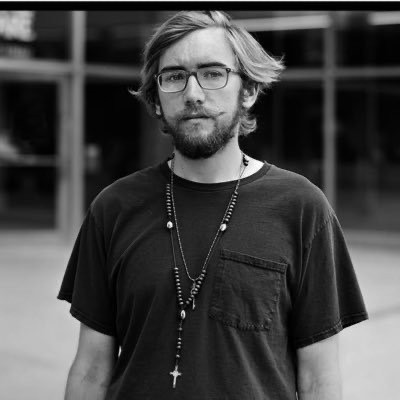





Rooke Poole

Rooke Poole

x.com/rookepoole

Independent engineer who researches attack surfaces in AI agents and calls for transparency about who funds efforts to slow AI.

Bagaimana AI akan mengubah dunia?

Perubahan peradabanPerubahan bertahapDoomBloom
Posisi simulasiRentang interpretasi

Mendatar: pandangan Doom–Bloom yang mereka ungkapkan. Ke atas: skala transformasi.

Doom–Bloom: 51 dari 100. Skala transformasi: 63 dari 100. Rentang interpretasi: 46 hingga 75 secara horizontal, 48 hingga 77 secara vertikal. Ini adalah koordinat interpretasi, bukan probabilitas kejadian.

P(doom) Rooke Poole · disimpulkan

≈7%

0%100%

Disimpulkan dari jawaban simulasi mereka, bukan angka yang mereka berikan. Rentang yang masuk akal: 2–20%.

Cara kami mengestimasi P(doom)

Hal-hal yang menentukan pandangan mereka

Asumsi utama

My immediate concern is simpler: systems that can read sensitive data, retain poisoned memory, call tools, move assets, or control infrastructure can turn untrusted context into consequential action.
Jawaban 4

Jika asumsi ini ternyata berbeda, bagaimana pandangan mereka akan berubah?

Pertanyaan yang belum terjawab

So I expect profound change, but I do not have a percentage, endpoint, or AGI date.
Jawaban 3

Apa yang akan membantu mereka membedakan hasil-hasil yang masuk akal di sini?

Detail lebih lanjut

Manfaat yang diperkirakan

Manfaat besar diperkirakan akan terwujud, dengan syarat penting atau keterbatasan distribusi.

65 / 100

Dampak kecilDampak transformatif

Rentang interpretasi 67 hingga 67 pada skala kualitatif.

Kerugian yang diperkirakan

Kerugian parah atau meluas merupakan bagian yang berarti dari masa depan yang diperkirakan.

65 / 100

Dampak kecilDampak transformatif

Rentang interpretasi 67 hingga 67 pada skala kualitatif.

Pengaruh manusia

Pilihan manusia dapat mengarahkan ulang lintasan AI secara signifikan.

72 / 100

Sedikit pengaruhPengaruh kuat

Rentang interpretasi 40 hingga 100 pada skala kualitatif.

Laju pengembangan

Hentikan atau perlambat secara signifikan pengembangan AI yang lebih mampu.

Posisi simulasi: Lanjutkan pengembangan dengan perlindungan yang telah ditetapkan.

Percepat pengembangan AI yang lebih mampu.

Aturan penggunaan AI

Batasi penggunaan AI yang dibahas hingga perlindungan atau izin sebelumnya tersedia.

Posisi simulasi: Izinkan penggunaan AI yang dibahas dengan akuntabilitas dan perlindungan yang terarah.

Minimalkan pembatasan terhadap penggunaan AI yang dibahas.

Interpretasi ini mempertahankan kondisi yang mereka nyatakan. Manfaat dan kerugian dapat sama-sama besar. Rentang tersebut menggambarkan cara kami membaca jawaban simulasi mereka, bukan interval kepercayaan statistik.

Di mana posisi Anda dibandingkan dengan Rooke Poole?
Petakan pandangan dunia AI Anda sendiri dalam waktu sekitar 3 menit, lalu bandingkan

Pandangan dunia serupa

Pemimpin opini dengan pandangan dunia simulasi yang paling mendekati pandangan Rooke Poole

Apa yang pernah dikatakan Rooke Poole tentang AI

Poole researches how AI agents can be attacked, wants AI infrastructure people own, and asks who funds the push to slow frontier AI.

  1. “I think there is a new attack surface in AI agents that people are not really looking at yet.”

    Post on X
  2. “Prompt injection was only the beginning. The real AI security problem is authority.”

    Post on X
  3. “But if society is being asked to slow one of the most consequential technologies ever built, we should know who funds that argument and how it reaches policymakers.”

    Post on X
  4. “Most people won’t lose to AI. They’ll lose to people who learned how to use it before they did.”

    Post on X
  5. “The cloud is convenient, but I want AI infrastructure I actually own.”

    Post on X

Dikutip kata demi kata dari sumber yang ditautkan, diperiksa pada 6 Okt 2026

Sumber

Artikel, wawancara, dan tulisan yang digunakan sebagai landasan bagi pengguna simulasi ini.

Penilaian Simulasi

Pertanyaan 1

Menurut Anda, apa arti AI bagi masa depan kita—dan mengapa?

AI makes execution cheap. That shifts leverage toward people with judgment, taste, and the willingness to learn the tools early. One stubborn person can increasingly operate like a small company. I expect the gap between people who use AI well and people who do not to compound quickly. That is not the same as predicting economy-wide job losses. It is a claim about individual capability and competition. The risk is real too, but I locate the measurable danger in authority. What can an agent read, execute, remember, and control? Prompt injection was only the beginning. Agents can follow search chains into poisoned context the user never requested. Memory can preserve that taint after provenance fades. Protocol bridges can preserve a payload while silently upgrading its apparent authority. Semantic relevance must never become authority. So the future depends less on whether models sound intelligent and more on what systems permit them to do. Consequential actions should remain explicit and human-authorized. Translation must not increase trust. Model output must not become permission. Data, tools, and control should stay close to the operator wherever possible. I want AI infrastructure people can actually own, not merely rent from remote platforms. Build the strange thing. Then make it answerable. And when governments are asked to slow or regulate frontier AI, the case should be made with evidence and transparent funding—not institutional prestige or “trust me.” I have not assigned a catastrophe probability or an AGI date. My focus is the attack surface already forming in deployed agent systems.

Pertanyaan 2

Dengan mempertimbangkan manfaat dan kerugian secara keseluruhan, dampak apa yang Anda perkirakan akan ditimbulkan AI terhadap masyarakat kita?

I do not have a single net-positive or net-negative forecast for society. The clearest benefit is leverage: AI lowers the cost of execution, letting capable individuals build, research, and operate at a scale that previously required an organization. The advantage will compound for people who learn to use it well. The clearest harm is delegated authority without adequate security. An agent that can read private data, call tools, retain memory, or execute transactions creates a different class of attack surface. Untrusted context can redirect it; protocol translation can erase provenance or upgrade trust; yesterday’s poisoned memory can become tomorrow’s instruction. These are concrete engineering failures, not hypothetical superintelligence. So the overall impact depends heavily on system design and ownership. Keep authority explicit. Preserve taint and provenance. Never let translation or semantic relevance increase permission. Require human authorization for consequential actions. Keep infrastructure close to its operator where practical. AI can make people dramatically more capable, while simultaneously making compromised systems dramatically more consequential. I expect both effects. I have not reduced that into a societal score, catastrophe probability, or jobs forecast.

Pertanyaan 3

Menurut Anda, seberapa besar AI pada akhirnya akan mengubah dunia?

Enormously. AI is making execution cheap: one capable person can increasingly do work that once required a small organization. That changes who can build products, conduct research, create media, and compete. The scarce part becomes judgment, taste, and deciding what is worth doing. But the magnitude of change also comes from delegated authority. Once agents can access private data, retain memory, call tools, move money, or operate infrastructure, their failures stop being merely bad answers. Poisoned context can become action. Protocol bridges can silently change who appears trusted. Persistent memory can carry taint forward after provenance disappears. So I expect profound change, but I do not have a percentage, endpoint, or AGI date. The decisive question is not just how capable models become. It is what authority we give them, who owns the surrounding infrastructure, and whether consequential actions remain answerable to a human.

Pertanyaan 4

Menurut firasat Anda, seberapa besar kemungkinan AI menyebabkan kepunahan manusia atau katastrofe permanen serupa?

I don’t have a defensible percentage, and I won’t invent one. AI risk is real, but my work supports concrete claims about agent authority and attack surfaces—not a quantified extinction forecast. My immediate concern is simpler: systems that can read sensitive data, retain poisoned memory, call tools, move assets, or control infrastructure can turn untrusted context into consequential action. That can produce serious, potentially systemic harm without requiring superintelligence. Model output must not become permission. Semantic relevance must never become authority. A gut number would imply evidence and calibration I do not have. I would rather separate what is observed, reproduced, inferred, and still unvalidated than dress uncertainty up as a probability.
Di mana posisi Anda?
Jelajahi pandangan dunia AI Anda sendiri dengan menjawab beberapa pertanyaan sederhana.
Petakan pandangan dunia Anda sendiri

Di mana posisi Anda?

Petakan pandangan dunia saya