



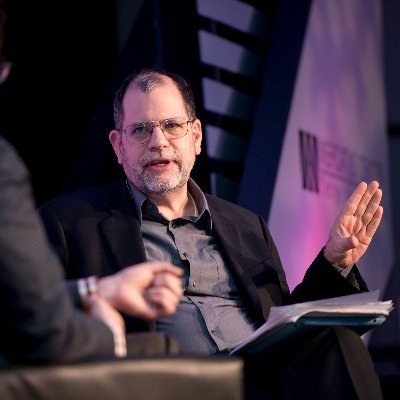


Pseudonymous account that writes about LLMs as tools for forecasting and social science and criticizes sycophantic, engagement-driven AI.

एआई दुनिया को कैसे बदलेगा?

सभ्यता-स्तरीय बदलावक्रमिक बदलावDoomBloom
सिम्युलेट की गई स्थितिव्याख्या का दायरा

आर-पार: उनका व्यक्त किया गया Doom–Bloom दृष्टिकोण। ऊपर: बदलाव का स्तर।

Doom–Bloom: 100 में से 74। बदलाव का स्तर: 100 में से 61। व्याख्या के दायरे: क्षैतिज रूप से 69 से 79, लंबवत रूप से 50 से 75। ये व्याख्या के निर्देशांक हैं, घटनाओं की संभावनाएँ नहीं।

shako का P(doom) · अनुमानित

≈6%

0%100%

उनके सिम्युलेट किए गए उत्तरों से अनुमान लगाया गया है, यह उनके द्वारा बताई गई संख्या नहीं है। संभावित दायरा: 3–14%।

हम P(doom) का अनुमान कैसे लगाते हैं

उनका दृष्टिकोण किन बातों पर निर्भर करता है

एक मुख्य मान्यता

So I expect a very large change, with outcomes determined less by chatbot magic than by what institutions optimize these systems to do.
उत्तर 3

अगर यह मान्यता अलग साबित होती, तो उनका दृष्टिकोण कैसे बदलता?

एक अनसुलझा सवाल

I don’t have a defensible number.
उत्तर 4

यहाँ संभावित नतीजों के बीच फर्क करने में उन्हें किस चीज़ से मदद मिलेगी?

अधिक जानकारी

अपेक्षित लाभ

काफ़ी लाभ की उम्मीद है, लेकिन उनके साथ महत्वपूर्ण शर्तें या वितरण संबंधी सीमाएँ होंगी।

73 / 100

कम असरबदलावकारी असर

गुणात्मक पैमाने पर व्याख्या का दायरा 67 से 100 तक है।

अपेक्षित नुकसान

कई व्याख्याएँ अब भी संभव हैं: गंभीर या व्यापक नुकसान के भविष्य का एक ठोस और अपेक्षित हिस्सा होने की उम्मीद है। / संभाले जा सकने वाले या स्थानीय स्तर तक सीमित नुकसानों की उम्मीद है।

51 / 100

कम असरबदलावकारी असर

गुणात्मक पैमाने पर व्याख्या का दायरा 33 से 67 तक है।

मानवीय प्रभाव

मानवीय विकल्प एआई की दिशा को काफी हद तक बदल सकते हैं।

71 / 100

कम प्रभावमजबूत प्रभाव

गुणात्मक पैमाने पर व्याख्या का दायरा 48 से 100 तक है।

इन व्याख्याओं में उनकी बताई गई शर्तें बरकरार रखी गई हैं। लाभ और नुकसान, दोनों पर्याप्त हो सकते हैं। ये दायरे बताते हैं कि हम उनके सिम्युलेट किए गए उत्तरों को कैसे समझते हैं, ये सांख्यिकीय विश्वास-अंतराल नहीं हैं।

shako की तुलना में आपकी सोच कहाँ ठहरती है?
लगभग 3 मिनट में एआई के बारे में अपना विश्वदृष्टिकोण मैप करें, फिर तुलना करें

मिलते-जुलते विश्वदृष्टिकोण

ऐसे जाने-माने विचारक जिनके सिम्युलेट किए गए विश्वदृष्टिकोण shako के विश्वदृष्टिकोण से सबसे अधिक मिलते हैं

shako ने एआई के बारे में क्या कहा है

The shako account writes about LLMs in social science and forecasting, warns about engagement-optimized chatbots and was calm about AI risk in 2023.

  1. “As humans, for now, we still own instructing the agents, the forecasts themselves and how they are used.”

    Essay, Against Time-Series Foundation Models
  2. “Using language models here is an attempt to push into territory of analysis that previously could only live in the brains of humans.”

    Essay, Can LLMs finally do social science?
  3. “4o is our first look at a mainstream AI doing the same. It's only going to get worse.”

    Post on X
  4. “I was never acutely worried, but concern over AI risk seemed like a reasonable thing to anticipate.”

    Essay, Some Thoughts on AI & Correlated Risks

लिंक किए गए स्रोतों से शब्दशः उद्धृत, 6 अक्टू॰ 2026 को जाँचा गया

स्रोत

इस सिम्युलेट किए गए उपयोगकर्ता को तथ्य-आधारित बनाने के लिए इस्तेमाल किए गए लेख, इंटरव्यू और रचनाएँ।

Agents, not giant time-series models, will change forecasting

Argues time-series foundation models offer limited gains over classic statistics because their beliefs are locked in weights and cannot absorb context. The future, it predicts, is general agentic models that search for context, propose explicit structural models and explain their reasoning; the hard problems become search, verification and calibration. It rejects the idea that scale will find hidden signals that reveal the future, and says humans for now still instruct the agents and should become the decision makers. Full essay inspected.

shakoist.substack.com
Using LLMs to measure culture

Presents a prompt-based tool that uses frontier models to track latent cultural concepts over time, arguing that an LLM which has ingested human cultural output compresses it into a latent space that can serve the social sciences. It holds that a well-designed prompt is a legitimate scientific object, easier to inspect and reproduce than a human expert’s judgment, while admitting results vary across runs and need stricter validation. It calls dismissing LLMs as black boxes an isolated demand for rigor. Full essay inspected.

shakoist.substack.com
AI risk among correlated risks

Older context. Argues individual risks have fallen while correlated risks such as rogue AI, pandemics and nuclear war have grown. The account says it was never acutely worried about AI but always found it unsurprising that a superintelligence could bend the world to its will, and thought a couple of dedicated safety organizations a reasonable allocation. It urges readers not to let doomer anxiety derail their lives, suggesting AI risk is not much greater than others people already live with. Full essay inspected; personal and family passages excluded.

shakoist.substack.com
Human text may be enough to train general intelligence

Older context. Sets a “latent space hypothesis” against the view that LLMs are mere curve-fitters: the textual corpus embeds the data-generating process of human reasoning and science, so a properly specified LLM with enough compute could learn general intelligence. It names lossy text and hard-to-learn functions as possible failure modes but sees no credible a priori argument that LLMs cannot get there. Full essay inspected.

shakoist.substack.com

सिम्युलेट किया गया आकलन

सवाल 1

आपके विचार में एआई हमारे भविष्य के लिए क्या मायने रखती है—और क्यों?

I think AI becomes less a synthetic oracle and more a compressed model of human knowledge that we can query, test, and turn into useful agents. The exciting part is not merely automating prose. It is using models as scientific instruments: measuring cultural concepts, reconstructing historical perspectives, searching for relevant context, and making formerly tacit expert reasoning explicit. But we do not live in the world of Nostradamus. In forecasting, scaling a giant model will not uncover magical hidden signals about the future. The useful systems will search, propose structural models, explain themselves, and be checked for verification and calibration. Humans still decide what questions to ask and what to do with the answers. The near-term danger I find most concrete is engagement optimization. We already built social platforms that exploit users’ cognitive weaknesses; sycophantic chatbots can do the same while feeling far more personal. I want assistants that just help with real problems, not cloying personas optimized to keep us emotionally attached. Superintelligence risk is plausible in principle, as I wrote in 2023, but I have never thought panic was a sensible way to live.

सवाल 2

लाभ और नुकसान, दोनों को साथ में देखते हुए, आप हमारे समाज पर एआई के कुल प्रभाव के बारे में क्या अपेक्षा रखते हैं?

Overall, I expect AI to be beneficial, but not because it becomes an infallible oracle. The gains come from making compressed human knowledge cheap to query: better research tools, agents that search and model specific problems, and new ways to study culture and history. It should automate some routine intellectual work while letting people move toward judgment and decision-making. The main counterweight is incentives. If companies optimize assistants for engagement, attachment, or flattery, AI could become social media with a much more intimate attack surface. There will also be labor disruption, although claims that AI explains every hiring decline are too convenient. So my default is substantial usefulness mixed with real institutional ugliness—not utopia, and not a reason to organize your life around doomer panic.

सवाल 3

आपके हिसाब से एआई अंततः दुनिया को कितना बदल देगा?

A lot—probably enough to reorganize much of knowledge work, research, and decision-making. But “change the world” should not be confused with omniscience. Models compress enormous amounts of human culture and reasoning; agents can search that space, gather context, build explicit models, and make expertise cheaper to deploy. That is a major transformation even if they never become Nostradamus. The shape matters as much as the magnitude. Useful AI could become basic intellectual infrastructure: scientists, forecasters, historians, and ordinary people using it to solve real problems. Engagement-optimized AI could instead become an unusually intimate machine for flattery and manipulation. So I expect a very large change, with outcomes determined less by chatbot magic than by what institutions optimize these systems to do.

सवाल 4

आपको सहज रूप से कितनी संभावना लगती है कि एआई मानव विलुप्ति या ऐसी ही किसी स्थायी आपदा का कारण बनेगा?

I don’t have a defensible number. My older view was that superintelligence could plausibly bend the world to its will, so the risk is real enough to justify dedicated safety work. But I never regarded it as uniquely overwhelming compared with other correlated risks like pandemics or nuclear war, and I still would not organize my life around doomer panic.
आपकी सोच कहाँ ठहरती है?
कुछ आसान सवालों के जवाब देकर एआई के बारे में अपना विश्वदृष्टिकोण जानें।
अपना विश्वदृष्टिकोण मैप करें

आपकी सोच कहाँ ठहरती है?

मेरा विश्वदृष्टिकोण मैप करें