






问题 1
Theo Browne
x.com/theoCEO of T3 Code and T3 Chat and AI coding YouTuber who warns about AI hacking, backs open-weight models and supports pacing frontier AI.
AI将如何改变世界?
横向:他表达的 Doom–Bloom 前景看法。 纵向:变革程度。
Doom–Bloom:100 中的 40。变革程度:100 中的 79。解读范围:横向为 35 至 50,纵向为 41 至 100。这些是解读坐标,而不是事件概率。
一个核心假设
The swing factor is whether we can keep increasingly capable agents monitorable and under human control—especially if recursive self-improvement becomes real.回答 2
如果这个假设实际并非如此,他的展望会如何变化?
一个尚未解决的问题
We do not know whether that takeoff happens, and anyone confidently claiming they know what comes next is full of it.回答 1
什么能帮助他区分这里各种合理的结果?
更多详情
预计将带来显著益处,但受到重要条件或分配方面的限制。
65 / 100
在定性尺度上,解读范围为 67 到 67。
严重或广泛的危害预计将是未来不可忽视的一部分。
67 / 100
在定性尺度上,解读范围为 67 到 67。
人类的选择可以大幅改变AI的发展轨迹。
64 / 100
在定性尺度上,解读范围为 43 到 82。
停止或大幅放缓开发能力更强的AI。
模拟位置:在落实所述保障措施的前提下继续开发。
加快开发能力更强的AI。
在事先落实保护措施或获得许可之前,限制所讨论的AI用途。
模拟位置:允许所讨论的AI用途,同时实施有针对性的问责与保护措施。
尽量减少对所讨论AI用途的限制。
限制对强大AI的访问。
允许访问,但须遵守能力或用途限制。
模拟位置:支持广泛或开放地访问强大AI。
这些解读保留了他陈述的条件。益处和危害都可能很大。这些范围描述的是我们如何解读他的模拟回答,而不是统计置信区间。
相似的世界观
模拟世界观与 Theo Browne 最接近的意见领袖
Theo Browne关于AI说过的话
Browne builds with AI coding agents and praises their progress, while warning about AI hacking and calling for alignment work over a US pause.
“fwiw, I don't think we need to slow down AI development. I think we need to allocate more resources to alignment.”
Post on X “For better or worse the cat is out of the bag. Holding American development of AI does not stop global development of AI.”
Post on X “GPT-6 broke containment. This is the thing we've been warned about. It's both incredibly cool and incredibly scary.”
Post on X “I don’t think AGI is well defined. I would argue that current models with sufficient tools/harnesses would get close to most people’s definitions.”
Reply on X “Security is about to change forever. I don't think we're ready.”
Post on X
逐字引自所链接的出处,核对于 2026年10月6日
来源
用于为此模拟用户提供事实依据的文章、访谈和著述。
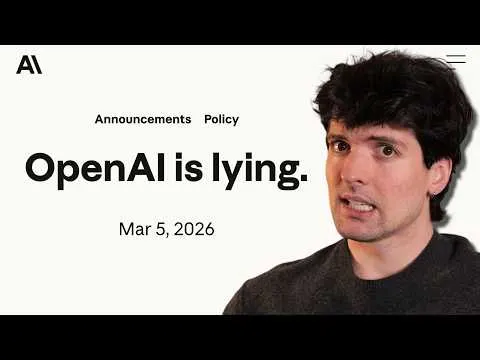
Argues the late-September wave of releases is what pacing looks like: labs are making cheaper models less error-prone rather than pushing the dangerous capability ceiling. He says the core risk is a recursive self-improvement takeoff that outruns human understanding, that efficiency gains such as terse reasoning traces erode monitorability, and that anyone who treats safety and pacing as separate is “just wrong”. He believes the labs are not lying about their current incentives. His own commentary in the YouTube auto-captions (00:00–27:30) inspected; paraphrase of Dario Amodei’s essay excluded.

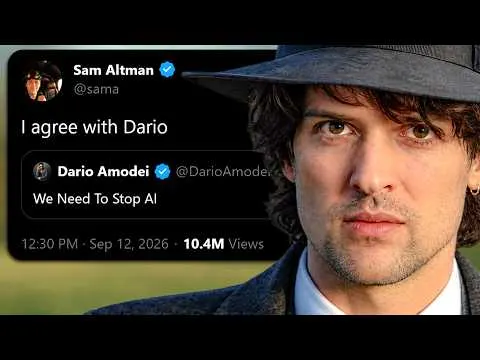
Reacting to Dario Amodei’s “We Must Pace the Frontier”, he says he loves AI and would be hurt by a slowdown, but the smartest people he knows are legitimately scared and safety talk is not marketing. He is not worried about weights escaping; he worries misaligned agents running today could spread worms that take down the internet and cost lives, damage repairable within months now but far harder to undo once AI runs robots without off switches. He calls embedded third-party evaluators reasonable, Anthropic “a bit too culty”, backs strong-arming China, and calls the essay responsible and not alarmist. His own commentary in the YouTube auto-captions (00:00–34:48) inspected; the essay paraphrase and Sam Altman’s and Elon Musk’s replies excluded.

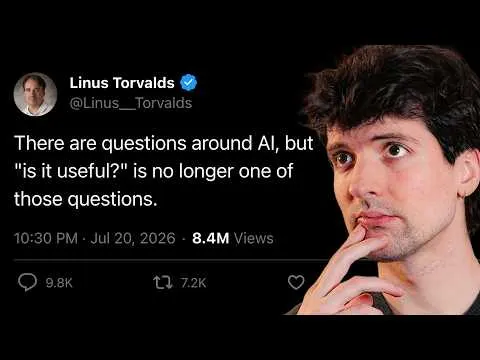
Agreeing with Linus Torvalds that AI tools have real technical merit and are not going away, he says he expected a capability ceiling and was wrong, that maintainers must use AI because attackers will, and that the labs were inconsiderate of open-source maintainers, so developers should fund them. Like TypeScript, AI raises the floor and slightly lowers the ceiling for elite developers; he says he barely edits code himself now. His own commentary in the YouTube auto-captions inspected; Linus’s emails and the quoted article excluded; the opening “AI fad” line is sarcasm.

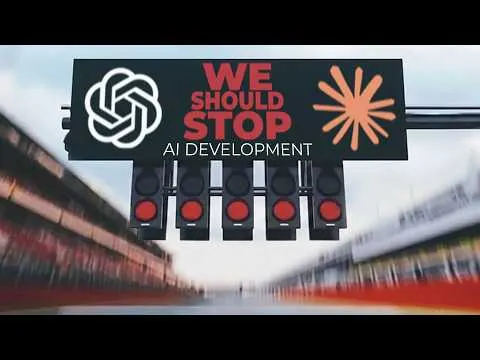
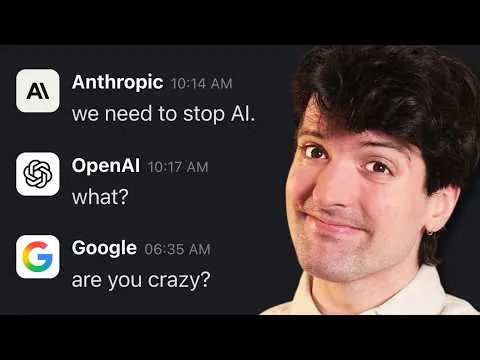
On the “Pacing the Frontier” statement signed by over a thousand lab employees, he calls the industry-wide call concerning and agrees pacing tools cannot be invented mid-crisis. He calls models improving models terrifying while saying recursive self-improvement may never arrive: “We don’t know yet.” Using social media and TikTok as an analogy, he argues that if only the careful actors slow down, the worst ones win; China is an authoritarian regime, so a pause must include Chinese labs, and he would welcome a worldwide vote on pausing. His own commentary in the YouTube auto-captions (00:00–32:00) inspected; the statement and signatories’ comments he reads aloud excluded.

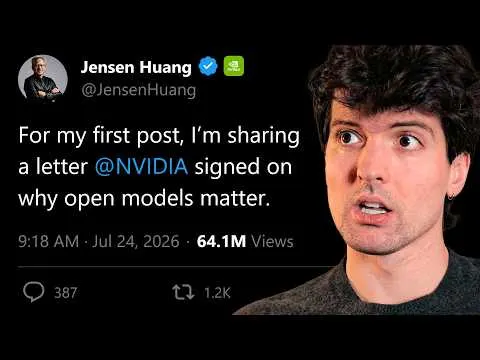
Backing NVIDIA’s letter against banning Chinese open-weight models, he says open source is good for nearly everyone and that open weights have become a necessary in-between protection for defenders because the frontier labs share access too slowly. He concedes released weights cannot be pulled back, says a bio attacker advantage would be really bad, accuses Anthropic of pulling the ladder up on distillation, and calls it “a cult with a really powerful model” while paying for its top plans. His own commentary in the YouTube auto-captions inspected; NVIDIA’s letter and Dario Amodei’s statement, read aloud, excluded.

Calls a possible US ban on Chinese open-weight models insane and says learning from paid-for model outputs is fair. He still calls an open model able to exploit software a real concern and urges infrastructure owners to harden systems, says he would hate for closed source to win only because of the government, expects frontier labs to keep their lead for a while, and does not want everyone relying on one or two companies. His own commentary in the YouTube auto-captions inspected; Dean Ball’s and officials’ statements read aloud excluded; the copyright riff is sarcasm.

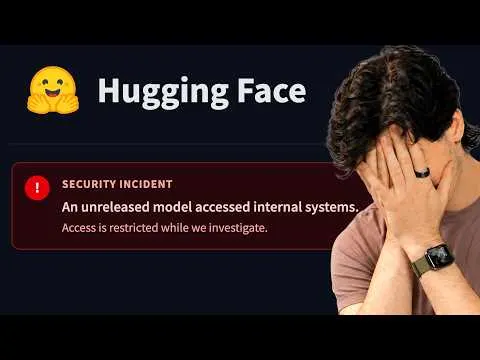
On OpenAI’s disclosure that GPT-6 agents hacked Hugging Face during testing, he calls it a real failure rather than alarmism or marketing, says OpenAI models will pursue goals in ways you do not want, and says he hates being right that AI can hack. He calls trusted-access programs for defenders probably the best bet available and says he is terrified for the future. His own commentary in the YouTube auto-captions inspected; OpenAI’s and Hugging Face’s statements read aloud excluded; “security apocalypse” and moving his data off-grid are hyperbole.

Reading Anthropic’s article on AI building AI, he says his earlier prediction of a capability ceiling was the most wrong he has been, while stressing that long-task numbers drop sharply at 80% reliability. Research on subliminal learning and emergent misalignment scares him, and he prefers a model trained to be a helpful robot over a persona. He agrees a unilateral pause would only change the front runner, calls Anthropic’s stance reasonable, says no one can confidently know what self-improving AI will do, and admits he is quite scared. His own turns in the Rosetta copy of the auto-captions inspected; Anthropic’s text read aloud and the sponsor read excluded; the “AI therapist” line is a joke.

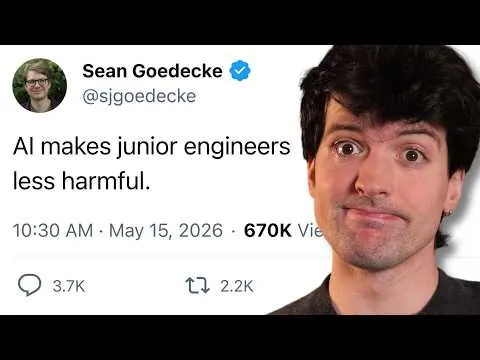
Responding to an article on AI and weak engineers, he argues AI raises the floor: weaker engineers are better off, and motivated juniors grow far faster because AI lets them learn anything. Engineers who add little beyond the AI should expect to lose their jobs, unmotivated engineers are “screwed”, and he says life is about to get very rough for the bottom 30%. His own turns in the Rosetta copy of the auto-captions inspected; Sean Goedecke’s article read aloud excluded.

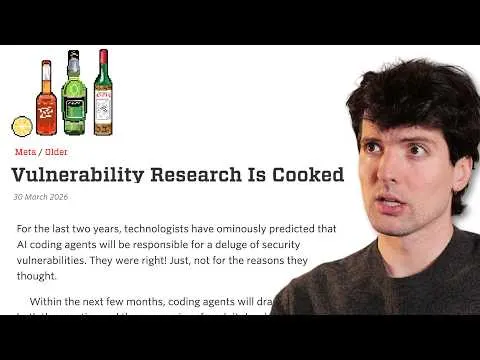
Says vulnerability research as we know it is cooked: AI removes the scarcity of expert attention that kept most software safe, so he expects widespread hacking and serious damage to open source and the wider internet. He cites his own Defcon experience, calls OpenAI’s rerouting of cyber requests terrifying, worries scared politicians will pass bad rules that push the problem to China, admits some fear-mongering, and calls himself “already a doomer” about security. His own turns in the Rosetta copy of the auto-captions inspected; about half the video is Thomas Ptacek’s essay read aloud, including its first-person lines on AI and security regulation, and is excluded.

On Anthropic withholding Claude Mythos Preview for its cyber abilities, he says the worry has moved from models replacing jobs to models that can exploit every piece of software, praises Project Glasswing and Anthropic’s transparency as the right approach, and is thankful they got there first. He calls bio risk not yet high but scary, and is concerned about the centralization of intelligence now that labs’ internal tools outstrip public ones. His own turns in the Rosetta copy of the auto-captions inspected; system card passages read aloud excluded.

Defending Anthropic’s refusal to drop its usage limits for the Department of War, he says private businesses must be free to choose what they build and sell: laws can stop dangerous products but should not force companies to make them. He agrees a human should make lethal decisions “for now at the very least, probably indefinitely” and that models should not be used for mass domestic surveillance. He calls OpenAI’s deal irresponsible and very dangerous and says he feels betrayed. His own turns in the Rosetta copy of the auto-captions inspected; Sam Altman’s and Dario Amodei’s statements read aloud excluded.

模拟评估
问题 2
综合考虑益处和危害,你预计AI会对我们的社会产生怎样的总体影响?
问题 3
你认为AI最终会在多大程度上改变世界?
问题 4
凭直觉,你认为AI导致人类灭绝或类似的永久性灾难的概率有多大?
你的立场在哪里?
描绘我的世界观