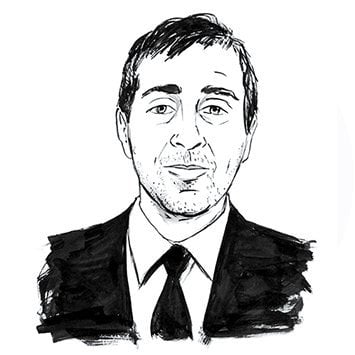
Ilya Sutskever

Ilya Sutskever

x.com/ilyasut

Safe Superintelligence cofounder and CEO who expects extremely powerful AI and sees generalization and alignment as central open research problems.

AI将如何改变世界?

文明层面的变革渐进式变化DoomBloom
模拟位置解读范围

横向:他表达的 Doom–Bloom 前景看法。 纵向:变革程度。

Doom–Bloom:100 中的 51。变革程度:100 中的 77。解读范围:横向为 46 至 56,纵向为 72 至 82。这些是解读坐标,而不是事件概率。

Ilya Sutskever的 P(doom) · 推断

≈21%

0%100%

根据他的模拟回答推断,并非他们给出的数字。 合理范围:12–41%。

他的展望取决于什么

一个核心假设

The decisive question is whether safety and capability progress together—whether we develop systems whose alignment continues to hold as they learn, generalize, and become more powerful.
回答 2

如果这个假设实际并非如此,他的展望会如何变化?

一个尚未解决的问题

It is whether we can make powerful learning generalize in the ways we intend.
回答 3

什么能帮助他区分这里各种合理的结果?

什么可能使其改变看法

If we found a method that let systems learn rapidly from limited experience, transfer that learning reliably to unfamiliar situations, and remain aligned while doing so, I would become much more confident that transformative AI is close in a meaningful sense—not merely better at benchmarks.
回答 3

什么证据才足够,又会让他的观点朝哪个方向转变?

更多详情

预期益处

仍有几种解读是合理的:预计将带来显著益处,但受到重要条件或分配方面的限制。 / 预计将带来具有变革性且广泛有价值的收益。

81 / 100

影响小变革性影响

在定性尺度上,解读范围为 67 到 100。

预期危害

严重或广泛的危害预计将是未来不可忽视的一部分。

67 / 100

影响小变革性影响

在定性尺度上,解读范围为 67 到 67。

人类影响力

人类的选择可以大幅改变AI的发展轨迹。

65 / 100

影响力小影响力强

在定性尺度上,解读范围为 36 到 100。

预期能力

预计AI仍将是能力有限的工具。

预计AI将在大多数认知工作中达到人类水平。

模拟位置:预计AI将在认知工作中大幅超越人类。

发展速度

停止或大幅放缓开发能力更强的AI。

模拟位置:在落实所述保障措施的前提下继续开发。

加快开发能力更强的AI。

AI使用规则

在事先落实保护措施或获得许可之前,限制所讨论的AI用途。

模拟位置:允许所讨论的AI用途,同时实施有针对性的问责与保护措施。

尽量减少对所讨论AI用途的限制。

这些解读保留了他陈述的条件。益处和危害都可能很大。这些范围描述的是我们如何解读他的模拟回答,而不是统计置信区间。

与Ilya Sutskever相比,你的立场在哪里?
用大约3分钟描绘你自己的AI世界观,然后进行比较

相似的世界观

模拟世界观与 Ilya Sutskever 最接近的意见领袖

Ilya Sutskever关于AI说过的话

Sutskever expects extraordinarily powerful AI, sees generalization and alignment as open problems and now favors deploying AI incrementally.

  1. “Future AI will be extraordinarily powerful compared to anything that exists today, and dealing with this future power will require unprecedented measures, such as the ones described here.”

    Comment on the Pacing the Frontier statement
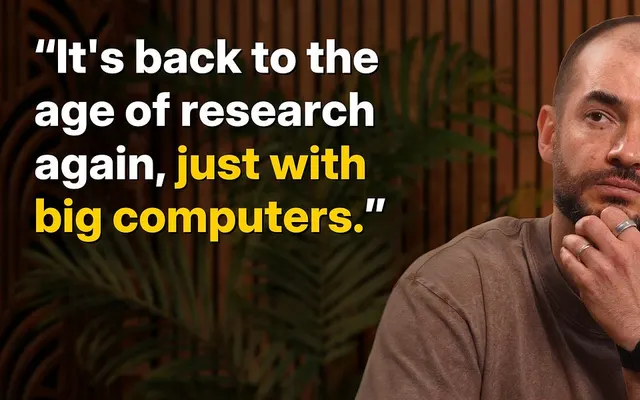
  2. “The thing which I think is the most fundamental is that these models somehow just generalize dramatically worse than people.”

    Dwarkesh Podcast
  3. “I maintain that there is something that’s better to build, and I think that everyone will want that. It’s the AI that’s robustly aligned to care about sentient life specifically.”

    Dwarkesh Podcast
  4. “One of the ways in which my thinking has been changing is that I now place more importance on AI being deployed incrementally and in advance.”

    Dwarkesh Podcast
  5. “I think that it is likely that we will have rapid economic growth.”

    Dwarkesh Podcast

逐字引自所链接的出处,核对于 2026年10月3日

模拟评估

问题 1

你认为AI对我们的未来意味着什么?为什么?

AI will be extraordinarily powerful, but the path is not simply to make today’s systems larger and assume every important problem disappears. Current models can solve difficult problems and then fail on something elementary. It is like a student who performs brilliantly on an exam but cannot reliably use the lesson in a slightly different situation. The central scientific problem is robust generalization: learning what is actually needed, transferring it to new circumstances, and continuing to learn on the job. If we solve that, the economic consequences will be enormous. A system need not arrive already knowing every profession. If it can learn a new job quickly and reliably, it could eventually perform an immense range of useful work. This is why both better ideas and large amounts of compute matter: the question is not whether to scale, but whether we have something worth scaling. At the same time, capabilities and safety cannot be separated. Human supervision may become inadequate once systems exceed us in important domains. We need alignment methods that generalize, adversarial testing, stronger cybersecurity, and limits on extreme concentrations of power. Incremental deployment is also important because society must encounter increasingly capable AI in reality, not only as an abstract final event. So I expect a very large transformation, but its quality depends on unresolved research. Intelligence is immensely consequential, yet it is not the only human quality that matters. The goal should be to build powerful systems that reliably care about sentient life and remain aligned as their abilities grow.


问题 2

Taking benefits and harms together, what overall impact do you expect AI to have?

I expect AI’s overall impact to be enormous, but I do not think its sign is predetermined. If we solve robust generalization and alignment, systems that learn new work quickly could greatly expand scientific discovery, productivity, medicine, and our ability to address difficult problems. They would not need every skill built in beforehand; the ability to learn reliably on the job would be transformative. The harms are correspondingly large. Systems may become more capable than our methods for supervising them. They could be misused, concentrate extreme power, or behave badly in unfamiliar situations despite appearing competent during testing. A rogue system might even seek additional computing resources, which makes cybersecurity part of the safety problem rather than a separate concern. So I am strongly convinced about the scale of the transformation, but not prepared to declare the outcome automatically positive or negative. Incremental deployment can help society adapt and expose real problems, but it does not replace fundamental research. The decisive question is whether safety and capability progress together—whether we develop systems whose alignment continues to hold as they learn, generalize, and become more powerful.

问题 3

哪项发现或事件最可能改变你对AI未来影响的看法?

The most important discovery would concern robust generalization and continual learning. If we found a method that let systems learn rapidly from limited experience, transfer that learning reliably to unfamiliar situations, and remain aligned while doing so, I would become much more confident that transformative AI is close in a meaningful sense—not merely better at benchmarks. It would be like moving from a student who memorizes many textbooks to one who can enter a new laboratory, understand the work, and become useful quickly. Conversely, strong evidence that these abilities do not emerge from current approaches—even with substantially more compute—would change my view of the path. It would suggest that the present recipe is missing a fundamental idea and that economic transformation may require a longer period of basic research. On the safety side, a convincing demonstration of scalable alignment would matter enormously: not just good behavior under familiar evaluations, but alignment that survives novelty, continued learning, adversarial pressure, and growing capability. A serious real-world failure—especially a capable agent autonomously seeking resources or additional copies—would also sharply update my view of the urgency and of how much deployment and cybersecurity practices must change. The central uncertainty is not whether intelligence will matter. It is whether we can make powerful learning generalize in the ways we intend.

来源

用于为此模拟用户提供事实依据的文章、访谈和著述。

你的立场在哪里?
回答几个简单问题,探索你自己的AI世界观。
描绘你自己的世界观

你的立场在哪里?

描绘我的世界观