Shawn Wang

Shawn Wang

x.com/swyx

Latent Space writer and podcast host who covers AI engineering, from building agents on foundation models to testing and verifying what they do.

AI将如何改变世界?

文明层面的变革渐进式变化DoomBloom
模拟位置解读范围

横向:他们表达的 Doom–Bloom 前景看法。 纵向:变革程度。

Doom–Bloom:100 中的 74。变革程度:100 中的 53。解读范围:横向为 69 至 79,纵向为 40 至 60。这些是解读坐标,而不是事件概率。

Shawn Wang的 P(doom) · 推断

≈7%

0%100%

根据他们的模拟回答推断,并非他们给出的数字。 合理范围:4–14%。

他们的展望取决于什么

一个核心假设

Overall, I expect AI to be strongly beneficial if we successfully turn capability into reliable, accessible systems.
回答 2

如果这个假设实际并非如此,他们的展望会如何变化?

什么可能使其改变看法

The biggest update would come from real-world evidence that AI can reliably accelerate hard science—not just produce plausible hypotheses, but contribute to validated advances in medicine, materials, or climate.
回答 3

什么证据才足够,又会让他们的观点朝哪个方向转变?

更多详情

预期益处

预计将带来显著益处,但受到重要条件或分配方面的限制。

68 / 100

影响小变革性影响

在定性尺度上,解读范围为 67 到 67。

预期危害

仍有几种解读是合理的:严重或广泛的危害预计将是未来不可忽视的一部分。 / 预计会出现可控或局部的危害。

52 / 100

影响小变革性影响

在定性尺度上,解读范围为 33 到 67。

人类影响力

人类的选择可以大幅改变AI的发展轨迹。

63 / 100

影响力小影响力强

在定性尺度上,解读范围为 46 到 79。

发展速度

停止或大幅放缓开发能力更强的AI。

模拟位置:在落实所述保障措施的前提下继续开发。

加快开发能力更强的AI。

AI使用规则

在事先落实保护措施或获得许可之前,限制所讨论的AI用途。

模拟位置:允许所讨论的AI用途,同时实施有针对性的问责与保护措施。

尽量减少对所讨论AI用途的限制。

这些解读保留了他们陈述的条件。益处和危害都可能很大。这些范围描述的是我们如何解读他们的模拟回答,而不是统计置信区间。

与Shawn Wang相比,你的立场在哪里?
用大约3分钟描绘你自己的AI世界观,然后进行比较

相似的世界观

模拟世界观与 Shawn Wang 最接近的意见领袖

模拟评估

问题 1

你认为AI对我们的未来意味着什么?为什么?

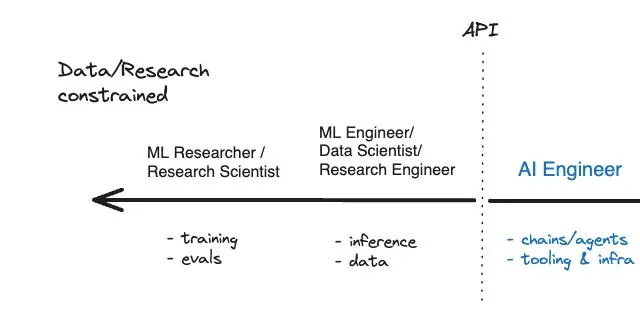
I think AI expands what individuals and small teams can build, learn, and discover—but capability alone does not produce a useful future. The decisive layer is AI engineering: turning foundation models into reliable products through tools, data, evaluations, memory, control flow, infrastructure, and relentless integration work. Coding agents are the clearest example today, and the same pattern can extend into other work performed through software. The largest upside may be science. Applying these systems to medicine, materials, climate, and scientific discovery could matter far more than generating another stream of low-value content. AI can also lower barriers to education and entrepreneurship, even while concentrating wealth and power. I reject the idea that today’s distribution of benefits must become a permanent underclass structure. But autonomy is not reliability. Agents need delegated authority, and authority requires trust and verification. As generated code exceeds humans’ ability to review it manually, automated testing and verification become essential. Memory, infrastructure access, privacy, and biosafety remain real constraints; distributing a powerful model across many companies does not magically make access private or prevent abuse. Open models also matter for sovereign AI and broader participation. So my default frame is neither utopia nor doom: build the harnesses, measure real actions and consequences, and direct engineering talent toward outcomes worth having.

问题 2

Taking benefits and harms together, what overall impact do you expect AI to have?

Overall, I expect AI to be strongly beneficial if we successfully turn capability into reliable, accessible systems. The biggest gains are likely to come from accelerating science—medicine, materials, climate, and discovery—and from giving individuals and small teams more leverage to learn, build, and start companies. But those benefits are not automatic. AI can concentrate wealth, enable abuse, create biosafety risks, and delegate consequential actions to systems that are capable but not dependable. The engineering stack matters: evaluations, memory, permissions, automated testing, verification, privacy, and infrastructure. Open models also matter for sovereign access and broad participation. So I’m optimistic about the opportunity, not complacent about the implementation. I would rather judge deployed systems by their observable actions and real consequences than by impressive demos or reasoning traces. I also would not turn that outlook into an AGI timeline or a numerical forecast.

问题 3

哪项发现或事件最可能改变你对AI未来影响的看法?

The biggest update would come from real-world evidence that AI can reliably accelerate hard science—not just produce plausible hypotheses, but contribute to validated advances in medicine, materials, or climate. That would strengthen my optimism substantially. In the other direction, repeated consequential failures despite strong evaluations, permissions, testing, and verification would weaken it. So would evidence that capable systems make dangerous biological work broadly accessible, or that benefits remain structurally concentrated even as access improves. I care less about a striking demo or an eloquent reasoning trace than about observable actions, reproducible results, and real consequences.

来源

用于为此模拟用户提供事实依据的文章、访谈和著述。

The Rise of the AI Engineer

Describes AI engineering as productizing foundation models with software, data and evaluations.

latent.space
Shawn Wang: writings and talks

First-party current index linking agent engineering work and the 2025 agent-lab essay; establishes scope, not a catastrophe forecast.

swyx.io
Cognition: The Devin is in the Details

Argues agent labs translate model capabilities into useful products through extensive integration and engineering; acknowledges many harnesses are superseded and uncertainty about competition from model labs.

swyx.io
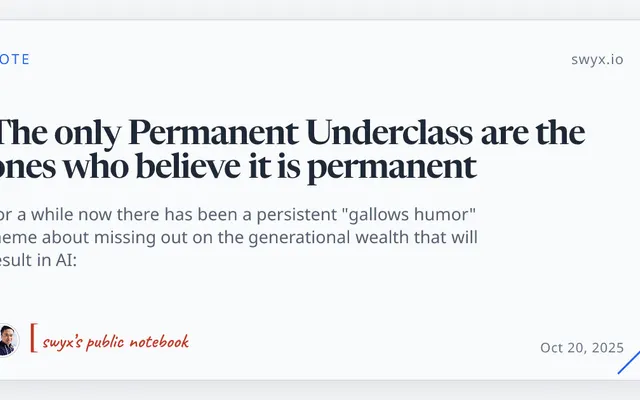
The only Permanent Underclass are the ones who believe it is permanent

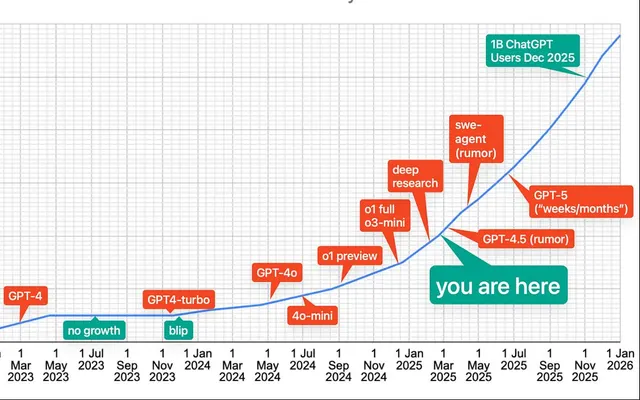
Acknowledges AI-linked wealth concentration but rejects fatalistic permanent-underclass narratives, arguing AI lowers barriers to learning, entrepreneurship and upward mobility for people who exercise agency.

swyx.io
Agent Engineering — keynote essay

His keynote essay treats intent, tools, control flow, planning, memory and delegated authority as essential agent ingredients. Argues improved models, tools and economics create a major engineering opportunity; emphasizes trust and verification rather than equating autonomy with reliability.

latent.space
Agent Labs Thesis — swyx on Unsupervised Learning

Speaker-attributed transcript: at 32:53 he expects coding agents to expand beyond coding; at 40:01–41:18 he raises biosafety concerns and doubts broad enterprise distribution is truly private access. At 44:30–48:58 he identifies memory constraints, revises upward on open models, and favors automated testing and verification as human code review becomes a bottleneck. No numeric p(doom) given.

latent.space
Reality: The Final Eval — swyx with Andon Labs

His own questions at 45:42–47:58 distinguish inaccessible reasoning traces, observable actions and simulations without real consequences for lying. This supports attention to evaluation validity; the guests’ model-behavior findings and risk judgments remain theirs, not his.

latent.space
Agent infrastructure — swyx with Modal CTO Akshat Bubna

At 33:41–36:24 he identifies GPU access as a constraint on autonomous research, questions how widely research loops are used beyond demonstrations, and favors agents provisioning their own infrastructure. Modal deployment and performance claims belong to guest Akshat Bubna.

latent.space
It's Time to Science

Argues applying AI engineering to hard science could be among this century’s most important missions, spanning medicine, materials, climate and AI research. Explicitly avoids assigning AGI or superintelligence timelines; calls for engineering talent to pursue science rather than low-value output.

latent.space
你的立场在哪里?
回答几个简单问题,探索你自己的AI世界观。
描绘你自己的世界观

你的立场在哪里?

描绘我的世界观