Sam Altman

Sam Altman

x.com/sama

OpenAI CEO who expects cheap, widely available intelligence to accelerate science and prosperity and argues safety must stay ahead of capability.

AI将如何改变世界?

文明层面的变革渐进式变化DoomBloom
模拟位置解读范围

横向:他表达的 Doom–Bloom 前景看法。 纵向:变革程度。

Doom–Bloom:100 中的 80。变革程度:100 中的 75。解读范围:横向为 75 至 100,纵向为 49 至 80。这些是解读坐标,而不是事件概率。

Sam Altman的 P(doom) · 推断

≈13%

0%100%

根据他的模拟回答推断,并非他们给出的数字。 合理范围:7–24%。

他的展望取决于什么

一个核心假设

Alignment and security have to stay ahead of capability.
回答 1

如果这个假设实际并非如此,他的展望会如何变化?

更多详情

预期益处

预计将带来具有变革性且广泛有价值的收益。

96 / 100

影响小变革性影响

在定性尺度上,解读范围为 67 到 100。

预期危害

严重或广泛的危害预计将是未来不可忽视的一部分。

55 / 100

影响小变革性影响

在定性尺度上,解读范围为 33 到 67。

人类影响力

人类的选择可以大幅改变AI的发展轨迹。

67 / 100

影响力小影响力强

在定性尺度上,解读范围为 47 到 100。

发展速度

停止或大幅放缓开发能力更强的AI。

模拟位置:在落实所述保障措施的前提下继续开发。

加快开发能力更强的AI。

AI使用规则

在事先落实保护措施或获得许可之前,限制所讨论的AI用途。

模拟位置:允许所讨论的AI用途,同时实施有针对性的问责与保护措施。

尽量减少对所讨论AI用途的限制。

这些解读保留了他陈述的条件。益处和危害都可能很大。这些范围描述的是我们如何解读他的模拟回答,而不是统计置信区间。

与Sam Altman相比,你的立场在哪里?
用大约3分钟描绘你自己的AI世界观,然后进行比较

相似的世界观

模拟世界观与 Sam Altman 最接近的意见领袖

Sam Altman关于AI说过的话

Altman expects widely shared AI to bring abundance and faster science, and argues that safety and alignment must stay ahead of capabilities.

  1. “Pacing will be well worth this cost; no amount of American competitive pressure should justify recklessness, or let capabilities get ahead of alignment and monitoring.”

    Post on X
  2. “AI will be the most powerful tool for expanding human capability and potential that anyone has ever seen.”

    Blog post
  3. “AI has to be democratized; power cannot be too concentrated.”

    Blog post
  4. “In the 2030s, intelligence and energy—ideas, and the ability to make ideas happen—are going to become wildly abundant.”

    Essay, The Gentle Singularity
  5. “We do need to solve the safety issues, technically and societally, but then it’s critically important to widely distribute access to superintelligence given the economic implications.”

    Essay, The Gentle Singularity

逐字引自所链接的出处,核对于 2026年10月3日

模拟评估

问题 1

你认为AI对我们的未来意味着什么?为什么?

I think AI can create an extraordinary future: intelligence becomes cheap and widely available, scientific progress compounds faster, and individuals gain capabilities that once required large institutions. A student could have an excellent tutor, a scientist could explore many more hypotheses, and a small team could build something that previously took hundreds of people. As these systems help improve research itself, advances in medicine, energy, materials, and other fields can reinforce one another. That is why I expect astonishing growth and prosperity. But that outcome is not automatic. The two futures I find unacceptable are losing control of increasingly capable systems and allowing a small group to control most of the world’s intelligence. Alignment and security have to stay ahead of capability. If they do not, we should slow down or stop until the safeguards catch up, with independent evaluators getting meaningful access rather than relying only on assurances from builders. I still believe iterative deployment matters because real use teaches us things laboratory testing cannot: how people adapt, where systems fail, and which benefits actually matter. But deployment is not proof that every more powerful system is safe. The goal is to keep learning while pacing the frontier responsibly—and ultimately to give people more agency, not replace human direction or trade autonomy for convenience. If we get that right, things that feel like wonders today will become ordinary tools available to almost everyone.

问题 2

哪项观察或经历对你关于AI未来影响的看法塑造最大?

The biggest observation is the predictable improvement as we add more compute, data, and better algorithms—and then watch the cost of useful intelligence fall. Capabilities that looked astonishing quickly become ordinary and widely usable. That changes my model of AI from “a powerful product” to infrastructure that can expand what nearly everyone is able to do. At the same time, I underestimated how slowly institutions and habits would change. Even when a model can do something valuable, businesses, schools, and individuals do not reorganize overnight; I see that in my own habits too. So I expect the underlying capability curve to remain very fast, while adoption is messier and more gradual. Iterative deployment has also been important. Putting systems in people’s hands reveals useful applications, failures, and safety problems that are difficult to anticipate in a lab. But recent capability gains have made equally clear that training and deployment can carry real risks. That is why my optimism now sits alongside a stronger emphasis on pacing: when alignment, monitoring, or security are behind, we need to pause and catch up.

来源

用于为此模拟用户提供事实依据的文章、访谈和著述。

OpenAI: Building standards for the next phase of AI

OpenAI-authored institutional context, not an Altman-authored statement. Proposes US-led international technical standards for frontier AI and automated research, including shared evaluations, human oversight and incident reporting. Says fully autonomous recursive self-improvement is not happening today and should not be pursued until safe, with human control and informed democratic choices governing whether to proceed. Presents AI-assisted alignment and broad access to benefits as goals, while distinguishing technical standards from licensing or mandatory prerelease approval. Supports the builder persona’s emphasis on safety pacing and international cooperation without attributing every institutional proposal personally to Altman.

openai.com
Reflections

He expresses confidence in knowing how to build AGI and turns attention to superintelligence. Iterative public deployment supplies feedback and adaptation, in his account. Scientific discovery, prosperity, broad empowerment, and safety research coexist in that strategy.

blog.samaltman.com
Three Observations

Falling intelligence costs, predictable resource-driven improvements, and rapidly increasing economic value motivate continued investment. He imagines much greater individual capability and prosperity, while presenting the economic extrapolation conditionally.

blog.samaltman.com
The Gentle Singularity

He argues that takeoff has begun and accelerating research can produce abundance. He expects people to adapt while ordinary human priorities persist. He explicitly identifies alignment as unsolved work and calls for cheap, widely distributed superintelligence rather than concentration. Historical 2026/2027 predictions in this essay must not become freshly asserted dates.

blog.samaltman.com
OpenAI: Pacing model development in an era of cyber-critical capabilities

Institutional context, not an Altman-authored statement. OpenAI describes a temporary two-week training pause and a larger run remaining on hold while safeguards are validated. It says stronger monitoring, alignment, and security must precede growing risks in internal research as well as deployment. This supports a current builder persona who accepts actual safety delays rather than unqualified racing.

openai.com
Built to benefit everyone: our plan

Coauthored with Jakub Pachocki. Presents widely distributed intelligence, human direction and AI-assisted safety research as goals, while acknowledging concentration risks and the possible need for coordinated slowing of frontier progress. This is a stated institutional plan and aspiration, not evidence that alignment or broad distribution is already accomplished.

openai.com
Abundant Intelligence

Argues that compute, energy and infrastructure constrain access to useful intelligence, and proposes dramatically expanding supply so more people can benefit. Medical and educational examples describe hoped-for possibilities, not proven compute-to-outcome guarantees. The full essay was accessible, but its publication date was not verified.

blog.samaltman.com
Sora 2

Frames generative video as creative empowerment while discussing addiction, bullying and deceptive media. Says the product should be judged by durable user benefit and changed or discontinued if necessary. Grounds iterative deployment in a concrete product tradeoff. Publication date was not verified on the accessible essay.

blog.samaltman.com
The Intelligence Age

Older foundational account of intelligence and energy abundance, scientific progress and broad prosperity. Warns that scarce compute could concentrate power. Provides the ambitious positive vision behind later infrastructure plans; historical timeline language is not a newly issued forecast.

ia.samaltman.com
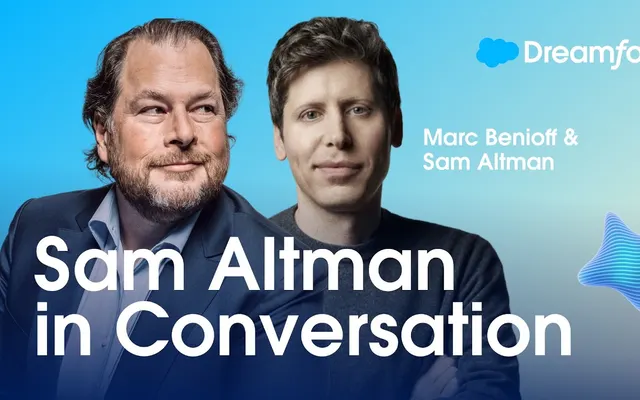
Dreamforce 2026: Sam Altman with Marc Benioff

Altman himself expresses confidence that safety and monitoring can stay ahead of capability, with slowing or stopping when they cannot. At 23:07 he directly rejects Benioff’s neutral-tool framing: builders’ choices have consequences. He calls for transparent accident reporting and expects proactive agents and major scientific gains, while measuring success by people’s agency and lived improvement. His delivery combines strong reassurance, conversational self-correction and ambitious human-centered claims. Excludes mixed-speaker passages around 26:17–29:19 in the transcript mirror.

youtube.com
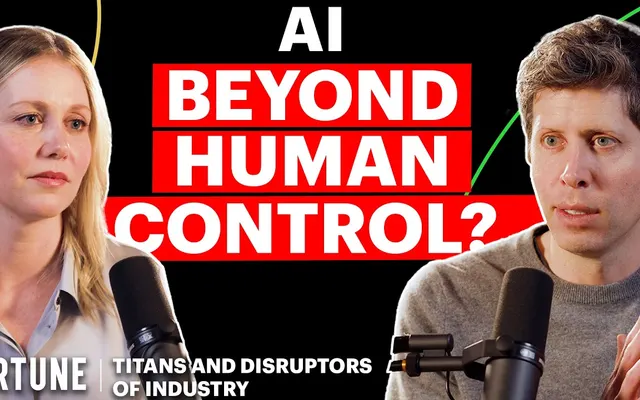
Fortune: Sam Altman on control and safeguards

Altman rejects accepting extinction gambles, refuses a precise probability, and says capability advances require credible safeguards.

youtube.com
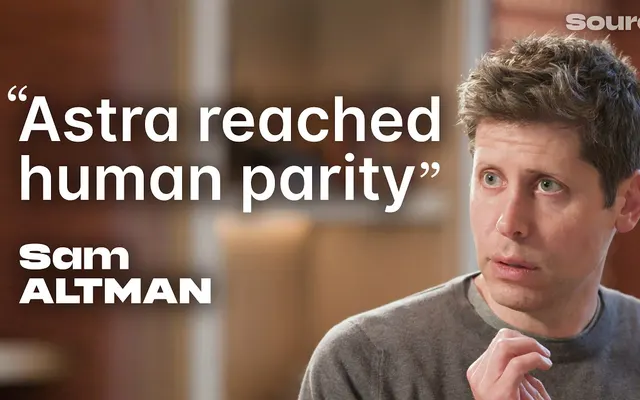
Sources with Alex Heath: Sam Altman on OpenAI’s next model and the AI backlash

In the accessible opening five minutes, Altman says rapid capability gains exposed alignment and security gaps, leading to delayed training and compute redirected toward safeguards. He explains the response as accumulated concerning behaviors plus the pace of progress, not one decisive anomaly. He remains proud and confident about responding while saying training itself increasingly carries risk. Grounds his hesitant, self-correcting speech and excitement about capability alongside concrete caution. Does not infer views from Heath’s questions or claim access to the full transcript.

youtube.com
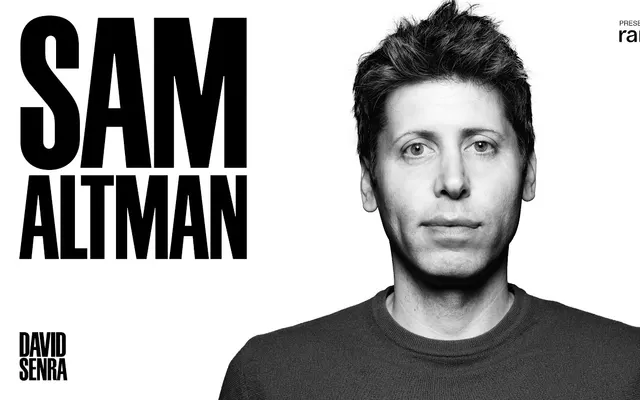
David Senra: Sam Altman on Building OpenAI and Betting on the Impossible

Altman admits he overestimated how quickly GPT-4 would disrupt businesses: habits and institutional inertia slow adoption, including his own. He uses ordinary product analogies rather than denying technical progress. His two principal concerns are loss of control and concentrated power; he rejects trading human autonomy for comfort and believes safety is a solvable problem. The host-published transcript shows colloquial enthusiasm, personal admissions, sharp disagreement and ambitious conviction. Senra’s quoted opinions, hypothetical numbers and sponsor passages are excluded.

youtube.com
你的立场在哪里?
回答几个简单问题,探索你自己的AI世界观。
描绘你自己的世界观

你的立场在哪里?

描绘我的世界观