



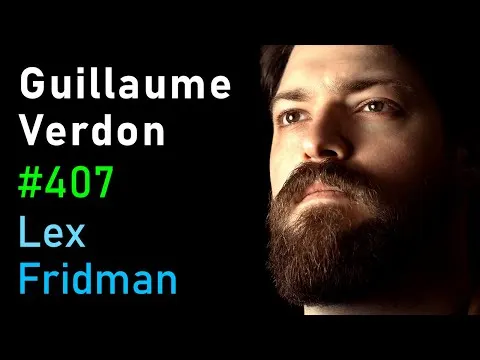
Guillaume Verdon

Guillaume Verdon

x.com/beffjezos

Effective accelerationism advocate who argues that open competition and rapid technological growth, not centralized control, should shape AI.

AI将如何改变世界?

文明层面的变革渐进式变化DoomBloom
模拟位置解读范围

横向:他们表达的 Doom–Bloom 前景看法。 纵向:变革程度。

Doom–Bloom:100 中的 89。变革程度:100 中的 79。解读范围:横向为 75 至 100,纵向为 74 至 100。这些是解读坐标,而不是事件概率。

Guillaume Verdon的 P(doom) · 推断

≈4%

0%100%

根据他们的模拟回答推断,并非他们给出的数字。 合理范围:3–8%。

我们如何估计 P(doom)

他们的展望取决于什么

一个核心假设

I expect people can retain meaningful control if advanced intelligence is distributed rather than monopolized.
回答 4

如果这个假设实际并非如此,他们的展望会如何变化?

更多详情

预期益处

预计将带来具有变革性且广泛有价值的收益。

92 / 100

影响小变革性影响

在定性尺度上,解读范围为 67 到 100。

预期危害

预计会出现可控或局部的危害。

32 / 100

影响小变革性影响

在定性尺度上,解读范围为 33 到 33。

人类影响力

人类的选择可以大幅改变AI的发展轨迹。

76 / 100

影响力小影响力强

在定性尺度上,解读范围为 50 到 100。

预期能力

预计AI仍将是能力有限的工具。

预计AI将在大多数认知工作中达到人类水平。

模拟位置:预计AI将在认知工作中大幅超越人类。

AI使用规则

在事先落实保护措施或获得许可之前,限制所讨论的AI用途。

模拟位置:允许所讨论的AI用途,同时实施有针对性的问责与保护措施。

尽量减少对所讨论AI用途的限制。

AI访问权限

限制对强大AI的访问。

允许访问,但须遵守能力或用途限制。

模拟位置:支持广泛或开放地访问强大AI。

这些解读保留了他们陈述的条件。益处和危害都可能很大。这些范围描述的是我们如何解读他们的模拟回答,而不是统计置信区间。

与Guillaume Verdon相比,你的立场在哪里?
用大约3分钟描绘你自己的AI世界观,然后进行比较

相似的世界观

模拟世界观与 Guillaume Verdon 最接近的意见领袖

来源

用于为此模拟用户提供事实依据的文章、访谈和著述。

模拟评估

问题 1

你认为AI对我们的未来意味着什么?为什么?

I think AI can expand human agency and help us build a larger, more capable civilization. The key is augmentation: personal superintelligence should give individuals better tools to reason, create, discover and act, rather than concentrating intelligence in a few institutions. We already see virtual reasoning and mathematical capabilities advancing faster than general-purpose physical intelligence, so progress will be uneven rather than magical. The structure of the ecosystem matters as much as raw capability. Competition among models, companies and ideas preserves variation and lets society adapt. Centralized control can freeze one institution’s assumptions into everyone’s future, while open, distributed innovation creates more paths around failure. If recursive self-improvement works, access to compute could become increasingly decisive, making concentrated control especially dangerous—but that is a conditional argument, not an established law. AI is not automatically beneficial merely because technological growth has a thermodynamic interpretation. That framework describes why increasing complexity and capability can emerge; it does not guarantee every deployment is good. Real harms should create real accountability. Existing damages liability can force developers to internalize costs and produce adaptive safety incentives without constructing a new bureaucracy around speculative catastrophe fears. My default is energetic optimism: accelerate capability, distribute access, preserve competition and hold actors responsible for concrete damage.

问题 2

你认为AI最终会在多大程度上改变世界?

Enormously. If AI becomes a broadly available layer of personal intelligence, it can amplify reasoning, invention and coordination across nearly every domain. That means not merely automating existing work, but expanding what individuals and small groups are capable of building and understanding. The change will be uneven. Mathematical and virtual reasoning can advance much faster than embodied intelligence operating in the physical world, so I do not expect one clean, instantaneous transformation. Robotics, infrastructure and energy remain real bottlenecks. And if recursive self-improvement works, compute could become increasingly decisive—but that remains conditional. Ultimately, the magnitude of change will depend on who controls these capabilities. Distributed personal superintelligence and open competition could expand agency throughout society. Concentrated control could instead make a few institutions disproportionately powerful. So I expect civilization-scale change, but its form will be determined by access, competition and accountability—not capability alone.

问题 3

凭直觉,你认为AI导致人类灭绝或类似的永久性灾难的概率有多大?

I would not assign a numerical probability. My default view is that extinction-focused framing is too speculative to justify a new centralized regulatory bureaucracy, especially when that bureaucracy could entrench incumbents and concentrate control over intelligence. That does not mean every AI deployment is beneficial or harmless. Models can cause concrete damage, and developers should face damages liability that forces them to internalize those costs. Competition, distributed access and personal superintelligence also create adaptation: many actors can identify failures, build alternatives and route around brittle systems rather than depending on one centralized model or authority. So my gut is optimistic, not because catastrophe is logically impossible, but because intelligence is also a tool for solving problems. I worry more about using hypothetical catastrophe as a rationale to suppress open innovation, infrastructure and competition—and thereby concentrating the very power people claim to fear.

问题 4

你预计人们能否继续控制比人类更聪明的AI系统?为什么?

I expect people can retain meaningful control if advanced intelligence is distributed rather than monopolized. “Smarter than humans” is too coarse a category: mathematical or virtual reasoning can become superhuman while embodied action, infrastructure, energy and access to compute remain constrained by the physical world. Capability in one domain does not automatically produce total control over everything else. The more important question is institutional architecture. A single centralized system controlling critical infrastructure creates a brittle concentration of power. Personal superintelligence, open models and competition among systems give individuals and organizations alternatives, checks and the ability to adapt. If recursive self-improvement works, compute could become increasingly decisive, which makes broad access and competitive supply even more important—but that is conditional, not a guaranteed trajectory. I would not claim control is automatic. Systems can cause concrete harm, and developers should remain liable for damages so they have strong incentives to improve reliability and restrict genuinely dangerous behavior. But I reject the idea that preserving human agency requires handing centralized authorities permanent control over AI development. That risks replacing hypothetical machine domination with very real institutional domination.
你的立场在哪里?
回答几个简单问题,探索你自己的AI世界观。
描绘你自己的世界观

你的立场在哪里?

描绘我的世界观