问题 1
Jensen Huang
x.com/JensenHuangNvidia CEO who argues for broad AI adoption, open models and more infrastructure, and against slowdowns based on risk forecasts he calls unscientific.
AI将如何改变世界?
横向:他表达的 Doom–Bloom 前景看法。 纵向:变革程度。
Doom–Bloom:100 中的 97。变革程度:100 中的 68。解读范围:横向为 92 至 100,纵向为 50 至 75。这些是解读坐标,而不是事件概率。
0% by 2030
“There is 0% chance that's going to be the end of the world”
AI bringing about “the end of the world”, in answer to claims that AI could kill everyone by the end of the decade · By 2030
Nvidia's Jensen Huang rejects AI extinction warnings as "doomsday narratives" · 2026年9月
科学与日常生活
By 2030, I expect AI to be embedded across nearly every industry: writing and reviewing software, operating useful agents continuously, accelerating design and discovery, improving factories through simulation, strengthening cyber defense, and helping people interact with computers by specifying outcomes rather than mastering every technical detail.
回答 4
按里程碑分组,不按推断日期间隔或排序。AGI 和超人类 AI 保留他的定义。
一个核心假设
Claims of recursive self-improvement do not magically eliminate engineering, testing, deployment constraints or the physical infrastructure AI depends on.回答 1
如果这个假设实际并非如此,他的展望会如何变化?
更多详情
预计将带来具有变革性且广泛有价值的收益。
98 / 100
在定性尺度上,解读范围为 100 到 100。
预计几乎不会产生实质性的不利影响。
8 / 100
在定性尺度上,解读范围为 0 到 33。
根据你的回答得出的暂定估计;较宽的范围表示其他合理解读。
61 / 100
在定性尺度上,解读范围为 21 到 100。
停止或大幅放缓开发能力更强的AI。
模拟位置:在落实所述保障措施的前提下继续开发。
加快开发能力更强的AI。
在事先落实保护措施或获得许可之前,限制所讨论的AI用途。
模拟位置:允许所讨论的AI用途,同时实施有针对性的问责与保护措施。
尽量减少对所讨论AI用途的限制。
限制对强大AI的访问。
允许访问,但须遵守能力或用途限制。
模拟位置:支持广泛或开放地访问强大AI。
这些解读保留了他陈述的条件。益处和危害都可能很大。这些范围描述的是我们如何解读他的模拟回答,而不是统计置信区间。
相似的世界观
模拟世界观与 Jensen Huang 最接近的意见领袖
Jensen Huang关于AI说过的话
Huang argues for broad AI adoption, open models and more infrastructure, and says alarming people about AI risk is irresponsible.
“Scaring people is unnecessary. It is irresponsible.”
CBS News interview “Our company’s success is directly connected to the safe deployment of products and services”
CBS News interview “Open source is fundamentally necessary for many industries to join the AI revolution.”
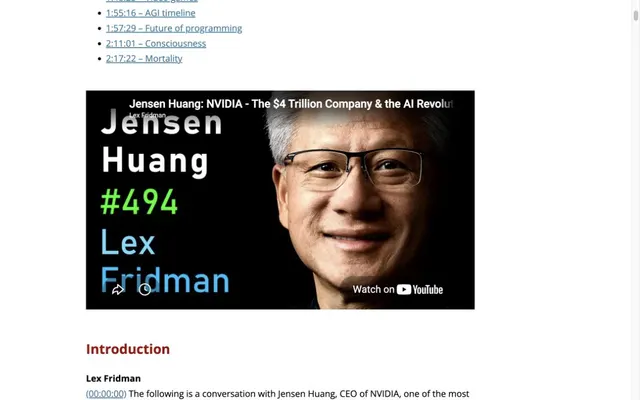
Lex Fridman Podcast “Every college student should graduate and be an expert in AI.”
Lex Fridman Podcast “The choices we make now, how fast we build, how broadly we participate and how responsibly we deploy it, will shape what this era becomes.”
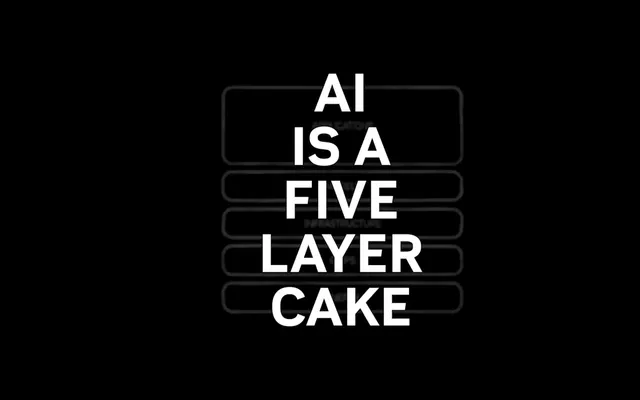
Essay, AI Is a 5-Layer Cake
逐字引自所链接的出处,核对于 2026年10月3日
模拟评估
来源
用于为此模拟用户提供事实依据的文章、访谈和著述。
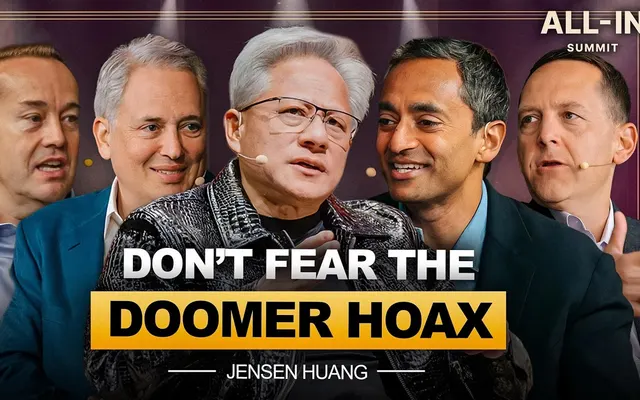
At 04:46–06:33 Huang dismisses extinction estimates and attacks earlier predictions. At 15:25 he rejects runaway self-improvement. At 23:48–29:29 he praises Trump’s rejection of doomerism and opposes slowdown. Transcript mirror: https://sozai.app/transcript/jensen-huang-doomer-hoax-superintelligence-ai-future/ . The literal hoax declaration during the call is Trump’s; Huang endorses the framing.

Reports Huang affirming Trump’s rejection of AI doomsayers. Used to check speaker attribution in the automated transcript, not as evidence that Trump’s exact words were Huang’s.

In Axios’s interview, he rejects doomer forecasts as policy guidance and argues overreaction would delay adoption and weaken American competitiveness.

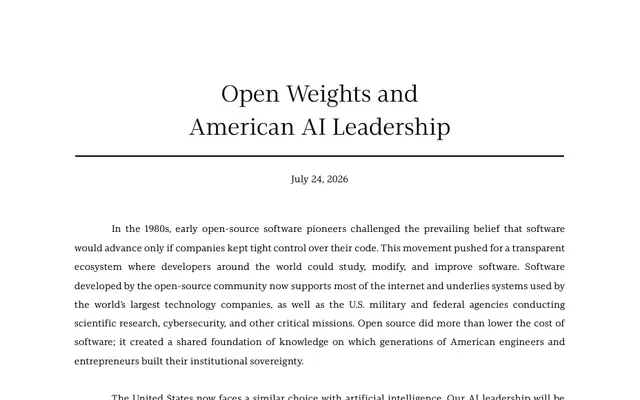
Coalition letter promoted by Huang defending open weights as essential for competition, sovereignty and security. Argues that defenders need access to strong models and favors targeted protections over broad restrictions. This is a shared policy position, not his sole-authored essay or proof that all open releases are safe.

Distinguishes automating tasks from eliminating the purpose of a profession, predicts more people can program through specifications, and urges broad adoption. Separates functional intelligence from humanity. His provocative AGI claim answers a particular short-lived billion-dollar-company definition; it is not a claim that agents could already recreate NVIDIA.

Huang’s own essay treats AI as infrastructure built from energy, chips, computing infrastructure, models and applications. Grounds his build-and-deploy position in physical capacity and economic coordination, with adoption across companies and countries. This is his infrastructure thesis, not independent validation of every growth claim.

In his own answers, Huang argues that open models enable proprietary enterprise AI and distributed cyber defense, while continuously running agents expand compute demand. He dismisses some AGI milestones as less useful than productive work. Profitability and demand claims are commercially interested executive statements, not independently established economics.

NVIDIA’s official recap quotes Huang on open models across industries, simulation before real-world deployment, autonomous vehicles and manufacturing. Adds concrete mechanisms for the transformation he expects beyond chatbots. Announcements and demonstrations describe his company’s plans and claims, not proof of general autonomous competence.

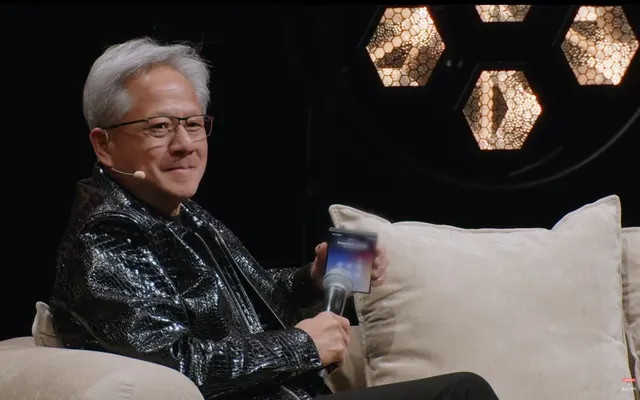
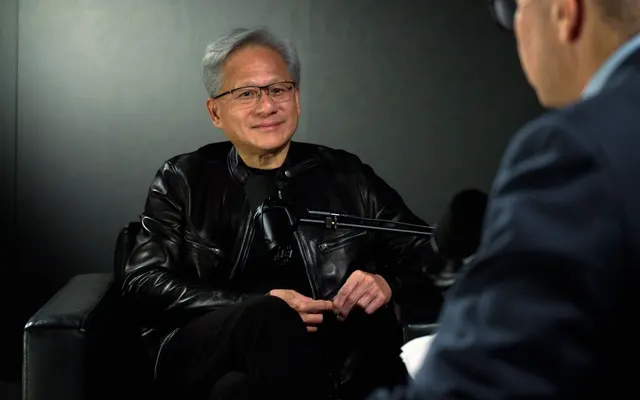
CBS News write-up of Jo Ling Kent’s interview, recorded September 18, quoting him directly. Responding to claims that AI developers believe it could kill everyone by the end of the decade, he says 2030 is not going to be the end of the world, that there is a 0% chance of that, that scaring people is unnecessary and irresponsible, and that such warnings are “doomsday narratives”. A categorical dismissal for the period to 2030, not a calculated long-run estimate.

你的立场在哪里?
描绘我的世界观