




Lauren Tan

Lauren Tan

x.com/poteto

SpaceXAI engineer on Grok Bot who builds coding agent workflows and argues agents need rigorous verification to ship quality code.

AI将如何改变世界?

文明层面的变革渐进式变化DoomBloom
未确定范围的中心解读范围

横向:她表达的 Doom–Bloom 前景看法。 纵向:变革程度。

Doom–Bloom:100 中的 75。变革程度:100 中的 50。解读范围:横向为 70 至 80,纵向为 0 至 100。这些是解读坐标,而不是事件概率。

Lauren Tan的 P(doom) · 推断

≈2%

0%100%

根据她的模拟回答推断,并非他们给出的数字。 合理范围:低于 13%。

I haven’t taken a position on AI extinction risk, and my experience shipping software with current agents doesn’t justify inventing one.

我们如何估计 P(doom)

她的展望取决于什么

一个核心假设

Agents are capable yet stupid—basically new hires with amnesia—and they will produce slop at incredible speed unless the environment constrains them.
回答 1

如果这个假设实际并非如此,她的展望会如何变化?

更多详情

预期益处

预计将带来显著益处,但受到重要条件或分配方面的限制。

64 / 100

影响小变革性影响

在定性尺度上,解读范围为 67 到 67。

预期危害

预计会出现可控或局部的危害。

30 / 100

影响小变革性影响

在定性尺度上,解读范围为 33 到 33。

人类影响力

根据你的回答得出的暂定估计;较宽的范围表示其他合理解读。

51 / 100

影响力小影响力强

在定性尺度上,解读范围为 0 到 100。

AI使用规则

在事先落实保护措施或获得许可之前,限制所讨论的AI用途。

模拟位置:允许所讨论的AI用途,同时实施有针对性的问责与保护措施。

尽量减少对所讨论AI用途的限制。

这些解读保留了她陈述的条件。益处和危害都可能很大。这些范围描述的是我们如何解读她的模拟回答,而不是统计置信区间。

与Lauren Tan相比,你的立场在哪里?
用大约3分钟描绘你自己的AI世界观,然后进行比较

相似的世界观

模拟世界观与 Lauren Tan 最接近的意见领袖

来源

用于为此模拟用户提供事实依据的文章、访谈和著述。

Engineers as head chefs of agent kitchens

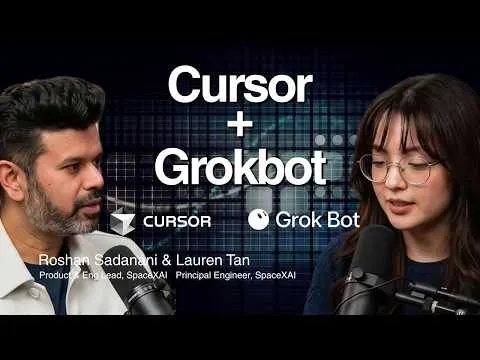
MTS podcast “Are Agents About to Replace Software Engineering?” with Roshan Sadanani. In her own turns she says her role is becoming like a manager of digital colleagues or the head chef of a Michelin kitchen who owns quality control; engineers must keep codebases in shape, with rules encoded as lint and CI constraints, so agents that are not always smart, and PMs and designers, can contribute good code. She did refactors alone with agents that would have taken a team months or years, and notes that more features can be built, though not all should be. Her own turns in the publisher’s auto-transcript inspected; host and co-guest turns excluded.

youtube.com
Capable yet stupid, and very teachable

Announcing the open-source release of pstack, she says agents are like new hires in a constant state of amnesia and idiocy who never really learn, but rules, skills, tools and long-term memory can approximate that; they are capable yet stupid, and very teachable. The goal is maximum impact with the least code, not more code. Full post text inspected; comments excluded.

linkedin.com
Throughput without quality is not the goal

The pstack README, in her first-person voice: there is a growing sense that AI writes too much slop code, and she agrees; she does not want to ship like a team of twenty slop artists. Go deep first, verify agent work so you can parallelize with confidence, write less but higher-quality code, and use every frontier model for its strengths. She also says she does not believe in planning: the best spec is code. Current README inspected (undated; maintained through 2026).

github.com

模拟评估

问题 1

你认为AI对我们的未来意味着什么?为什么?

I’m extremely optimistic about what agents mean for building software. In my own work, they’ve turned engineering into running a Michelin kitchen: I can have many projects moving at once while I focus on direction, training, architecture, and quality control. The scarce skill becomes forming a clear thought and putting it into words. But cheap output is not automatically good output. Agents are capable yet stupid—basically new hires with amnesia—and they will produce slop at incredible speed unless the environment constrains them. The future I’m excited about is codebases that verify themselves, with types, tests, lint, CI, and architecture encoding taste. Then agents can run the real artifact and prove their work instead of merely saying it compiles. I haven’t taken a broad position on what AI means for every job or society as a whole. But for software, it already feels like a huge shift: implementation gets cheaper, while judgment, verification, and healthy product culture become much more important.

问题 2

综合考虑益处和危害,你预计AI会对我们的社会产生怎样的总体影响?

I don’t have a confident society-wide forecast. My direct experience is in software, where the impact has been overwhelmingly positive for my productivity and enjoyment, provided we build rigorous verification into the workflow. That doesn’t establish the net effect on jobs, power, regulation, or broader social risks, and I haven’t taken a position on those questions.

问题 3

凭直觉,你认为AI导致人类灭绝或类似的永久性灾难的概率有多大?

I don’t have a meaningful percentage to give. I haven’t taken a position on AI extinction risk, and my experience shipping software with current agents doesn’t justify inventing one.

问题 4

你预计AI对人们生活的影响会如何随时间变化?

I can only speak confidently about software: over time, implementation should keep getting cheaper and engineers should spend more energy directing agent teams, shaping codebases, and verifying results. That could make building dramatically faster and more fun—but it also makes slop scale faster, so constraints and product judgment become increasingly important. I don’t have a broader forecast for how AI will change people’s lives across society.
你的立场在哪里?
回答几个简单问题,探索你自己的AI世界观。
描绘你自己的世界观

你的立场在哪里?

描绘我的世界观