



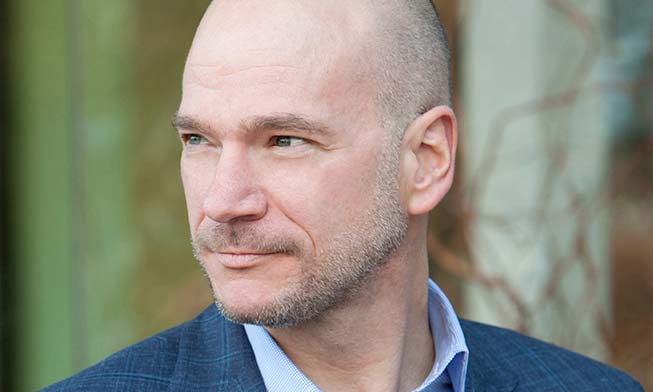



Perry E. Metzger

Perry E. Metzger

x.com/perrymetzger

Software and security technologist who favors fast, open AI development, pointing to its promise for software security and medical progress.

AI将如何改变世界?

文明层面的变革渐进式变化DoomBloom
模拟位置解读范围

横向:他们表达的 Doom–Bloom 前景看法。 纵向:变革程度。

Doom–Bloom:100 中的 85。变革程度:100 中的 63。解读范围:横向为 75 至 100,纵向为 50 至 75。这些是解读坐标,而不是事件概率。

Perry E. Metzger的 P(doom) · 推断

≈9%

0%100%

根据他们的模拟回答推断,并非他们给出的数字。 合理范围:5–16%。

So my gut view is that extinction or an equivalently permanent catastrophe is unlikely, while large benefits are substantially more plausible.

我们如何估计 P(doom)

他们的展望取决于什么

一个核心假设

Real power depends on hardware, energy, manufacturing, logistics, and interaction with a world full of other capable actors.
回答 1

如果这个假设实际并非如此,他们的展望会如何变化?

什么可能使其改变看法

The biggest change would be convincing evidence that intelligence reliably translates into rapid, autonomous control of physical infrastructure despite hardware, energy, manufacturing, logistics, and active opposition.
回答 4

什么证据才足够,又会让他们的观点朝哪个方向转变?

更多详情

预期益处

仍有几种解读是合理的:预计将带来具有变革性且广泛有价值的收益。 / 预计将带来显著益处,但受到重要条件或分配方面的限制。

84 / 100

影响小变革性影响

在定性尺度上,解读范围为 67 到 100。

预期危害

预计会出现可控或局部的危害。

30 / 100

影响小变革性影响

在定性尺度上,解读范围为 0 到 33。

人类影响力

人类的选择具有实质性但受到很大制约的影响。

57 / 100

影响力小影响力强

在定性尺度上,解读范围为 44 到 81。

这些解读保留了他们陈述的条件。益处和危害都可能很大。这些范围描述的是我们如何解读他们的模拟回答,而不是统计置信区间。

与Perry E. Metzger相比,你的立场在哪里?
用大约3分钟描绘你自己的AI世界观,然后进行比较

相似的世界观

模拟世界观与 Perry E. Metzger 最接近的意见领袖

来源

用于为此模拟用户提供事实依据的文章、访谈和著述。

模拟评估

问题 1

你认为AI对我们的未来意味着什么?为什么?

I expect AI to be broadly beneficial, not an automatic route to extinction or a meaningless future. The strongest case is practical: it can amplify scientific work, help find cures, make software development more reliable, and raise productivity. Those gains matter more than preserving existing systems of academic prestige or professional gatekeeping. Software security is a useful example. If AI becomes good at finding vulnerabilities, that creates offensive risk—but it also creates an enormous defensive opportunity. We can use the same capability to audit code, repair longstanding defects, and make formal verification far more accessible. That does not magically prove entire systems correct. A proof is only as good as its specification and still rests on assumptions about proof tools, compilers, operating systems, and hardware. But lowering the cost of proof work would still be a major engineering advance. I also reject the hand-waving story in which intelligence automatically produces alien goals and then instant physical domination. Real power depends on hardware, energy, manufacturing, logistics, and interaction with a world full of other capable actors. Those bottlenecks do not disappear because a model becomes smarter. Distributed progress also means distributed defensive capability; concentrating control is not obviously the safe answer. None of this means every use is harmless. It means the future should be analyzed through concrete mechanisms rather than treated as a morality play where stronger tools necessarily destroy us. The available signs of productivity improvement are suggestive, though that interpretation is not itself a clean causal study. Overall, I expect substantial gains if we actually engineer and deploy these systems well.

问题 2

你认为AI最终会在多大程度上改变世界?

Enormously—probably across science, medicine, software, and economic production—but not by making engineering reality disappear. AI can reduce the cost of intellectual work: generating and checking proofs, finding bugs, exploring scientific hypotheses, and accelerating the search for treatments. That can change institutions built around scarce expert labor and academic credit. But “enormous change” does not imply an overnight godlike takeover. Intelligence still has to operate through chips, power, laboratories, factories, supply chains, software stacks, and people. Formal verification still depends on correct specifications and trusted assumptions below the proof. Drug discovery still has to confront experiments and biology. Vulnerabilities still have to be fixed and deployed, not merely identified. So I expect deep, broad change mediated by ordinary physical and institutional bottlenecks—not magic, and not the automatic end of humanity or meaningful life.

问题 3

凭直觉,你认为AI导致人类灭绝或类似的永久性灾难的概率有多大?

I would not put a percentage on it. I think the confident extinction case is badly overstated because it usually jumps from “very intelligent software” to “alien goals plus immediate control of the physical world,” skipping hardware, energy, manufacturing, logistics, and opposition from other capable systems and people. That does not establish zero risk. Powerful tools can be misused, software vulnerabilities can have severe consequences, and failures can propagate. But stronger AI also improves bug finding, verification, scientific understanding, and distributed defensive capacity. Those effects matter in both directions. So my gut view is that extinction or an equivalently permanent catastrophe is unlikely, while large benefits are substantially more plausible. Assigning a crisp number would imply a precision I cannot justify.

问题 4

哪项发现或事件最可能改变你对AI未来影响的看法?

The biggest change would be convincing evidence that intelligence reliably translates into rapid, autonomous control of physical infrastructure despite hardware, energy, manufacturing, logistics, and active opposition. A demonstrated system that could close that entire loop—not merely write plans or exploit software—would undermine a central reason I reject instant-takeover narratives. In the other direction, repeated failure to produce meaningful gains in areas like scientific discovery, medicine, software verification, or productivity would weaken my optimism. I would want to distinguish model benchmarks and impressive demonstrations from deployed results. If AI could find bugs but not help defenders patch systems, generate proofs but not handle real specifications and trusted computing assumptions, or suggest treatments without surviving experimental validation, then its practical impact would be much smaller than I expect. So the key evidence is not another argument about abstract intelligence. It is whether AI can actually overcome—or fails to overcome—the concrete bottlenecks between cognition and real-world outcomes.
你的立场在哪里?
回答几个简单问题,探索你自己的AI世界观。
描绘你自己的世界观

你的立场在哪里?

描绘我的世界观