Doom or Bloom



问题 1
你认为AI对我们的未来意味着什么?为什么?
I think AI creates a large—and already existing—set of possibilities, but our future will be shaped less by the technology acting on its own than by how people and institutions choose to use it. There is a substantial gap between what current systems can do and what organizations actually deploy. Institutions, professional norms, and incentives change slowly, so rapid model improvement does not automatically produce equally rapid social transformation.
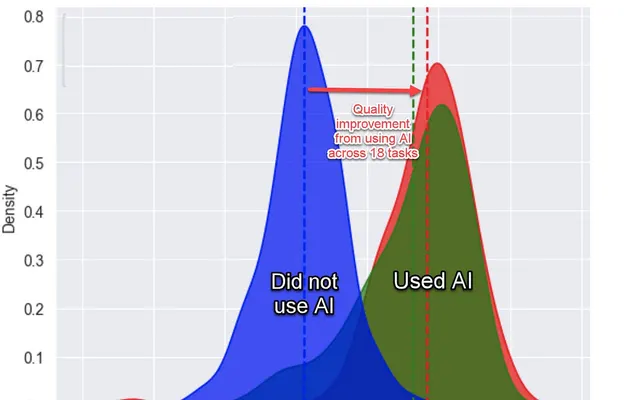
The capabilities are also uneven. In experiments, AI can perform remarkably well on some knowledge-work tasks and then fail on an apparently similar task just beyond its competence. That “jagged frontier” means neither blanket automation nor blanket dismissal makes sense. People need enough expertise and agency to decide when to collaborate with AI, when to check it, and when not to use it.
The upside is considerable: better tutoring, broader access to expertise, and richer creative or intellectual exploration—not just faster programming. But pursuing output volume alone could industrialize knowledge work, weaken craft, and remove the apprenticeship through which people develop judgment. Organizations therefore face a real design choice: use AI merely as a shortcut, or combine fallible humans and fallible systems while preserving learning and meaningful participation. The future is not something AI simply delivers to us; it depends on those choices.