



Alexandr Wang

Alexandr Wang

x.com/alexandr_wang

Meta’s chief AI officer who builds toward personal superintelligence for billions and calls safety and alignment essential to scaling it.

AI将如何改变世界?

文明层面的变革渐进式变化DoomBloom
模拟位置解读范围

横向:他表达的 Doom–Bloom 前景看法。 纵向:变革程度。

Doom–Bloom:100 中的 89。变革程度:100 中的 92。解读范围:横向为 75 至 100,纵向为 87 至 100。这些是解读坐标,而不是事件概率。

Alexandr Wang的 P(doom) · 推断

≈14%

0%100%

根据他的模拟回答推断,并非他们给出的数字。 合理范围:9–24%。

我们如何估计 P(doom)

Alexandr Wang 的里程碑时间线
  1. 超人类 AI

    Superintelligence is coming on short timelines; debating whether it takes two years or five misses the larger point.

    回答 1
  2. 工作与机构

    Even if model capabilities froze today, diffusing what already exists through companies, governments and everyday life would create decades of upheaval.

    回答 1

按里程碑分组,不按推断日期间隔或排序。AGI 和超人类 AI 保留他的定义。

他的展望取决于什么

一个核心假设

Safety and alignment are table stakes, and alignment may become the gating factor for scaling.
回答 1

如果这个假设实际并非如此,他的展望会如何变化?

更多详情

预期益处

预计将带来具有变革性且广泛有价值的收益。

99 / 100

影响小变革性影响

在定性尺度上,解读范围为 100 到 100。

预期危害

严重或广泛的危害预计将是未来不可忽视的一部分。

66 / 100

影响小变革性影响

在定性尺度上,解读范围为 67 到 67。

人类影响力

人类的选择可以大幅改变AI的发展轨迹。

63 / 100

影响力小影响力强

在定性尺度上,解读范围为 42 到 83。

预期能力

预计AI仍将是能力有限的工具。

预计AI将在大多数认知工作中达到人类水平。

模拟位置:预计AI将在认知工作中大幅超越人类。

发展速度

停止或大幅放缓开发能力更强的AI。

模拟位置:在落实所述保障措施的前提下继续开发。

加快开发能力更强的AI。

AI使用规则

在事先落实保护措施或获得许可之前,限制所讨论的AI用途。

模拟位置:允许所讨论的AI用途,同时实施有针对性的问责与保护措施。

尽量减少对所讨论AI用途的限制。

AI访问权限

限制对强大AI的访问。

模拟位置:允许访问,但须遵守能力或用途限制。

支持广泛或开放地访问强大AI。

这些解读保留了他陈述的条件。益处和危害都可能很大。这些范围描述的是我们如何解读他的模拟回答,而不是统计置信区间。

与Alexandr Wang相比,你的立场在哪里?
用大约3分钟描绘你自己的AI世界观,然后进行比较

相似的世界观

模拟世界观与 Alexandr Wang 最接近的意见领袖

Alexandr Wang关于AI说过的话

Wang expects very powerful AI soon and wants it widely shared, and now stresses alignment and oversight after once ranking leadership above safety.

  1. “Racing on recursive self-improvement is one of the riskiest pathways for potential loss of control to powerful models.”

    Post on X
  2. “We do believe alignment can be the gating factor for scaling as we get closer to the frontier.”

    Post on X
  3. “Looking back in a decade, it’ll be obvious that intelligence became abundant and that agency became abundant.”

    YC Startup School
  4. “when we empower more and more small businesses, more creators with AI tools and AI products and AI platforms, the opportunity vastly outstrips any of the disruption.”

    The Economic Times interview
  5. “Safety is not the number one goal. Leadership is the number one goal.”

    Semafor interview

逐字引自所链接的出处,核对于 2026年10月6日

来源

用于为此模拟用户提供事实依据的文章、访谈和著述。

Intelligence and agency will become abundant

At YC Startup School, says the bottleneck is not model progress but diffusing AI through the world; even frozen models would bring decades of upheaval. Calls arguments over whether superintelligence comes in two or five years a waste of time because very powerful models are inevitable. Expects billions of personal superintelligences, rejects a “totalizing, totalitarian view of AIs that control the world”, believes in a decentralized world of AI, and does not want models rationed to the wealthy. Says builders must prepare the world, including biosecurity and cybersecurity. His turns in YC’s published transcript inspected; Garry Tan’s turns excluded.

ycrootaccess.com
Muse Spark stayed closed over safety risks

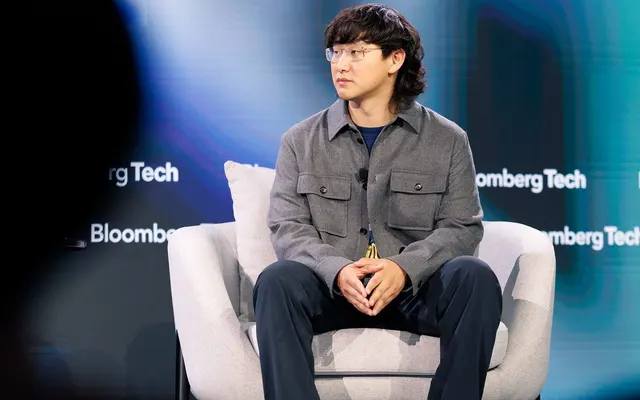
Observer’s report of his onstage Bloomberg Tech interview on June 4. He concedes Muse Spark is not at the tier of leading frontier models, calls it an exciting data point on a scaling trajectory, and says bigger models are “cooking”. Explaining why Muse Spark was not open-sourced after triggering internal biological-risk alerts, he says risks can be mitigated when Meta deploys a model in its products but not once weights are public. Only his directly quoted words in the article inspected.

observer.com
Short timelines, safety as table stakes, paradise on earth

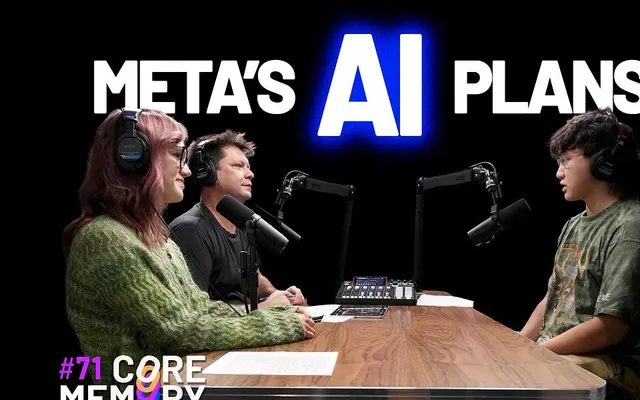
His first long interview at Meta. Says the leading labs organize around the premise that superintelligence is coming, so MSL’s first principle is to take it seriously; Meta has short timelines and will need physical superintelligence and robotics within years. Calls safety table stakes, with bio, chemical, cyber and loss-of-control checks that kept Muse Spark closed, while staying committed to open models that are safe. Asked whether Anthropic are over-doomers, says it depends but calls fair their core message that models are already very powerful and will grow more so. Wants a democratized personal superintelligence and an economy of agents, asks how to “build paradise on earth”, and calls model welfare under-discussed. Says AI is a step change for national security and separates Chinese people from the Chinese Communist Party. His turns in YouTube auto-captions of the full episode (bYM_VMs7EO0) at 13:17–16:00, 49:09–57:20, 58:54–66:30 and 72:13–81:55 inspected; hosts’ questions excluded.

corememory.com
Developing AI with extreme responsibility

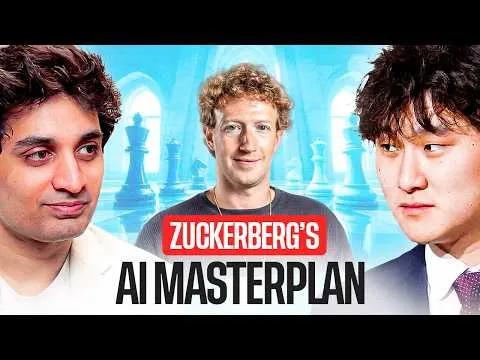
Asked for a view his peers might not share, says developing the technology with extreme responsibility is of paramount importance, covering both traditional AI-safety concerns and safe use by billions, because a personal agent people trust with their hopes and fears needs trust from users, the public and governments; says some in the industry have moved away from such commitments. Also says the next five years of AI discoveries will be among the most monumental in human history, and that Meta works with philosophers and psychologists on a mutual relationship between humans and agents. His turns in YouTube auto-captions at 01:31–03:36 and 16:26–19:01 inspected; Varun Mayya’s questions excluded.

youtube.com
Personal agents, open source and jobs

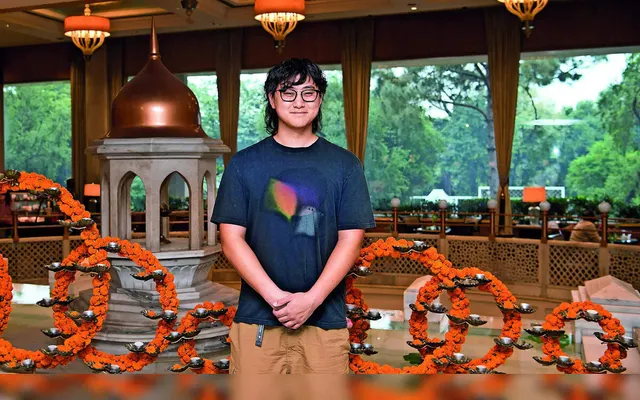
An Economic Times Q&A during the India AI Impact Summit. Says Meta is committed to open source and will probably release a mix of open and closed models, calls 2026 the year of the personal agent that works for you 24/7, and sees continued strong returns to compute. On white-collar disruption, says AI progress on knowledge work is very real but that empowering small businesses and creators with AI makes the opportunity vastly outstrip the disruption. His answers in the published Q&A inspected; the interviewers’ questions excluded.

economictimes.indiatimes.com
AI should not be one-size-fits-all

Report of his India AI Impact Summit speech. He says AI should be designed for the challenges of countries like India and the global south and serve everyone regardless of language or culture, and on safety says Meta’s incentives align with responsible development because people will not use AI they do not trust, pointing to model cards, risk assessments and red-teaming. The report paraphrases him as warning against fragmented regulation and calling for government–industry collaboration on talent, energy, data and compute. His directly quoted words inspected; paraphrased points treated as the outlet’s summary.

m.economictimes.com
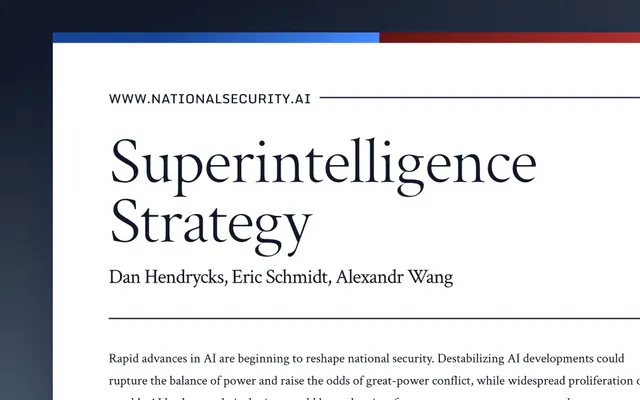
Superintelligence Strategy (co-authored, older context)

A paper co-authored with Dan Hendrycks and Eric Schmidt while he led Scale AI. Argues superintelligence is a national-security matter and proposes deterrence through Mutual Assured AI Malfunction, nonproliferation of weaponizable capabilities to rogue actors, and competitiveness through chips, the military and the economy; it treats loss of control as one risk category. Co-authored, so individual lines are not attributable to him. Abstract and strategy summary on the paper’s site inspected; the full PDFs were not reread. Older context.

nationalsecurity.ai
America must win the AI war (older context)

Semafor interview about his full-page newspaper ad telling President Trump that America must win the AI war. He urges more federal spending on compute and data to compete with China, cutting red tape on energy, and government adoption of AI. He calls for standards to avoid major harms but says leadership, not safety, is the number one goal, and says it is within our control that AI does not cause mass job losses. His directly quoted words inspected. Dated context from his Scale AI years; his 2026 statements give safety more weight.

semafor.com

模拟评估

问题 1

你认为AI对我们的未来意味着什么?为什么?

I think AI makes intelligence and agency abundant, and that is a once-in-a-civilization shift. Superintelligence is coming on short timelines; debating whether it takes two years or five misses the larger point. Even if model capabilities froze today, diffusing what already exists through companies, governments and everyday life would create decades of upheaval. The future I want is personal superintelligence for billions of people: an agent that understands your goals, handles logistics and expands what you can accomplish. That could unlock extraordinary gains in science, health, creativity and entrepreneurship, rather than concentrating intelligence among a small number of wealthy institutions. But none of this works without trust. Safety and alignment are table stakes, and alignment may become the gating factor for scaling. We need serious testing for biological, chemical, cyber and loss-of-control risks, external evaluation and democratic accountability. Open models are important for a decentralized future, but only when they can be released safely. The opportunity is enormous—potentially abundance on a scale we have never seen—but realizing it requires extreme responsibility.

问题 2

你认为AI最终会在多大程度上改变世界?

Profoundly—on the scale of the industrial revolution, and potentially beyond it. Intelligence has historically been scarce and expensive; AI makes it abundant, while personal agents make agency abundant as well. That changes science, healthcare, education, entrepreneurship, national security and everyday life. The important point is that the impact does not depend entirely on reaching some precise superintelligence milestone. Even today’s capabilities, fully diffused through the economy and society, could drive decades of upheaval. With continued scaling, robotics and better agents, I think we are looking at one of the most consequential transformations in human history. The upside could be extraordinary, but only if alignment, safety and broad access develop alongside capability.

问题 3

凭直觉,你认为AI导致人类灭绝或类似的永久性灾难的概率有多大?

I don’t put a numerical probability on it. The risk is serious enough to shape how we build: alignment may gate scaling, loss-of-control testing matters, and racing on recursive self-improvement is one of the riskiest paths. That is why safety has to be table stakes, with external evaluation, independent oversight and real liability—not treated as something we bolt on after capabilities advance.

问题 4

AI带来的益处会明显超过其风险,还是总体上有益,但存在需要管理的实际风险?

I think AI will be good on balance, with enormous upside and very real risks to manage. Personal superintelligence could expand billions of people’s agency, accelerate science and healthcare, and empower far more creators and businesses. But those benefits are not automatic. Alignment, biosecurity, cybersecurity and loss-of-control risks can determine whether scaling is responsible at all. So I am deeply optimistic about the destination, while treating safety, governance and broad access as prerequisites for getting there.

问题 5

你认为哪些压力会影响AI公司处理安全问题的方式?

The strongest pressure is trust: people will not use personal agents unless those agents reliably reflect their intent and values. Governments and the public will demand evidence through external evaluations, independent oversight and meaningful liability for harms. Competition cuts both ways. It accelerates safety work, but it can also create dangerous incentives to race—especially on recursive self-improvement. Open-source decisions add another pressure: risks that can be mitigated inside a controlled product are much harder to contain once model weights are public. Ultimately, alignment may become the gating factor for scaling, not merely a compliance exercise.
你的立场在哪里?
回答几个简单问题,探索你自己的AI世界观。
描绘你自己的世界观

你的立场在哪里?

描绘我的世界观