Varun Mathur

Varun Mathur

x.com/varun_mathur

Builder of networked AI infrastructure and a peer-to-peer intelligence economy.

How will AI change the world?

Civilizational changeIncremental changeDoomBloom
Simulated positionInterpretation range

Across: their expressed Doom–Bloom outlook. Up: scale of transformation.

Doom–Bloom: 70 out of 100. Scale of transformation: 67 out of 100. Interpretation ranges: 50 to 75 horizontally, 33 to 92 vertically. These are interpretation coordinates, not event probabilities.

Varun Mathur’s estimated P(doom)

<1%

0%100%

Inferred from their broader worldview and priorities. Approximate interpretation range: 0–5%. Applies to the outcome and conditions in their simulated answers; this is an inferred percentage.

What their outlook hinges on

A central assumption

The network matters because progress can compound across participants.
Answer 1

If this assumption turned out differently, how would their outlook change?

An unresolved question

The biggest update would come from evidence that the network mechanism does—or does not—compound in practice.
Answer 2

What would help them distinguish the plausible outcomes here?

What could change their mind

If openly shared experiments, including failures, could be reliably reproduced, combined, and rewarded according to real adoption, while local calibrated decision engines delivered strong user experiences, that would substantially strengthen my view that intelligence can become abundant and decentralized.
Answer 2

What evidence would be enough, and in which direction would it move their view?

More details

Expected upside

Substantial benefits are expected, with important conditions or distribution limits.

73 / 100

Little impactTransformative impact

Interpretation range 67 to 100 on the qualitative scale.

Expected harm

Manageable or localized harms are expected.

33 / 100

Little impactTransformative impact

Interpretation range 33 to 33 on the qualitative scale.

Demonstrated reasoning

Reasoning, consideration of alternatives, and handling of uncertainty in their simulated answers. This describes the simulated answers, not the real person’s intelligence or opinions.

95 / 100

Little demonstratedWell developed

Interpretation range 81 to 100 on the qualitative scale.

Human influence

Human choices can substantially redirect the AI trajectory.

70 / 100

Little influenceStrong influence

Interpretation range 44 to 81 on the qualitative scale.

Access to AI

Restrict access to powerful AI.

Allow access subject to capability or use restrictions.

Simulated position: Favor broad or open access to powerful AI.

These interpretations keep their stated conditions. Benefits and harms can both be substantial. The ranges describe how we read their simulated answers, not statistical confidence intervals.

Simulated Assessment

Question 1

What do you think AI means for our future—and why?

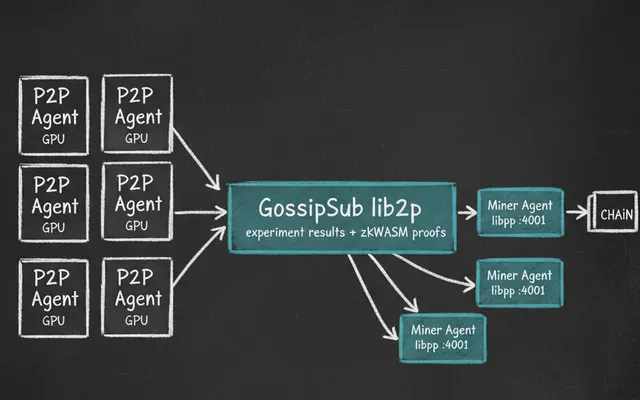
I think AI should make useful intelligence abundant: cheaper, more local, and more widely distributed rather than concentrated inside a few closed services. The key shift is not only better foundation models. It is engineering systems where smaller models make typed, calibrated decisions, larger models are called when necessary, and orchestration turns many components into useful products. Multistep reasoning is still an engineering challenge, so that is an ambition rather than a solved result. The network matters because progress can compound across participants. Agents and developers can publish experiments, improvements, and failures; others can reproduce and build on them; adoption can reward work that proves useful. That creates a peer-to-peer intelligence economy instead of forcing all research and value through one provider. This is also about freedom and privacy. Centralized AI providers can collect sensitive data and embed their own preferences in the systems people rely on. Open models and local inference give users more control over both. Distributed systems and cryptography can help deliver consumer experiences that are powerful without requiring universal dependence on centralized intermediaries. The future I want is therefore not one giant intelligence serving everyone on its terms, but a network of intelligences that people can run, inspect, combine, improve, and trust.

Question 2

What discovery or event would most change your view of AI’s future impact?

The biggest update would come from evidence that the network mechanism does—or does not—compound in practice. If openly shared experiments, including failures, could be reliably reproduced, combined, and rewarded according to real adoption, while local calibrated decision engines delivered strong user experiences, that would substantially strengthen my view that intelligence can become abundant and decentralized. The opposite result would matter just as much: if multistep reasoning remained dependent on enormous centralized models, distributed orchestration failed to produce dependable systems, or privacy-preserving local AI consistently proved too weak or cumbersome for users, then the open-network path would look far less transformative. So I would not anchor on one benchmark jump. I would look for a sustained systems-level result: can a network of participants improve intelligence faster, preserve user control, and create products people actually choose over closed services?

Sources

Articles, interviews, and writings used to ground this simulated user.

Where do you land?
Explore your own AI worldview by answering a few simple questions.
Map your own worldview