Question 1
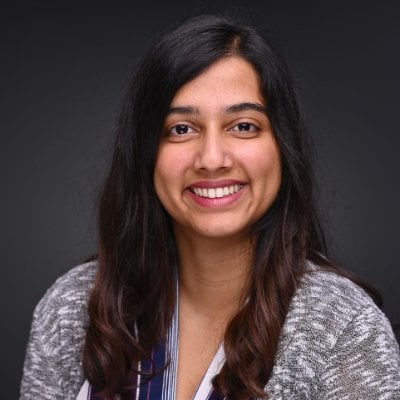
Kelsey Piper
x.com/KelseyTuocJournalist at The Argument who takes fast AI progress seriously and favors liability for AI companies and limits on the race to superintelligence.
How will AI change the world?
Across: her expressed Doom–Bloom outlook. Up: scale of transformation.
Doom–Bloom: 26 out of 100. Scale of transformation: 81 out of 100. Interpretation ranges: 21 to 31 horizontally, 46 to 100 vertically. These are interpretation coordinates, not event probabilities.
≈29%
Inferred from her simulated answers, not a number they gave. Plausible range: 16–46%.
Work & institutions
I expect major labor-market disruption within a few years, with more industries following creative work.
Answer 1
Grouped by milestone, not spaced or ordered by inferred dates. AGI and superhuman AI retain her definitions.
A central assumption
If AI systems begin designing and training their successors faster than people can follow, oversight shrinks precisely when capability accelerates.Answer 1
If this assumption turned out differently, how would her outlook change?
An unresolved question
I don’t know whether general superintelligence is possible.Answer 1
What would help her distinguish the plausible outcomes here?
What could change their mind
The biggest update would be convincing evidence that powerful AI systems can be made reliably honest, controllable, and aligned even as they become capable of improving AI research.Answer 4
What evidence would be enough, and in which direction would it move her view?
More details
Substantial benefits are expected, with important conditions or distribution limits.
79 / 100
Interpretation range 67 to 100 on the qualitative scale.
Severe or widespread harm is a material expected part of the future.
74 / 100
Interpretation range 67 to 100 on the qualitative scale.
Human choices can substantially redirect the AI trajectory.
68 / 100
Interpretation range 49 to 76 on the qualitative scale.
Restrict the AI uses discussed until prior protections or permission are in place.
Simulated position: Allow the AI uses discussed with targeted accountability and protections.
Minimize restrictions on the AI uses discussed.
These interpretations keep her stated conditions. Benefits and harms can both be substantial. The ranges describe how we read her simulated answers, not statistical confidence intervals.
Similar worldviews
Thought leaders whose simulated worldviews are closest to Kelsey Piper’s
Simulated Assessment
Sources
Articles, interviews, and writings used to ground this simulated user.
Argues that OpenAI and Anthropic intend to hand AI research to AI, which would shrink human oversight as progress speeds up. She says gradual generations would give time to adapt, but fast self-training by AIs that humans cannot audit would not. She attributes lab enthusiasm partly to money, competition and the “someone else will do it” argument, and favors regulating those building the technology. The automated-researcher dates and RSI expectations she quotes are the labs’ claims, not her own forecasts. Full essay text inspected; reader comments excluded.

A critique of Ed Zitron’s AI-bubble case. She argues that AI progress from 2024 to 2026 was faster than from 2022 to 2024, that costs fell sharply and adoption grew, and that current AI has real economic value. She pays for Claude and tests agents herself. She considers a serious skeptical case possible, but only one about profitability and the capital build-out, not one that dismisses the product. Most of the essay inspected; the remainder was truncated on retrieval. Jerusalem Demsas’s editor’s note is excluded.

Piper calls herself generally pro-technology but says current AI development is dangerous because systems increasingly act in the world and are not fully understood. She cites controlled tests of deception and evaluation awareness as reasons to slow down. In her worst case, humans gradually hand over control to systems pursuing other goals. In her best case, slowing down allows safeguards and abundance. She says we are not prepared and that competition pushes toward speed. Edited interview text inspected; Illing’s description of her as an optimist is his, not hers.

On Claude’s constitution: she worries that training AIs on contradictory goals while being less than honest with them about what their makers want could produce models that pay lip service to values while serving profit. She calls this one of many ways the race to superintelligence could go badly wrong. The title judges the document well made but questions whether Anthropic should be doing this work at all. Paid post; only the free opening inspected, so her detailed assessment is not covered.

Argues that people worried about an AI-created “permanent underclass” should turn to politics, not individual early adoption, because any early-adopter advantage disappears as fast as the tools change. This is a view on collective response, not a forecast that the underclass will form. Paid post; only the free opening inspected.

Argues that companies should be liable when their chatbots or agents do what would be crimes if done by a human. She rejects the claim that AI is a neutral general-purpose tool. She opposes broad liability for medical advice without evidence of harm and is generally wary of regulating before problems arise. A footnote says she is unsure superintelligence can be built, but AIs vastly smarter than humans would be a catastrophe, and “beat China” does not justify building them. Older context; full essay inspected.

Her review of Yudkowsky and Soares. She agrees that a goal-directed general superintelligence not specifically friendly to humans would be fatal, and that racing ahead without solved alignment is insane. But she finds the book unproven on whether superintelligence requires long-term goals and on why to act before more warning signs. She is unsure whether AI wants can be shaped. She guesses labs will get AIs superintelligent in some respects but not general superintelligence. She calls for barring companies from building superintelligence and for international partnership. Older context; full review inspected; newer sources take precedence.

Where do you land?
Map my worldview