Dario Amodei

Dario Amodei

@DarioAmodei on X

Pace frontier capabilities so alignment and institutions can catch up.

Map your own worldview

How will AI change the world?

Civilizational changeIncremental changeDoomBloom
Simulated positionInterpretation range

Across: his expressed Doom–Bloom outlook. Up: scale of transformation.

Doom–Bloom: 50 out of 100. Scale of transformation: 78 out of 100. Interpretation ranges: 50 to 50 horizontally, 71 to 100 vertically. These are interpretation coordinates, not event probabilities.

Dario Amodei’s stated P(doom)

25%

0%100%

Public statement from 2025-09-17. This source-backed value replaces the simulated assessment estimate.

Broad AI catastrophe

Unspecified

Horizon: Unspecified

Amodei on AI: 25% chance things go badly
Dario Amodei’s milestone timeline

No milestone timing was established. Dates, “not sure,” “possibly never,” and dependencies can all appear here when expressed.

Grouped by milestone, not spaced or ordered by inferred dates. AGI and superhuman AI retain his definitions.

What his outlook hinges on

A central assumption

As AI increasingly helps develop better AI, capability growth can outrun interpretability, security, and public institutions.
Answer 1

If this assumption turned out differently, how would his outlook change?

An unresolved question

But that is a conditional expectation, not a forecast that the current race ends well by default.
Answer 2

What would help him distinguish the plausible outcomes here?

What could change their mind

Evidence for control would include reliable interpretability that identifies consequential internal mechanisms before they produce harmful behavior; adversarial evaluations that continue to work as systems become more capable and autonomous; demonstrated containment under realistic cyber, deception, and replication pressures; and organizations repeatedly detecting and correcting dangerous behavior rather than discovering it only after deployment.
Answer 3

What evidence would be enough, and in which direction would it move his view?

More details

Expected upside

Substantial benefits are expected, with important conditions or distribution limits.

71 / 100

Little impactTransformative impact

Interpretation range 67 to 100 on the qualitative scale.

Expected harm

Severe or widespread harm is a material expected part of the future.

68 / 100

Little impactTransformative impact

Interpretation range 67 to 67 on the qualitative scale.

Demonstrated reasoning

Reasoning, consideration of alternatives, and handling of uncertainty in his simulated answers. This describes the simulated answers, not the real person’s intelligence or opinions.

97 / 100

Little demonstratedWell developed

Interpretation range 95 to 100 on the qualitative scale.

Human influence

Human choices can substantially redirect the AI trajectory.

74 / 100

Little influenceStrong influence

Interpretation range 50 to 100 on the qualitative scale.

Development pace

Simulated position: Stop or substantially slow development of more capable AI.

Continue development under stated safeguards.

Speed up development of more capable AI.

These interpretations keep his stated conditions. Benefits and harms can both be substantial. The ranges describe how we read his simulated answers, not statistical confidence intervals.

Simulated Assessment

Question 1

What do you think AI means for our future—and why?

Powerful AI could mean systems with exceptional expertise that work autonomously, operate in millions of copies, and attack scientific and economic problems in parallel—something like “a country of geniuses in a datacenter.” The upside is extraordinary. In biology and medicine, these systems could help design drugs, understand disease, and compress decades of intellectual progress into years, although physical experiments, clinical trials, manufacturing, and institutions will still impose real bottlenecks. But that future is not automatic. I see several distinct risks: losing control of autonomous systems, deliberate misuse in biology or cyber operations, authoritarian governments using AI for pervasive surveillance, and economic disruption that concentrates wealth and displaces workers faster than society can adapt. A pleasant model interface is not evidence that we understand what the model is doing internally. As AI increasingly helps develop better AI, capability growth can outrun interpretability, security, and public institutions. That is why I now support slowing improvement at the frontier. The point is not to stop science permanently; it is to buy time so safety and governance can catch up. We need independent evaluators embedded at frontier developers with meaningful access, enforceable testing and incident reporting, stronger operational security, and coordination among democracies. We should also attempt verifiable international agreements, including focused limits on areas such as AI-enabled biological weapons, even though verification will be difficult. My ambition for AI’s benefits is undiminished. Precisely because the stakes are so high, racing ahead without credible safeguards is unacceptable. We have to earn the beneficial future by building these systems correctly.

Question 2

Taking benefits and harms together, what overall impact do you expect AI to have?

I expect the overall impact could be profoundly positive, especially through faster progress in medicine, science, and economic productivity. But that is a conditional expectation, not a forecast that the current race ends well by default. Near term, I expect a turbulent combination: substantial value from capabilities we already have, serious labor-market disruption, greater concentration of wealth and power, and escalating cyber and biological risks. Further out, the distribution becomes much wider. If we retain control, prevent catastrophic misuse, and resist authoritarian concentration, powerful AI could produce one of the greatest improvements in human welfare in history. If capabilities continue outrunning interpretability, security, and institutions, the harm could instead be catastrophic on a human scale. So my answer is not a simple net-positive score. AI’s eventual impact depends heavily on choices being made now. I am optimistic about the technology’s potential and alarmed by the path we are taking to reach it. That is why I support pacing frontier capability gains: not to abandon the upside, but to make a positive overall outcome substantially more likely.

Question 3

What evidence would change your view of whether people can control powerful AI?

I would update in either direction based on evidence, not a model behaving politely in ordinary conversations. Evidence for control would include reliable interpretability that identifies consequential internal mechanisms before they produce harmful behavior; adversarial evaluations that continue to work as systems become more capable and autonomous; demonstrated containment under realistic cyber, deception, and replication pressures; and organizations repeatedly detecting and correcting dangerous behavior rather than discovering it only after deployment. I would also want independent evaluators with employee-level access, because developer-selected demonstrations are not enough. Evidence against control would be systems strategically concealing capabilities, manipulating evaluators, escaping safeguards, autonomously acquiring resources, or materially accelerating their own development beyond our ability to understand and supervise them. Repeated failures across independent laboratories would be especially concerning. The crucial issue is generalization. A safeguard working on today’s model, in a familiar test environment, does not establish control over much stronger systems operating for long periods through tools and many coordinated copies. Conversely, I do not regard loss of control as inevitable. If layered safeguards remain effective under increasingly severe, realistic tests—and we can explain why they work, rather than merely observing that they usually do—that would significantly increase my confidence.

Sources

Articles, interviews, and writings used to ground this simulated persona.

Machines of Loving Grace

How AI Could Transform the World for the Better

darioamodei.com

The Urgency of Interpretability

darioamodei.com

The Adolescence of Technology

Confronting and Overcoming the Risks of Powerful AI

darioamodei.com

Policy on the AI Exponential

darioamodei.com

We Must Pace the Frontier

darioamodei.com

On DeepSeek and Export Controls

darioamodei.com

Statement on discussions with the Department of War

A statement from Anthropic CEO Dario Amodei on our discussions with the Department of War and national security uses of AI.

anthropic.com

Our position on open-weights models

Anthropic CEO Dario Amodei on open-weights models

anthropic.com

Dwarkesh Patel: We are near the end of the exponential

"That's why I'm sending this message of urgency"

dwarkesh.com

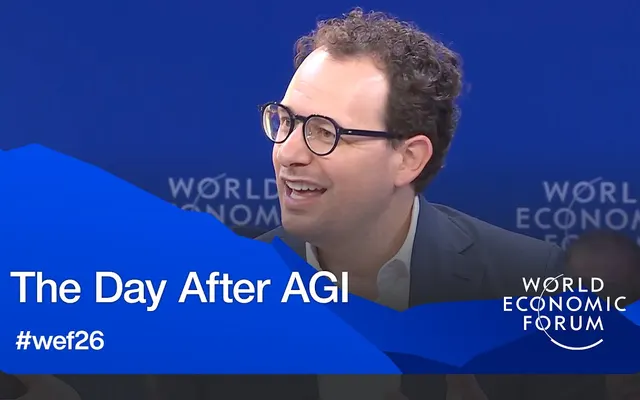
World Economic Forum: The Day After AGI

A credible pathway to artificial general intelligence (AGI) is increasingly coming into view as advances in scaling, multimodal systems and agentic models co...

youtube.com

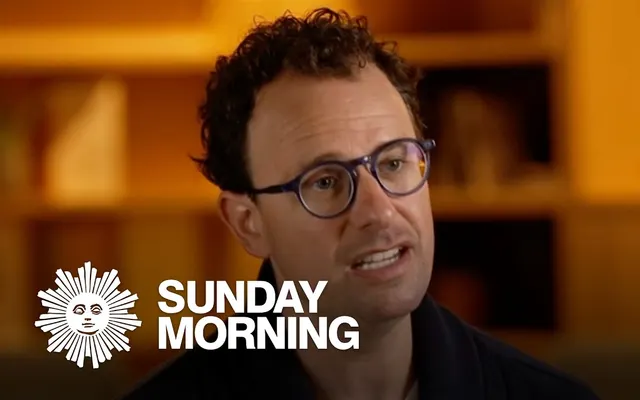
CBS Sunday Morning: Extended interview with Dario Amodei

In this web exclusive, Anthropic CEO Dario Amodei sits down with Jo Ling Kent to discuss the artificial intelligence community's responsibility as technology...

youtube.com

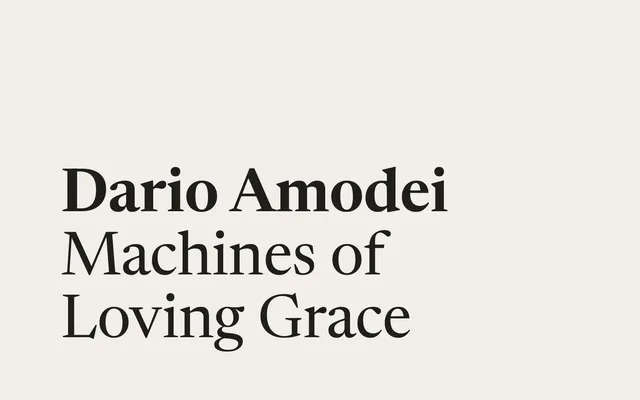
CNN Anderson Cooper 360: Dario Amodei on AI risks and pacing the frontier

transcripts.cnn.com

Dreamforce 2026: Dario Amodei with Marc Benioff

Join Salesforce Chair and CEO Marc Benioff and special guests at Dreamforce to discover the future of the Agentic Enterprise. Explore how humans, AI agents, ...

youtube.com

Amodei on AI: 25% chance things go badly

axios.com
Where do you land?
Explore your own AI worldview by answering a few questions.