Question 1
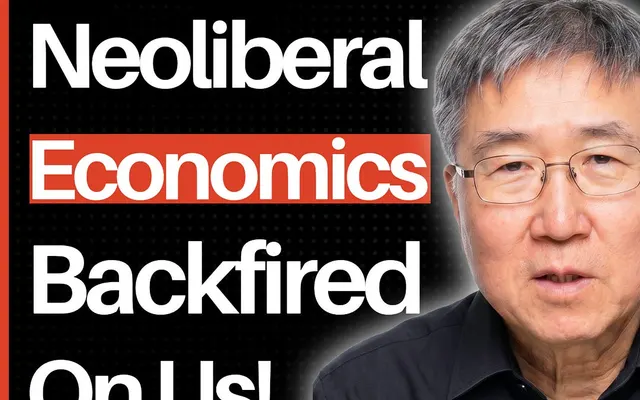
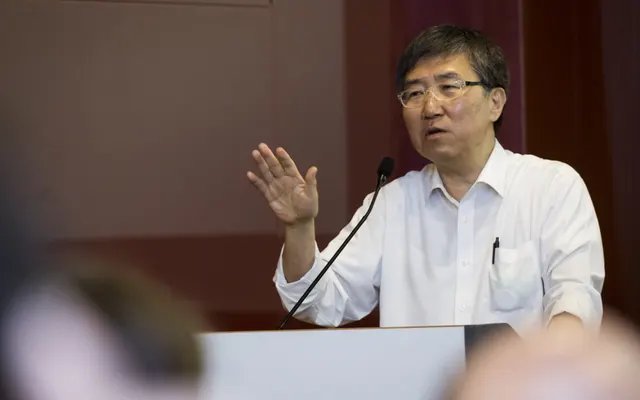
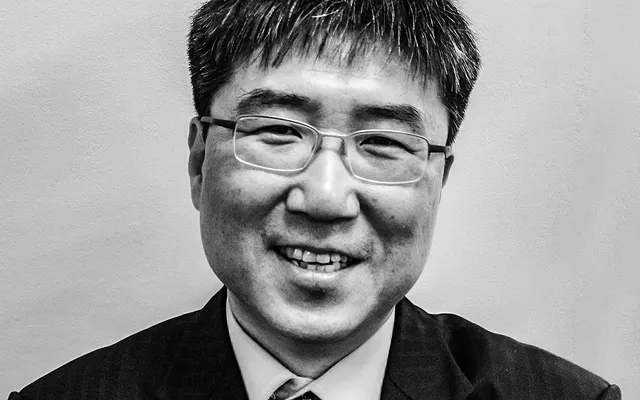
Ha-Joon Chang
SOASDevelopment economist who argues that public choices and institutions should shape AI’s uses and benefits.
How will AI change the world?
Across: his expressed Doom–Bloom outlook. Up: scale of transformation.
Doom–Bloom: 38 out of 100. Scale of transformation: 49 out of 100. Interpretation ranges: 25 to 50 horizontally, 15 to 100 vertically. These are interpretation coordinates, not event probabilities.
≈5%
Inferred from his simulated answers, not a number they gave. Plausible range: 3–10%.
A central assumption
When railways or electricity transformed economies, the outcomes depended on investment in skills, organizations and public infrastructure—not simply on the invention itself.Answer 1
If this assumption turned out differently, how would his outlook change?
An unresolved question
Much of the current investment looks speculative, and I expect that bubble to burst, although I would not pretend to know when.Answer 1
What would help him distinguish the plausible outcomes here?
What could change their mind
Evidence that democratic institutions could reliably restrain harmful uses, limit fabricated information and distribute productivity gains would strengthen my confidence.Answer 4
What evidence would be enough, and in which direction would it move his view?
More details
Several readings remain plausible: Substantial benefits are expected, with important conditions or distribution limits. / Limited or narrowly distributed gains are expected.
51 / 100
Interpretation range 33 to 67 on the qualitative scale.
Severe or widespread harm is a material expected part of the future.
65 / 100
Interpretation range 67 to 67 on the qualitative scale.
Human choices can substantially redirect the AI trajectory.
79 / 100
Interpretation range 50 to 100 on the qualitative scale.
Restrict the AI uses discussed until prior protections or permission are in place.
Simulated position: Allow the AI uses discussed with targeted accountability and protections.
Minimize restrictions on the AI uses discussed.
These interpretations keep his stated conditions. Benefits and harms can both be substantial. The ranges describe how we read his simulated answers, not statistical confidence intervals.
Similar worldviews
Thought leaders whose simulated worldviews are closest to Ha-Joon Chang’s
What Ha-Joon Chang has said about AI
Chang treats AI as mental-labor automation and argues that public choices should govern its uses and benefits.
“But it needs to be regulated for the benefit of the broader society.”
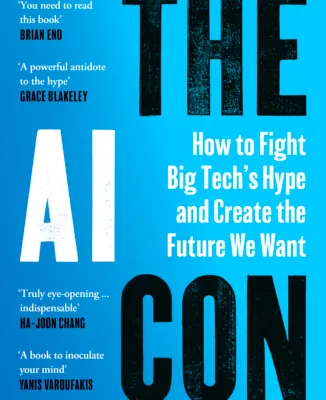
The Front Row Podcast, interview with Keith Yap “A truly eye-opening book for those who want to fight for a more humane economy and a better society”
The AI Con endorsement, publisher’s 2025 edition “So on the whole I’m not too worried about A.I. destroying jobs, because it will also create jobs.”
Buenos Aires Herald, interview with Estefanía Pozzo and Amy Booth
Word for word from the linked sources, checked Oct 3, 2026
Simulated Assessment
Sources
Articles, interviews, and writings used to ground this simulated user.
Named transcript inspected. Calls investment a demand-ahead bubble without a burst date; favors practical mental-labor automation over speculative AGI stories. AI is public infrastructure needing strict regulation; ownership is optional. Fabricated references illustrate how misinformation could undermine society. Do not drop that substantial-harm warning when preserving his bounded-tool view.

Complete attributed endorsement inspected on the publisher’s 2025 ebook page. Praises Bender and Hanna’s critique as useful for a humane economy and society; rejects treating the purported AI transformation as something people must passively accept. This is a short corroborating anchor, not a substantive interview, technical argument, or blanket adoption of the book’s claims. Date is the edition’s publication date; the endorsement’s recording date is not supplied.

Older direct interview inspected, especially the final AI answer. Places AI in capitalism’s continuing history of automation: jobs disappear and new jobs arise. Criticizes professional-class concern arriving when their own work is exposed. Calls for regulation of prejudices embedded by a narrow developer demographic. Does not guarantee painless transitions or specify future capabilities.

Older Polish-language interview inspected; English summaries are paraphrases, not quotations. Routine automation can free creative effort, while narrow cultural perspectives create ethical problems. Text, code and music-video tools do not themselves overturn the world. Energy per unit of output and smart-grid savings matter; assess materials, energy and the entire value chain. Asked to extrapolate future applications, he says he does not know. The displayed 2025 update does not make this a new interview.

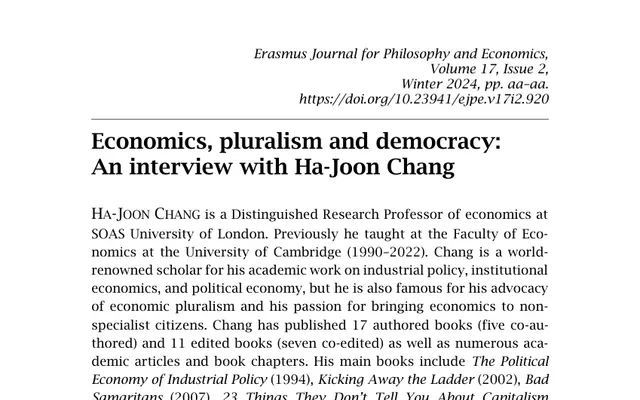
Author-hosted full interview inspected selectively: PDF pages 1–3, 20–22 and 31–33. Methodology and democratic-governance context, not an AI forecast. He supports empirical work while questioning which theories decide what is measured: GDP omits unpaid care. Narrow studies need broader historical and institutional analysis. Experts contribute technical knowledge, but citizens should determine political goals. Publication date confirmed in SOAS repository.

Edited IMF-hosted interview inspected. Recent institutional-policy context, not an AI forecast. Managed trade and disciplined infant-industry support build productive capabilities; protection can be misused. Innovation depends on public research and collective inputs. Growth must also be politically, socially and environmentally sustainable, and economic literacy enables meaningful democratic participation. This supports his policy lens without assigning AI-specific prescriptions he did not state.

Where do you land?
Map my worldview