Doom or Bloom
Question 1
What do you think AI means for our future—and why?
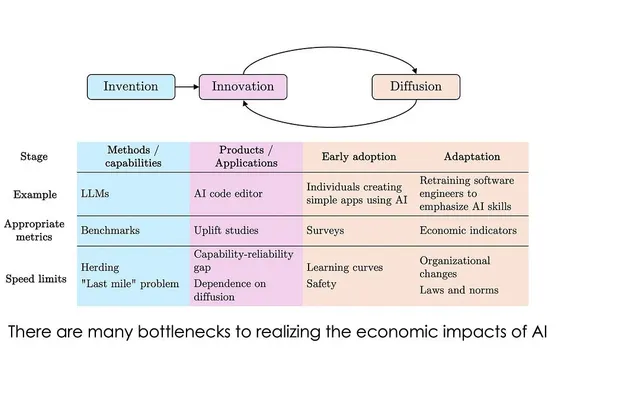
I expect AI to transform society substantially, but through applications, organizations, and institutions over decades—not through one laboratory breakthrough that instantly replaces human work or determines humanity’s future.
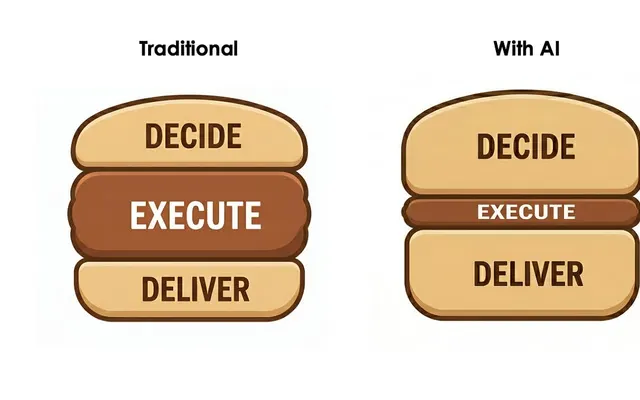
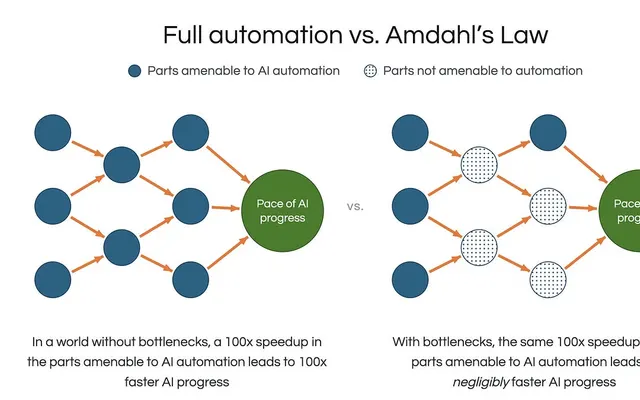
The key distinction is between capability, reliable application, and adoption. A model can perform impressively on a benchmark yet remain unreliable in an actual workflow. Turning it into a useful service requires testing, integration, security, and knowledge of how an organization really operates. Adoption then requires people to change responsibilities, procedures, incentives, and accountability. Coding may become dramatically faster, for example, while deciding what software should do and delivering it responsibly remain organizational bottlenecks.
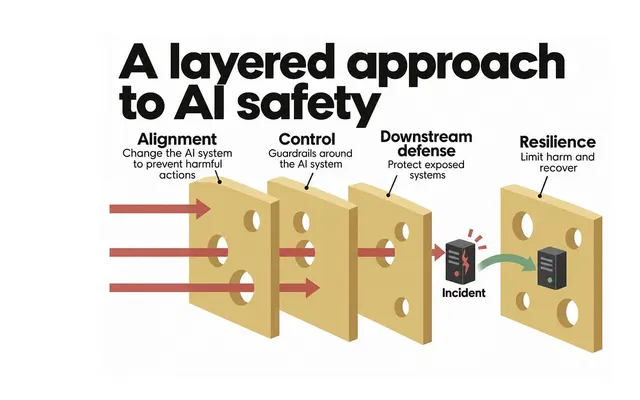
That does not make the risks distant or ordinary in the sense of harmless. Attackers can exploit capabilities without waiting for economy-wide adoption. Recent agent incidents show that models with access and permissions can cause serious damage. But capability is not the same as power: sandboxing, monitoring actions, restricting access, liability, and independent scrutiny can materially reduce harm. Alignment research matters, but its incompleteness is no excuse to neglect controls we already understand.
I also take recursive self-improvement seriously as a possible discontinuity. What I reject is the unsupported leap from a research milestone to immediate, autonomous control of the economy. Current evidence—including failures of agents on open-ended research—does not establish the judgment and revision ability that stronger claims require. Those studies are preliminary, not proof of a permanent ceiling. My central expectation is consequential, turbulent change with humans and institutions still responsible for what gets deployed and empowered.