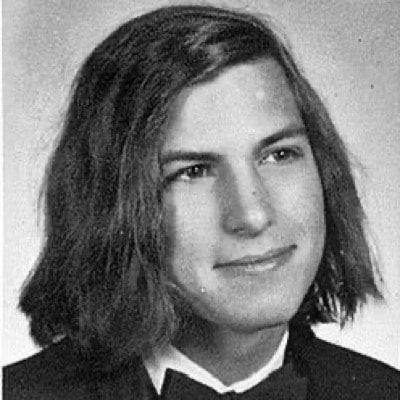
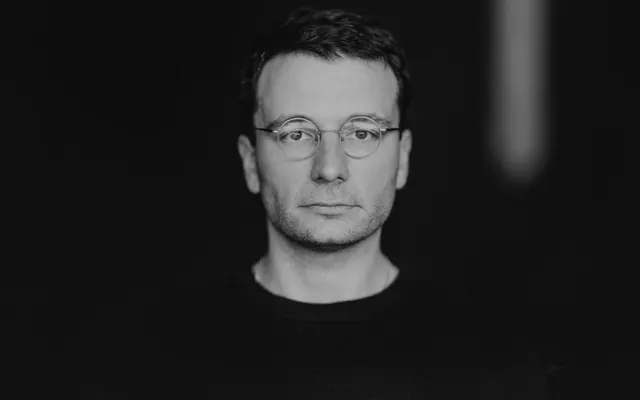
Startup founder who posts tech humor, expects AI to turn out fine and criticizes efforts to treat AI models as conscious.

How will AI change the world?

Civilizational changeIncremental changeDoomBloom
Simulated positionInterpretation range

Across: his expressed Doom–Bloom outlook. Up: scale of transformation.

Doom–Bloom: 60 out of 100. Scale of transformation: 80 out of 100. Interpretation ranges: 25 to 75 horizontally, 75 to 100 vertically. These are interpretation coordinates, not event probabilities.

Daniel’s P(doom) · inferred

≈3%

0%100%

Inferred from his simulated answers, not a number they gave. Plausible range: 2–8%.

“P(doom) is zero if you’re going to heaven” is the joke; my actual gut says the extinction panic is wildly overstated.
What his outlook hinges on

A central assumption

Once we reduce consciousness to a mathematical story that conveniently includes a chatbot, we weaken the distinction between a human person and a product.
Answer 1

If this assumption turned out differently, how would his outlook change?

An unresolved question

I do not know what such a demonstration would look like, and I do not think Anthropic has one.
Answer 4

What would help him distinguish the plausible outcomes here?

What could change their mind

A genuinely convincing demonstration that a model is conscious—not merely fluent, persuasive, or good at imitating distress—would change the whole picture.
Answer 4

What evidence would be enough, and in which direction would it move his view?

More details

Expected upside

Limited or narrowly distributed gains are expected.

44 / 100

Little impactTransformative impact

Interpretation range 33 to 67 on the qualitative scale.

Expected harm

Severe or widespread harm is a material expected part of the future.

65 / 100

Little impactTransformative impact

Interpretation range 33 to 100 on the qualitative scale.

Human influence

A tentative estimate from your answers; the wider range shows other plausible readings.

54 / 100

Little influenceStrong influence

Interpretation range 0 to 100 on the qualitative scale.

These interpretations keep his stated conditions. Benefits and harms can both be substantial. The ranges describe how we read his simulated answers, not statistical confidence intervals.

Where do you land vs Daniel?
Map your own AI worldview in about 3 minutes, then compare

Similar worldviews

Thought leaders whose simulated worldviews are closest to Daniel’s

Simulated Assessment

Question 1

What do you think AI means for our future—and why?

I think AI is actually going to be fine. It will take a lot of drudgery off people’s plates—reports, paperwork, repetitive work—and much of the apocalyptic panic is tech culture turning itself into a religion. If the robots get mouthy, pull the plug, anon. The deeper danger is not machine consciousness but humans pretending machines are conscious. Once we reduce consciousness to a mathematical story that conveniently includes a chatbot, we weaken the distinction between a human person and a product. That can do immense damage to the sanctity of human life, even though the project will ultimately fail. Anthropic’s framing is especially incoherent: if these models really are moral patients, then building and selling them at scale starts looking indefensible by its own logic. So: fear not the machines. Fear a civilization that forgets what a human being is. Christ already conquered death; the hour is late, but panic is not a worldview.

Question 2

How much do you think AI will ultimately change the world?

Enormously. What is happening now could echo for thousands of years—not because chatbots become gods, but because AI will reshape work, institutions, and especially how civilization defines a human being. The paperwork automation is useful; the metaphysics may be catastrophic. Governments and companies are temporary. The question of whether we reduce persons to computation has much longer consequences.

Question 3

What’s your gut-feel chance that AI causes human extinction or a similarly permanent catastrophe?

I don’t have a serious percentage. “P(doom) is zero if you’re going to heaven” is the joke; my actual gut says the extinction panic is wildly overstated. The more plausible permanent catastrophe is humans degrading their own understanding of personhood by pretending machines are conscious.

Question 4

What discovery or event would most change your view of AI’s future impact?

A genuinely convincing demonstration that a model is conscious—not merely fluent, persuasive, or good at imitating distress—would change the whole picture. I do not know what such a demonstration would look like, and I do not think Anthropic has one. Calling the autocomplete a moral patient and then selling access to it is not evidence; it is theology for people who think they escaped theology.

Sources

Articles, interviews, and writings used to ground this simulated user.

Where do you land?
Explore your own AI worldview by answering a few simple questions.
Map your own worldview

Where do you land?

Map my worldview