Demis Hassabis

Demis Hassabis

@demishassabis on X

Enormous scientific promise, with rigorous standards and coordinated care.

Map your own worldview

How will AI change the world?

Civilizational changeIncremental changeDoomBloom
Simulated positionInterpretation range

Across: his expressed Doom–Bloom outlook. Up: scale of transformation.

Doom–Bloom: 66 out of 100. Scale of transformation: 75 out of 100. Interpretation ranges: 50 to 75 horizontally, 48 to 100 vertically. These are interpretation coordinates, not event probabilities.

Demis Hassabis’s estimated P(doom)

≈2%

0%100%

Inferred from his broader worldview and priorities. Approximate interpretation range: 0–30%. Applies to the outcome and conditions in his simulated answers; this is an inferred percentage.

Demis Hassabis’s milestone timeline
  1. Science & daily life

    Over the next several years, I expect the deeper change to come through science.

    Answer 3

Grouped by milestone, not spaced or ordered by inferred dates. AGI and superhuman AI retain his definitions.

What his outlook hinges on

A central assumption

Competitive pressure is moving faster than our understanding, so we need rigorous, evolving evaluations, independent standards and international coordination—potentially including a coordinated slowdown if evidence warrants it.
Answer 1

If this assumption turned out differently, how would his outlook change?

An unresolved question

I do not attach a precise probability to catastrophe, but the risk is nonzero and non-negligible.
Answer 1

What would help him distinguish the plausible outcomes here?

More details

Expected upside

Substantial benefits are expected, with important conditions or distribution limits.

80 / 100

Little impactTransformative impact

Interpretation range 67 to 100 on the qualitative scale.

Expected harm

Severe or widespread harm is a material expected part of the future.

63 / 100

Little impactTransformative impact

Interpretation range 33 to 67 on the qualitative scale.

Demonstrated reasoning

Reasoning, consideration of alternatives, and handling of uncertainty in his simulated answers. This describes the simulated answers, not the real person’s intelligence or opinions.

88 / 100

Little demonstratedWell developed

Interpretation range 76 to 95 on the qualitative scale.

Human influence

Human choices have meaningful but substantially constrained influence.

59 / 100

Little influenceStrong influence

Interpretation range 50 to 75 on the qualitative scale.

Development pace

Stop or substantially slow development of more capable AI.

Simulated position: Continue development under stated safeguards.

Speed up development of more capable AI.

Rules for using AI

Restrict the AI uses discussed until prior protections or permission are in place.

Simulated position: Allow the AI uses discussed with targeted accountability and protections.

Minimize restrictions on the AI uses discussed.

These interpretations keep his stated conditions. Benefits and harms can both be substantial. The ranges describe how we read his simulated answers, not statistical confidence intervals.

Simulated Assessment

Question 1

What do you think AI means for our future—and why?

I think AI could become as foundational as electricity: not simply another product, but a general tool for accelerating discovery across science, medicine and many parts of society. The application I care about most is human health. AlphaFold showed how AI can illuminate a fundamental scientific object—protein structure—and the larger ambition is to transform drug discovery and, eventually, help solve disease. Similar possibilities exist in energy, materials and accessibility, including tools designed with the Deaf community rather than merely delivered to it. But capability in coding or mathematics does not automatically mean science is solved. A mathematical answer may be verified directly; a new scientific hypothesis still has to be creative, experimentally tested and connected to the physical world. Better AI can accelerate that cycle enormously, while experiments and human judgment remain bottlenecks. This is also a pivotal and risky transition. I do not attach a precise probability to catastrophe, but the risk is nonzero and non-negligible. Competitive pressure is moving faster than our understanding, so we need rigorous, evolving evaluations, independent standards and international coordination—potentially including a coordinated slowdown if evidence warrants it. Those standards should cover both proprietary and open models without abolishing open science. Technical ingenuity can address many risks, but optimism is not proof that the problems are already solved. And technologists cannot decide society’s purpose alone. Science can expand what is possible; the humanities, affected communities and the broader public must help decide what kind of future we actually want.

Question 2

What would a good future need to preserve about being human?

A good future should preserve human agency, curiosity, creativity and meaningful relationships. AI ought to expand our ability to understand nature, cure disease and pursue ambitious projects—not reduce people to passive consumers of machine-generated abundance. It should also preserve our role in choosing ends. Intelligence can help us discover what is possible, but it cannot by itself decide what is valuable, beautiful or just. Those questions belong to society, drawing on the arts and humanities as well as science, and involving the communities affected by what we build. Finally, we should preserve room for genuine exploration: forming hypotheses, conducting experiments, making art, caring for others and finding purpose. The aim is not to automate humanity out of the future. It is to remove avoidable suffering and drudgery while giving people greater freedom to learn, create, connect and determine the direction of their own lives.

Question 3

How do you expect AI’s effects on people’s lives to change over time?

In the near term, most people will experience AI as an increasingly capable assistant: improving accessibility, education, healthcare administration, coding and everyday creative work. Some effects will be uneven and disruptive, especially in employment, because institutions and skills adapt more slowly than technology. Over the next several years, I expect the deeper change to come through science. AI could shorten the cycle from a biological insight to a candidate medicine, or help researchers propose better materials and energy technologies. But physical experiments, clinical trials and scientific creativity remain real bottlenecks, so these gains will not arrive instantaneously. If we reach broadly capable AGI, the effects could become civilization-scale—closer to electricity than another generation of software. People might gain access to extraordinary expertise and abundance, with far less disease and drudgery. But that outcome is not automatic. Competitive deployment without adequate understanding could concentrate power, destabilize society or create serious technical risks. We need evolving evaluations, international standards and enough room to slow down when the evidence warrants it. Ultimately, the most important shift may be from asking what work machines can do to asking what people want life to be for. AI can enlarge the space of possibilities; it cannot legitimately choose our purposes for us.

Question 4

What pressures do you think will shape how AI companies handle safety?

The dominant pressure is competition: between companies, and increasingly between countries. If every organization believes that slowing down means losing the frontier, safety work is squeezed into whatever time remains before deployment. Market incentives reward visible capability gains much more directly than careful evaluations of rare but severe risks. There are countervailing pressures—public trust, regulation, scientific scrutiny, employee judgment and the obvious commercial cost of systems behaving unreliably. But those are fragmented, while the race dynamic is immediate. That is why voluntary promises by individual companies are not enough. We need independent, scientifically grounded evaluations that evolve with capabilities, shared deployment standards for both proprietary and open models, and international coordination so responsible restraint does not simply advantage the least careful actor. Those standards should become stricter as the evidence changes. If evaluations show capabilities or risks that we do not understand, a coordinated slowdown must be available. I support the direction of pacing the frontier, but the technical thresholds, governance and enforcement details require serious work. The goal is to create enough room for safety science to catch up without destroying the open scientific ecosystem or forfeiting AI’s enormous benefits.

Sources

Sources for this persona’s current brief.

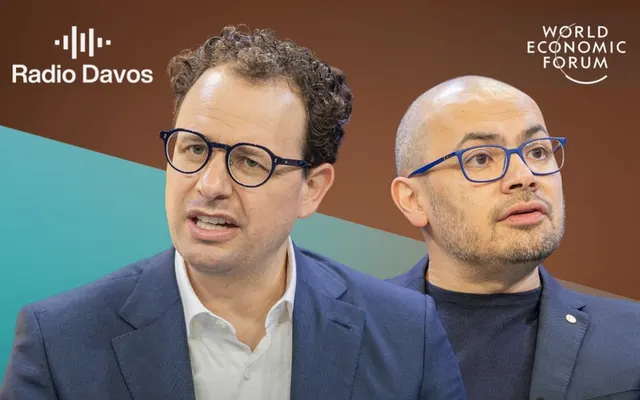
The day after AGI: Hassabis and Amodei at Davos

Artificial general intelligence (AGI) is that point in the future when the machines can do pretty much everything better than humans. When will it happen, what will it look like, and what will be the impact on humanity? Two of the brightest minds working in AI today, Demis Hassabis, Co-Founder and CEO of Google DeepMind, and Dario Amodei, Co-Founder and CEO of Anthropic, speak to Zanny Minton Beddoes, Editor-in-Chief of The Economist. Benjamin Larsen, an expert in AI at the World Economic Forum, introduces the conversation and gives us a primer on AGI.

weforum.org

Lex Fridman: science, human flourishing and AI risk

This is a transcript of Lex Fridman Podcast #475 with Demis Hassabis. The timestamps in the transcript are clickable links that take you directly to that point in the main video. Please note that the transcript is human generated, and may have errors. Here are some useful links: Go back to this episode’s main page Watch the full YouTube version of the podcast Table of Contents Here are the loose “chapters” in the conversation. Click link to jump approximately to that part in the transcript: 0:00 – Episode highlight 1:21 – Introduction 2:06 – Learnable patterns in nature 5:48 –

lexfridman.com

A framework for frontier AI and the dawning of a new age

A dynamic approach to testing frontier AI model capabilities that supports innovation, incentivizes responsible behavior, and helps safely steward AGI.

institute.deepmind.com
Where do you land?
Explore your own AI worldview by answering a few questions.