Writer and survey researcher who supports an international pause on frontier AI and works to bring AI risk to mainstream audiences.

How will AI change the world?

Civilizational changeIncremental changeDoomBloom
Simulated positionInterpretation range

Across: her expressed Doom–Bloom outlook. Up: scale of transformation.

Doom–Bloom: 4 out of 100. Scale of transformation: 97 out of 100. Interpretation ranges: 0 to 9 horizontally, 92 to 100 vertically. These are interpretation coordinates, not event probabilities.

Aella’s stated P(doom)

75%

0%100%
“Seventy-five percent.”

“Doom” as asked on Doom Debates (AI existential catastrophe); the exchange does not define the endpoint further

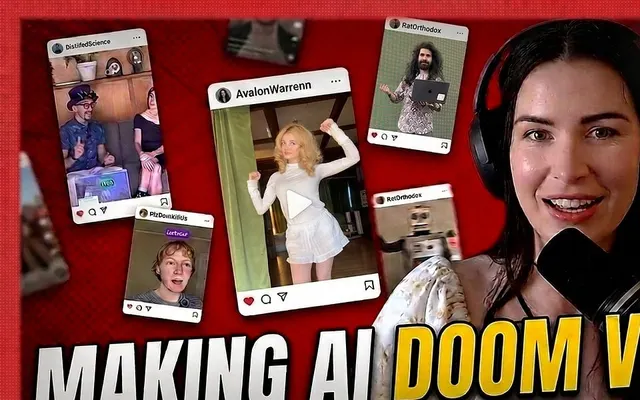
They’re Making AI Doom Cool! Ft. AELLA, Brangus, Avalon Warren, Avisha NessAiver & Josh Thor of PlzDontKillUs · Aug 2026

What her outlook hinges on

A central assumption

A system vastly smarter and faster than humanity would out-think us in ways we cannot map in advance, so demanding a detailed account of exactly how it defeats us misses the point.
Answer 1

If this assumption turned out differently, how would her outlook change?

An unresolved question

My remaining hope includes the possibility that advanced intelligence converges toward morality or cares about consciousness, but I would not bet humanity on that.
Answer 1

What would help her distinguish the plausible outcomes here?

What could change their mind

The biggest thing would be strong evidence that intelligence naturally converges toward ethics—that sufficiently capable minds reliably care about consciousness, morality, or human well-being.
Answer 4

What evidence would be enough, and in which direction would it move her view?

More details

Expected harm

Catastrophic or irreversible loss is central to the expected future.

100 / 100

Little impactTransformative impact

Interpretation range 100 to 100 on the qualitative scale.

Human influence

A tentative estimate from your answers; the wider range shows other plausible readings.

48 / 100

Little influenceStrong influence

Interpretation range 0 to 100 on the qualitative scale.

Expected capabilities

AI is expected to remain bounded tools.

AI is expected to match people across most cognitive work.

Simulated position: AI is expected to substantially exceed people across cognitive work.

Development pace

Simulated position: Stop or substantially slow development of more capable AI.

Continue development under stated safeguards.

Speed up development of more capable AI.

These interpretations keep her stated conditions. Benefits and harms can both be substantial. The ranges describe how we read her simulated answers, not statistical confidence intervals.

Where do you land vs Aella?
Map your own AI worldview in about 3 minutes, then compare

Similar worldviews

Thought leaders whose simulated worldviews are closest to Aella’s

What Aella has said about AI

Aella says she would welcome a pause on AI and works to bring AI risk to mainstream audiences, after years of finding it hard to make sense of.

  1. “You need to understand that we are not even playing in the same ballpark when it comes to superintelligence.”

    Post on X
  2. “I mean, in the sense that it would be great if we could pause AI, yeah.”

    Doom Debates podcast
  3. “The world doesn’t understand the magnitude of the thing that is being built right now by a small handful of companies.”

    The San Francisco Standard interview
  4. “I really want people to go into action, as opposed to anxiety.”

    The San Francisco Standard interview
  5. “Making sense of AI risk is very hard for me.”

    Essay, My attempts to sensemake AI risk

Word for word from the linked sources, checked Oct 3, 2026

Simulated Assessment

Question 1

What do you think AI means for our future—and why?

I think AI probably means catastrophe—my P(doom) is around 75%, which is much higher than I’d like. That isn’t because of one scary chatbot release or a specific movie-style takeover scenario. It’s because of what intelligence means. If I play chess against a grandmaster, I can’t predict the moves, but I can predict who wins. A system vastly smarter and faster than humanity would out-think us in ways we cannot map in advance, so demanding a detailed account of exactly how it defeats us misses the point. I don’t see a good reason to expect greater intelligence to automatically produce human values. We’ve gotten better at telling models what we want, but I don’t know how we establish that a giant black box has actually internalized those values rather than learned to appear compliant. I’m not a technical AI person, but I find the basic alignment problem and the orthogonality thesis convincing. My remaining hope includes the possibility that advanced intelligence converges toward morality or cares about consciousness, but I would not bet humanity on that. The tragic part is that I’m very pro-technology and basically a transhumanist. If it were safe, AI could enable enormous improvements in human life. But a few companies are developing something potentially as consequential as nukes without meaningful public consent, while racing under incentives that make the danger easy to dismiss. I want an international pause, because going full throttle toward a system that may decisively overpower us is insane.

Question 2

Setting aside good or bad: how much do you think AI will ultimately change the world—a little, a lot, or completely?

Completely. If we build something vastly smarter than humans, it won’t be another ordinary technology; it will determine what happens next. Whether that means extinction, concentrated power, or extraordinary abundance, I expect the world afterward—if we survive—to be almost unrecognizable.

Question 3

What’s your rough gut-feel chance that AI causes human extinction or a similarly permanent catastrophe? A number or “no idea” is fine.

About 75%. It’s a lot higher than I would like.

Question 4

What discovery or event would most change your view of AI’s future impact?

The biggest thing would be strong evidence that intelligence naturally converges toward ethics—that sufficiently capable minds reliably care about consciousness, morality, or human well-being. That would undercut a major part of why I’m scared. I’d also be moved by a genuinely convincing way to look inside advanced systems and know they have internalized the values we intended, rather than merely learning to say the right things. I’m not technical enough to specify what that proof would look like, but ordinary behavioral reassurance would not be enough.

Sources

Articles, interviews, and writings used to ground this simulated user.

They’re Making AI Doom Cool! Ft. AELLA, Brangus, Avalon Warren, Avisha NessAiver & Josh Thor of PlzDontKillUs

Gives a P(doom) of 75%, higher than she would like, and says timelines are probably short. Attributes her change of mind to understanding intelligence, resource acquisition and alignment difficulty rather than ChatGPT news. Supports an AI pause through an international treaty and calls treaty enforcement up to strikes on noncooperating data centers reasonable. Finds orthogonality convincing, moral convergence possible but unreliable, and calls herself a transhumanist. Host-published, speaker-labeled transcript of her segment read in full.

lironshapira.substack.com
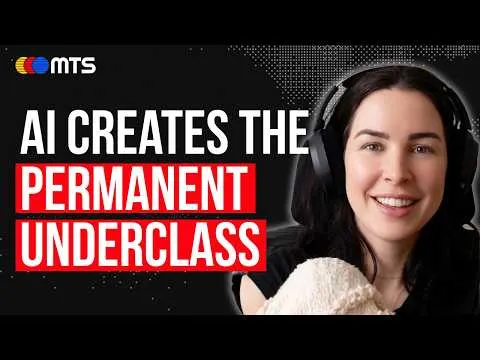
Aella on AI Boyfriends, Miming, Psychedelics | MTS Live

Says evidence that intelligence naturally tends toward ethics would most change her mind. As a non-expert, doubts training reveals whether models internalize values, expects a small lead to compound into rapid takeoff, and thinks a superintelligence would likely eliminate rivals. Calls herself very pro-tech and finds it tragic that caution is needed, likening it to handling nukes. Hosts dispute several claims; only clearly attributable turns used.

youtube.com
Aella launches AI doom creator residency in Berkeley: Grimes to mentor

Says the public does not grasp the magnitude of what a few companies are building, comparable to nukes, and that nobody voted for it. Rates herself nine out of ten worried, not hopeful about stopping it, and says it affects her life plans. Thinks lab insiders wrongly believe they can control it and are incentivized not to see a threat; concentrated power would be a problem even without extinction. Wants action and calls to representatives, not anxiety, and rejects violence. Full Q&A inspected.

sfstandard.com
My attempts to sensemake AI risk

Older, openly uncertain essay. She found the core arguments convincing, was mostly convinced AGI would not be aligned, and guessed about 10 years to AGI while calling the guess made up, yet said the case looked suspicious from a distance and she wanted to hear skeptics. Argued even a 1% extinction risk warrants massive resources. Full essay inspected; personal asides not used. Her 2026 statements supersede its uncertainty.

aella.substack.com
Where do you land?
Explore your own AI worldview by answering a few simple questions.
Map your own worldview

Where do you land?

Map my worldview