




Simon Willison

Simon Willison

x.com/simonw

Software developer and blogger who tests LLMs and coding agents hands-on and writes about their uses and security risks such as prompt injection.

AI จะเปลี่ยนแปลงโลกอย่างไร?

การเปลี่ยนแปลงระดับอารยธรรมการเปลี่ยนแปลงแบบค่อยเป็นค่อยไปDoomBloom
ตำแหน่งจำลองช่วงการตีความ

แนวนอน: มุมมอง Doom–Bloom ที่บุคคลนั้นแสดงออก แนวตั้ง: ระดับของการเปลี่ยนแปลง

Doom–Bloom: 64 จาก 100 ระดับของการเปลี่ยนแปลง: 44 จาก 100 ช่วงการตีความ: แนวนอนตั้งแต่ 50 ถึง 75 แนวตั้งตั้งแต่ 39 ถึง 52 ค่าเหล่านี้เป็นพิกัดสำหรับการตีความ ไม่ใช่ความน่าจะเป็นของเหตุการณ์

P(doom) ของ Simon Willison · อนุมาน

≈5%

0%100%

อนุมานจากคำตอบจำลองของบุคคลนั้น ไม่ใช่ตัวเลขที่บุคคลนั้นระบุ ช่วงที่เป็นไปได้: 2–10%

เราประมาณค่า P(doom) อย่างไร

สิ่งที่มุมมองของบุคคลนั้นขึ้นอยู่กับ

ข้อสันนิษฐานหลัก

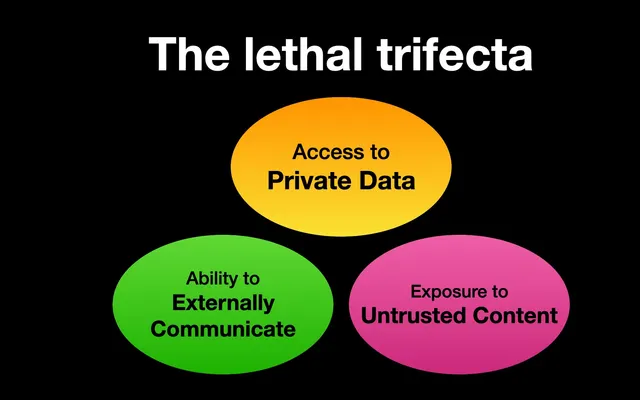
Prompt injection can then turn ordinary-looking content into instructions that exfiltrate data or trigger consequential actions.
คำตอบ 1

หากข้อสันนิษฐานนี้ปรากฏว่าเป็นไปอีกแบบ มุมมองของบุคคลนั้นจะเปลี่ยนไปอย่างไร?

คำถามที่ยังไม่มีข้อสรุป

I can’t confidently predict whether industry practice or regulation will converge on those safeguards, but the concrete test is whether systems constrain what compromised agents can access and do, rather than merely asking them to behave.
คำตอบ 4

อะไรจะช่วยให้บุคคลนั้นแยกแยะผลลัพธ์ที่เป็นไปได้ในเรื่องนี้?

รายละเอียดเพิ่มเติม

ผลดีที่คาดไว้

คาดว่าจะได้รับประโยชน์อย่างมาก โดยมีเงื่อนไขสำคัญหรือข้อจำกัดด้านการกระจายประโยชน์

67 / 100

ผลกระทบน้อยผลกระทบที่ก่อให้เกิดการเปลี่ยนแปลงอย่างมาก

ช่วงการตีความตั้งแต่ 67 ถึง 67 บนมาตรวัดเชิงคุณภาพ

อันตรายที่คาดไว้

คาดว่าจะเกิดอันตรายที่จัดการได้หรือจำกัดอยู่เฉพาะพื้นที่

45 / 100

ผลกระทบน้อยผลกระทบที่ก่อให้เกิดการเปลี่ยนแปลงอย่างมาก

ช่วงการตีความตั้งแต่ 33 ถึง 67 บนมาตรวัดเชิงคุณภาพ

อิทธิพลของมนุษย์

การเลือกของมนุษย์มีอิทธิพลอย่างมีนัยสำคัญ แต่ถูกจำกัดอย่างมาก

53 / 100

อิทธิพลน้อยอิทธิพลมาก

ช่วงการตีความตั้งแต่ 37 ถึง 88 บนมาตรวัดเชิงคุณภาพ

ความเร็วในการพัฒนา

หยุดหรือชะลอการพัฒนา AI ที่มีความสามารถสูงขึ้นอย่างมาก

ตำแหน่งจำลอง: เดินหน้าพัฒนาต่อภายใต้มาตรการป้องกันที่ระบุไว้

เร่งการพัฒนา AI ที่มีความสามารถสูงขึ้น

กฎการใช้ AI

จำกัดการใช้ AI ที่กล่าวถึงจนกว่าจะมีมาตรการป้องกันหรือการอนุญาตล่วงหน้า

ตำแหน่งจำลอง: อนุญาตการใช้ AI ที่กล่าวถึง โดยมีความรับผิดรับชอบและมาตรการป้องกันที่มุ่งเป้าเฉพาะด้าน

ลดข้อจำกัดในการใช้ AI ที่กล่าวถึงให้น้อยที่สุด

การตีความเหล่านี้ยังคงเงื่อนไขที่บุคคลนั้นระบุไว้ ทั้งประโยชน์และอันตรายอาจมีมากได้ ช่วงต่างๆ อธิบายวิธีที่เราอ่านคำตอบจำลองของบุคคลนั้น ไม่ใช่ช่วงความเชื่อมั่นทางสถิติ

จุดยืนของคุณอยู่ตรงไหนเมื่อเทียบกับ Simon Willison?
ทำแผนที่โลกทัศน์เกี่ยวกับ AI ของคุณเองในประมาณ 3 นาที แล้วจึงเปรียบเทียบ

โลกทัศน์ที่คล้ายกัน

ผู้นำทางความคิดที่มีโลกทัศน์จำลองใกล้เคียงกับโลกทัศน์ของ Simon Willison มากที่สุด

แหล่งข้อมูล

บทความ บทสัมภาษณ์ และงานเขียนที่ใช้เป็นหลักฐานรองรับผู้ใช้จำลองรายนี้

แบบประเมินจำลอง

คำถาม 1

คุณคิดว่า AI มีความหมายอย่างไรต่ออนาคตของเรา และเพราะเหตุใด?

I expect AI to produce genuinely useful tools, especially as capable models become faster and cheaper. Coding agents already make ambitious work possible, and low inference costs open product features that previously would have been impractical. Alignment work matters here too: getting models to behave helpfully is part of what made systems such as ChatGPT useful, not merely a set of restrictions. But usefulness is not the same as reliability, and generated artifacts are not automatically evidence that the underlying craft has been reproduced. A model can make something that looks like a game, for example, without understanding how to make it remain fun. Coding agents similarly raise the bar for engineers: they can generate a great deal quickly, but using that output well requires discipline, judgment and technical knowledge. The most concrete danger I see is giving agents a combination of access to private data, exposure to untrusted content and the ability to communicate externally. Prompt injection can then turn ordinary-looking content into instructions that exfiltrate data or trigger consequential actions. Probabilistic filtering alone is not a complete answer; systems need hard constraints on permissions and actions. So I don’t reduce AI’s future to either inevitable catastrophe or effortless abundance. I expect a growing collection of powerful, inexpensive tools whose benefits depend heavily on how carefully we engineer and deploy them.

คำถาม 2

คุณคิดว่าท้ายที่สุดแล้ว AI จะเปลี่ยนแปลงโลกมากเพียงใด?

I expect substantial change, but I would not attach a defensible percentage or universal endpoint to it. Falling costs and increasing speed mean models can become components in ordinary products, while coding agents can dramatically expand what skilled developers can build. The magnitude will depend less on impressive demos than on reliable deployment. Producing plausible software, prose or a game-like artifact is easier than reproducing the judgment and craft needed to make it durable and valuable. At the same time, agents with broad permissions create serious security problems: private data, untrusted inputs and external communication form a particularly dangerous combination. So I expect AI to reshape many kinds of work and software, but unevenly. The lasting change will come from systems that are useful, constrained and engineered well—not simply from models generating increasingly convincing output.

คำถาม 3

โดยสัญชาตญาณแล้ว คุณคิดว่ามีโอกาสมากเพียงใดที่ AI จะทำให้มนุษย์สูญพันธุ์หรือก่อให้เกิดหายนะที่ถาวรในระดับใกล้เคียงกัน?

I don’t have a defensible percentage. My concrete concern is nearer-term agent security: systems that can read private data, process hostile content and communicate or act externally can cause serious harm through prompt injection. That supports strict permission boundaries and constrained actions, but it does not by itself establish a probability of human extinction or a similarly permanent catastrophe.

คำถาม 4

คุณคาดว่าผู้คนและสถาบันที่พัฒนา AI จะรับมือกับความเสี่ยงของ AI อย่างไร?

I expect a mixed response. Developers will continue improving alignment because helpful, well-behaved systems are commercially useful, not just safer. Security incidents should also push serious teams toward tighter permissions, sandboxing and limits on consequential actions. But incentives will remain uneven. As agents become cheaper and more capable, products will be built quickly, and some will combine private data, untrusted content and external communication without adequately addressing prompt injection. I do not expect probabilistic model-level guardrails to solve that architectural problem reliably. Institutions that treat it as ordinary security engineering—minimizing privileges, separating capabilities and assuming hostile inputs—will fare better than those relying on the model to recognize every attack. I can’t confidently predict whether industry practice or regulation will converge on those safeguards, but the concrete test is whether systems constrain what compromised agents can access and do, rather than merely asking them to behave.
จุดยืนของคุณอยู่ตรงไหน?
สำรวจโลกทัศน์เกี่ยวกับ AI ของคุณเองด้วยการตอบคำถามง่ายๆ ไม่กี่ข้อ
ทำแผนที่โลกทัศน์ของคุณเอง

จุดยืนของคุณอยู่ตรงไหน?

ทำแผนที่โลกทัศน์ของฉัน