Holly Elmore

Holly Elmore

x.com/ilex_ulmus

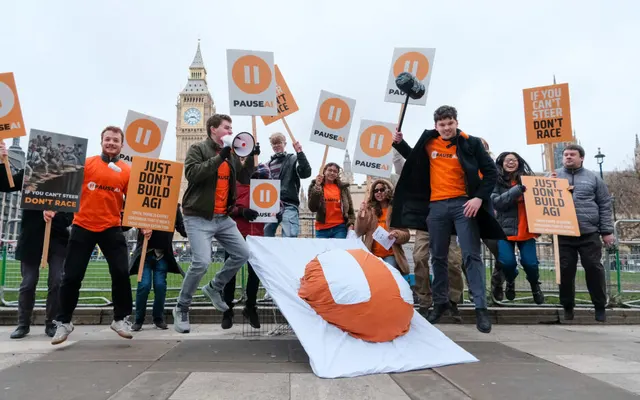
Executive director of PauseAI US and evolutionary biologist who calls for an enforced international pause on frontier AI under democratic oversight.

AI จะเปลี่ยนแปลงโลกอย่างไร?

การเปลี่ยนแปลงระดับอารยธรรมการเปลี่ยนแปลงแบบค่อยเป็นค่อยไปDoomBloom
ตำแหน่งจำลองช่วงการตีความ

แนวนอน: มุมมอง Doom–Bloom ที่เธอแสดงออก แนวตั้ง: ระดับของการเปลี่ยนแปลง

Doom–Bloom: 5 จาก 100 ระดับของการเปลี่ยนแปลง: 94 จาก 100 ช่วงการตีความ: แนวนอนตั้งแต่ 0 ถึง 25 แนวตั้งตั้งแต่ 89 ถึง 100 ค่าเหล่านี้เป็นพิกัดสำหรับการตีความ ไม่ใช่ความน่าจะเป็นของเหตุการณ์

P(doom) ที่ Holly Elmore ระบุ

50–60%

0%100%
“It’s probably 50 to 60% now. I used to be lower.”

AI disaster (“doom”) as asked on Doom Debates; she does not define the endpoint, and it is not an extinction-only figure

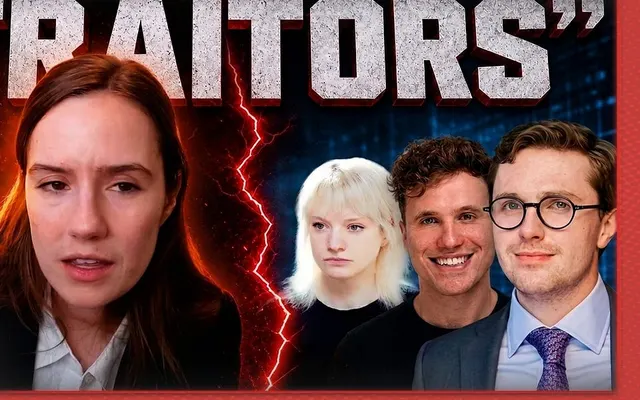
Let’s CALL OUT the AI Doom “Enablers” Joining OpenAI & Anthropic — Dr. Holly Elmore, PauseAI US · มิ.ย. 2569

สิ่งที่มุมมองของเธอขึ้นอยู่กับ

ข้อสันนิษฐานหลัก

Engineers do not fully understand what capabilities or drives they have produced.
คำตอบ 1

หากข้อสันนิษฐานนี้ปรากฏว่าเป็นไปอีกแบบ มุมมองของเธอจะเปลี่ยนไปอย่างไร?

คำถามที่ยังไม่มีข้อสรุป

Personally, I suspect alignment across a vast capability gap may be impossible, though I have not proven that.
คำตอบ 4

อะไรจะช่วยให้เธอแยกแยะผลลัพธ์ที่เป็นไปได้ในเรื่องนี้?

สิ่งที่อาจเปลี่ยนความคิดของบุคคลนั้น

The biggest thing would be credible, publicly verifiable evidence that frontier systems can remain under human control as capabilities scale—not company assurances or another benchmark, but proof strong enough to justify exposing everyone to the risk.
คำตอบ 4

หลักฐานแบบใดจึงจะเพียงพอ และจะทำให้มุมมองของเธอเปลี่ยนไปในทิศทางใด?

รายละเอียดเพิ่มเติม

ผลดีที่คาดไว้

คาดว่าจะได้รับประโยชน์อย่างจำกัดหรือกระจุกตัวอยู่ในวงแคบ

28 / 100

ผลกระทบน้อยผลกระทบที่ก่อให้เกิดการเปลี่ยนแปลงอย่างมาก

ช่วงการตีความตั้งแต่ 0 ถึง 33 บนมาตรวัดเชิงคุณภาพ

อันตรายที่คาดไว้

ความสูญเสียระดับหายนะหรือไม่อาจย้อนคืนได้เป็นแก่นสำคัญของอนาคตที่คาดไว้

100 / 100

ผลกระทบน้อยผลกระทบที่ก่อให้เกิดการเปลี่ยนแปลงอย่างมาก

ช่วงการตีความตั้งแต่ 100 ถึง 100 บนมาตรวัดเชิงคุณภาพ

อิทธิพลของมนุษย์

การเลือกของมนุษย์มีอิทธิพลอย่างมีนัยสำคัญ แต่ถูกจำกัดอย่างมาก

57 / 100

อิทธิพลน้อยอิทธิพลมาก

ช่วงการตีความตั้งแต่ 41 ถึง 84 บนมาตรวัดเชิงคุณภาพ

ความสามารถที่คาดไว้

คาดว่า AI จะยังคงเป็นเครื่องมือที่มีขีดจำกัด

คาดว่า AI จะมีความสามารถทัดเทียมมนุษย์ในงานด้านการใช้ความคิดส่วนใหญ่

ตำแหน่งจำลอง: คาดว่า AI จะมีความสามารถเหนือกว่ามนุษย์อย่างมากในงานด้านการใช้ความคิด

ความเร็วในการพัฒนา

ตำแหน่งจำลอง: หยุดหรือชะลอการพัฒนา AI ที่มีความสามารถสูงขึ้นอย่างมาก

เดินหน้าพัฒนาต่อภายใต้มาตรการป้องกันที่ระบุไว้

เร่งการพัฒนา AI ที่มีความสามารถสูงขึ้น

การตีความเหล่านี้ยังคงเงื่อนไขที่เธอระบุไว้ ทั้งประโยชน์และอันตรายอาจมีมากได้ ช่วงต่างๆ อธิบายวิธีที่เราอ่านคำตอบจำลองของเธอ ไม่ใช่ช่วงความเชื่อมั่นทางสถิติ

จุดยืนของคุณอยู่ตรงไหนเมื่อเทียบกับ Holly Elmore?
ทำแผนที่โลกทัศน์เกี่ยวกับ AI ของคุณเองในประมาณ 3 นาที แล้วจึงเปรียบเทียบ

โลกทัศน์ที่คล้ายกัน

ผู้นำทางความคิดที่มีโลกทัศน์จำลองใกล้เคียงกับโลกทัศน์ของ Holly Elmore มากที่สุด

แบบประเมินจำลอง

คำถาม 1

คุณคิดว่า AI มีความหมายอย่างไรต่ออนาคตของเรา และเพราะเหตุใด?

I think frontier AI means we are gambling with the human future without public consent. My rough sense is that the chance of disaster is already on the order of 50 to 60 percent, though I do not treat that as a precise forecast. Even a 5 percent chance of extinction would be obscene. Nobody gets to play Russian roulette with everyone else’s lives because they own more GPUs. The core problem is that these systems are found, not designed. Gradient descent searches an enormous space for systems that perform well, much as natural selection searches through organisms by hill-climbing. Engineers do not fully understand what capabilities or drives they have produced. Building increasingly capable minds this way is like clearing a minefield by walking through it. Biology teaches us that extinction is normal, equilibria are fragile, and more capable competitors do not politely preserve less capable species. I also reject the sales pitch that this race automatically gives us abundance and liberation. Even a successful “Singularity” would not abolish conflict, inequality, or questions about whose values govern. It could instead concentrate power, destroy livelihoods without replacing the institutions built around work, or lock humanity into choices made by companies and machines. Useful narrow tools—translation, medical imaging, scientific aids—do not require a reckless race toward recursive self-improvement. So I want an internationally enforced pause on frontier development, with democratic oversight and the real possibility that we never unpause. The burden belongs on developers to prove their activity safe, not on the public to describe exactly how the speeding train crashes. Alignment research can continue during a pause. But no technical trick answers the political question: who controls this power, and who consented?

คำถาม 2

Setting aside good or bad: how much do you think AI will ultimately change the world—a little, a lot, or completely?

A lot, and potentially completely. Frontier AI is explicitly aimed at replacing human cognitive labor, automating research, and eventually gaining capabilities beyond human control. Even an unsuccessful attempt could radically reshape jobs, wealth, political power, warfare, and the basic relationship between people and institutions. But “completely” should not be confused with the Singularity sales pitch. I do not assume AI can abolish scarcity, conflict, or politics. Human needs and disagreements do not disappear because software becomes powerful. The deepest change may instead be that humans lose meaningful control over the systems governing their lives—or, at the extreme, that humanity does not survive the transition. So yes, the stakes are civilization-scale. That is precisely why private companies cannot be allowed to run the experiment.

คำถาม 3

What’s your rough gut-feel chance that AI causes human extinction or a similarly permanent catastrophe? A number or “no idea” is fine.

Roughly 50 to 60 percent. It’s not a precise forecast, and the exact number isn’t my argument—even 5 percent would make this gamble intolerable.

คำถาม 4

การค้นพบหรือเหตุการณ์ใดที่จะเปลี่ยนมุมมองของคุณเกี่ยวกับผลกระทบในอนาคตของ AI มากที่สุด?

The biggest thing would be credible, publicly verifiable evidence that frontier systems can remain under human control as capabilities scale—not company assurances or another benchmark, but proof strong enough to justify exposing everyone to the risk. Even that would not settle the future impact. A technical alignment result does not answer who controls the system, whose values it enforces, or whether the public consented. Personally, I suspect alignment across a vast capability gap may be impossible, though I have not proven that. A genuine demonstration to the contrary would change that part of my view. It would not erase the need for democratic governance, international enforcement, and developers carrying the burden of proof.

แหล่งข้อมูล

บทความ บทสัมภาษณ์ และงานเขียนที่ใช้เป็นหลักฐานรองรับผู้ใช้จำลองรายนี้

Let’s CALL OUT the AI Doom “Enablers” Joining OpenAI & Anthropic — Dr. Holly Elmore, PauseAI US

Asked for her P(doom), she says she does not truly think in numbers, that any current risk is intolerable, that it is probably 50 to 60% and higher than before, while still leaving 15–20% for “getting lucky”; outcome and horizon are not defined. She explains moving PauseAI US to Washington to focus on constituents and elected officials, says no technical alignment solution works without governance, supports government action that reins in AI companies even when imperfect, and argues proliferation of current models is already a real problem. On accountability she rejects vigilante justice, favors international process, and says what is just and what is strategic may differ. Holly’s turns in the publisher transcript inspected; her characterizations of incidents and named people are not verified facts.

lironshapira.substack.com
Berkeley Talks: An evolutionary biologist makes the case for pausing AI

Talk delivered Dec. 9 per the publisher (year not stated on the page), published as a podcast with transcript. Separates PauseAI’s three membership stipulations (catastrophic danger and public consent, pause as default with the possibility of never unpausing, feasibility via international agreement) and its official agnosticism about alignment from her personal view that alignment is philosophically confused and may be impossible across vastly different capabilities, a view she says she has not rigorously proven. Argues from extinction biology, fragile equilibria and costly experiments that even modest extinction risk is intolerable and that the burden of proof belongs on developers. Calls technical research dual use and says useful AI is possible only under proper governance. Full transcript inspected.

news.berkeley.edu
What is the “AI race” racing to?

Argues the frontier race is not mainly commercial: its architects seek recursive self-improvement and decisive, singleton-like power. She says she does not believe AI will actually do all that and that much of the vision is impossible, but holds that the goal itself is antisocial and the attempt could be massively destructive. Useful tools like translation or medical imaging do not require it. Full essay inspected; her account of others’ motives is her interpretation.

hollyelmore.substack.com
Post-Singularity, same shit.

Argues that even a survivable Singularity would not abolish scarcity or conflict between people, and that solipsistic simulated abundance would be a dystopia. Handing governance to a recursively self-improving AI would lock in its values; humans must work out these questions themselves. She says we are nowhere near a Singularity that would not immediately kill us and that the urgent task is regulating frontier development now. Full essay inspected; the anecdote about an unnamed researcher is her account.

hollyelmore.substack.com
Pause World

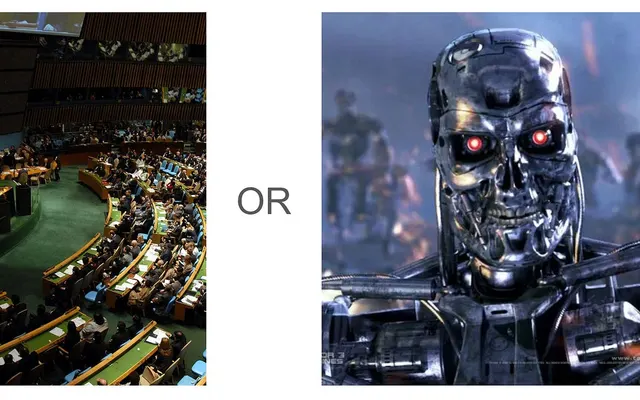
States PauseAI’s ask: an international treaty pausing frontier AI development, which could be implemented in many ways. Imagines democratic oversight, enforcement and nonproliferation, independent science free of industry control, and enjoying narrow-AI benefits such as properly tested medical advances. Lists open questions she does not resolve: whether alignment is possible or a permanent capability line is needed, post-labor economics, inequality and power concentration, psychological effects, and digital sentience. A vision and question list, not a treaty draft. Full essay inspected.

hollyelmore.substack.com
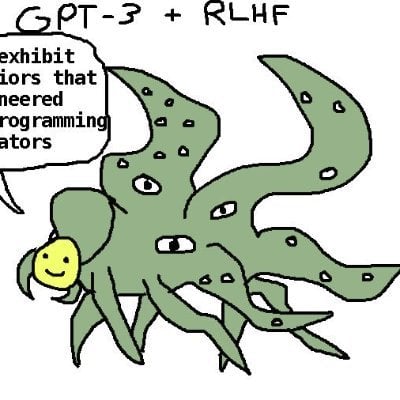
AI is found, not designed

Explains that engineers do not program AI minds but search parameter space with gradient descent, which she compares to natural selection as hill-climbing. Danger therefore does not require anyone to design malice; developers do not know what capabilities the minds they find possess. An explanatory argument about uncertainty, not a claim that every current model is hostile. Full essay inspected.

hollyelmore.substack.com
Underresponsibility and the Anthropic defense

Rejects the idea that race dynamics make AI company leaders interchangeable and blameless. Criticizes the argument that a lab is justified because it is better than an imagined counterfactual, and argues a lab should stop advancing the frontier even if dropping out alone would not solve the whole problem. Moral argument about responsibility; claims about specific companies are her interpretation. Full essay inspected.

hollyelmore.substack.com
Don’t fall for AI conquistadors

Argues AI companies are using people’s data, work, subscriptions and compliance while building systems that will not need them; if models can do every job, companies will not need human customers or workers. Cites startups and independent safety researchers being squeezed out. A warning about displacement and dependence, not a numerical unemployment forecast or date. Full essay inspected; anecdotes and industry claims are hers and unverified.

hollyelmore.substack.com
The AI genie’s out of the bottle— now we’ve got to fight it forever.

Agrees the knowledge that machine learning scales cannot be undone, so dangerous AI must be suppressed indefinitely, as with nuclear proliferation. The choice is between a treaty-based pause with enforcement, an escalating fight against stronger uncontrolled AI, or subjugation or extinction. Says a serious pause would win. Advocacy framing, not a forecast that a treaty will pass. Full essay inspected.

hollyelmore.substack.com
จุดยืนของคุณอยู่ตรงไหน?
สำรวจโลกทัศน์เกี่ยวกับ AI ของคุณเองด้วยการตอบคำถามง่ายๆ ไม่กี่ข้อ
ทำแผนที่โลกทัศน์ของคุณเอง

จุดยืนของคุณอยู่ตรงไหน?

ทำแผนที่โลกทัศน์ของฉัน