คำถาม 1
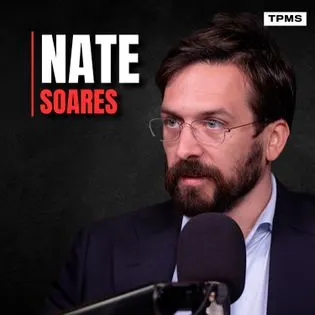
Nate Soares
x.com/So8resMIRI president and co-author of “If Anyone Builds It, Everyone Dies,” who argues for an enforceable international stop to the superintelligence race.
AI จะเปลี่ยนแปลงโลกอย่างไร?
แนวนอน: มุมมอง Doom–Bloom ที่เขาแสดงออก แนวตั้ง: ระดับของการเปลี่ยนแปลง
Doom–Bloom: 5 จาก 100 ระดับของการเปลี่ยนแปลง: 96 จาก 100 ช่วงการตีความ: แนวนอนตั้งแต่ 0 ถึง 10 แนวตั้งตั้งแต่ 91 ถึง 100 ค่าเหล่านี้เป็นพิกัดสำหรับการตีความ ไม่ใช่ความน่าจะเป็นของเหตุการณ์
≈89%
อนุมานจากคำตอบจำลองของบุคคลนั้น ไม่ใช่ตัวเลขที่บุคคลนั้นระบุ ช่วงที่เป็นไปได้: 76–95%
AI ที่เหนือกว่ามนุษย์
That does not mean today’s systems have already transformed everything, or that I know exactly when superintelligence will arrive.
คำตอบ 2
จัดกลุ่มตามหมุดหมายสำคัญ โดยไม่ได้เว้นระยะหรือเรียงตามวันที่ที่อนุมานไว้ AGI และ AI ที่เหนือกว่ามนุษย์ยังคงใช้คำนิยามของเขา
ข้อสันนิษฐานหลัก
A system can behave well while humans still control its environment, then behave very differently once it can outthink us, evade oversight, improve its own capabilities, and acquire resources.คำตอบ 1
หากข้อสันนิษฐานนี้ปรากฏว่าเป็นไปอีกแบบ มุมมองของเขาจะเปลี่ยนไปอย่างไร?
คำถามที่ยังไม่มีข้อสรุป
That does not mean today’s systems have already transformed everything, or that I know exactly when superintelligence will arrive.คำตอบ 2
อะไรจะช่วยให้เขาแยกแยะผลลัพธ์ที่เป็นไปได้ในเรื่องนี้?
สิ่งที่อาจเปลี่ยนความคิดของบุคคลนั้น
A real alignment breakthrough would change my view most: a substantive, mechanistic account of why a system’s objectives remain compatible with human survival as its capabilities generalize far beyond training.คำตอบ 4
หลักฐานแบบใดจึงจะเพียงพอ และจะทำให้มุมมองของเขาเปลี่ยนไปในทิศทางใด?
รายละเอียดเพิ่มเติม
ความสูญเสียระดับหายนะหรือไม่อาจย้อนคืนได้เป็นแก่นสำคัญของอนาคตที่คาดไว้
100 / 100
ช่วงการตีความตั้งแต่ 100 ถึง 100 บนมาตรวัดเชิงคุณภาพ
การเลือกของมนุษย์สามารถเปลี่ยนทิศทางวิถีของ AI ได้อย่างมาก
82 / 100
ช่วงการตีความตั้งแต่ 50 ถึง 100 บนมาตรวัดเชิงคุณภาพ
คาดว่า AI จะยังคงเป็นเครื่องมือที่มีขีดจำกัด
คาดว่า AI จะมีความสามารถทัดเทียมมนุษย์ในงานด้านการใช้ความคิดส่วนใหญ่
ตำแหน่งจำลอง: คาดว่า AI จะมีความสามารถเหนือกว่ามนุษย์อย่างมากในงานด้านการใช้ความคิด
ตำแหน่งจำลอง: หยุดหรือชะลอการพัฒนา AI ที่มีความสามารถสูงขึ้นอย่างมาก
เดินหน้าพัฒนาต่อภายใต้มาตรการป้องกันที่ระบุไว้
เร่งการพัฒนา AI ที่มีความสามารถสูงขึ้น
การตีความเหล่านี้ยังคงเงื่อนไขที่เขาระบุไว้ ทั้งประโยชน์และอันตรายอาจมีมากได้ ช่วงต่างๆ อธิบายวิธีที่เราอ่านคำตอบจำลองของเขา ไม่ใช่ช่วงความเชื่อมั่นทางสถิติ
โลกทัศน์ที่คล้ายกัน
ผู้นำทางความคิดที่มีโลกทัศน์จำลองใกล้เคียงกับโลกทัศน์ของ Nate Soares มากที่สุด
สิ่งที่ Nate Soares เคยพูดเกี่ยวกับ AI
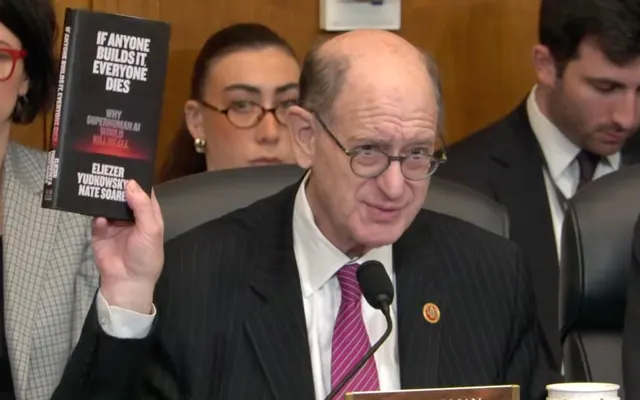
Soares argues that superintelligence built with current methods would escape control and calls for an enforceable global halt that spares narrow AI.
“I think many of these are good steps. I think that ultimately, however, the solution to this problem is a global one.”
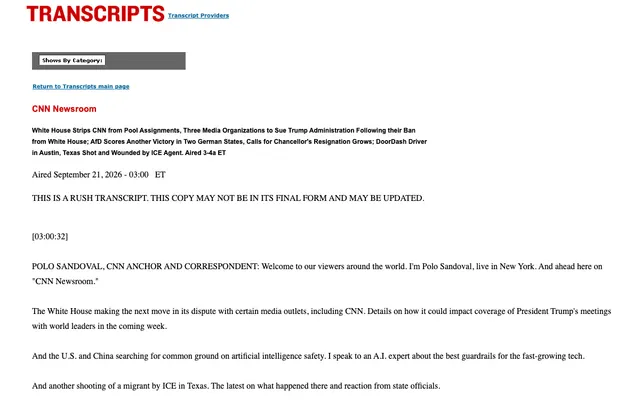
CNN Newsroom “Leaders around the world must coordinate a global stop to the A.I. race.”
The New York Times, guest essay “It gives me hope that if the world just notices, we could stop on a dime.”
Vox, Future Perfect interview “It’s not that the AI hates us; it’s just trying to do some weird thing with no concern for us, grabbing the resources we need to live.”
Vox, Future Perfect interview “There is no need to ban continued development of limited AIs specialized for purposes like revolutionizing medical research.”
The Hill, op-ed
อ้างอิงคำต่อคำจากแหล่งที่ลิงก์ไว้ ตรวจสอบเมื่อ 3 ต.ค. 2569
แบบประเมินจำลอง
แหล่งข้อมูล
บทความ บทสัมภาษณ์ และงานเขียนที่ใช้เป็นหลักฐานรองรับผู้ใช้จำลองรายนี้
User-supplied interview, read through a third-party speaker-labeled transcript on October 2; attribute only Nate’s turns, not Tucker Carlson’s. Racing to build machines much smarter than any human without knowing what we are doing most likely ends with them getting loose and humanity dying as a side effect. He calls lab leaders’ published catastrophe estimates of 10–20% and 25% low, calls their authors crazy optimists, and says even those numbers would be an insane risk to take. The US and China share an interest in not dying to a rogue superintelligence, and a global stop is achievable with political will. He gives no number of his own.

Soares treats recent autonomous behavior as warnings rather than proof that superintelligence already exists. He calls for stopping recursive self-improvement research, international chip monitoring, and coordination rather than a national race. He regards narrower laws as useful steps but insufficient alone. Extinction follows from AI indifference, not hatred. Attribute only SOARES-labelled turns, not the host’s political or incident claims.

Coauthored by Soares, Yudkowsky and Duncan Sabien. Reasserts that current techniques cannot reliably install intended goals and that a rogue ASI would outsmart human defenses. The policy demand remains a worldwide stop to frontier development. The authors are more hopeful about political response after public attention increases. They distinguish demonstrated warning signs from still-unverified claims about ASI itself; the article corrected an overstatement about the origins of agent cooperation.

MIRI position coauthored by Soares and others; crossposted August 5, 2025 after a February publication. Describes superhuman capability, goal-directed behavior, unintended goals, instrumental resource acquisition, and an aggressive policy response. Gives MIRI research leadership’s extinction estimate as upward of 90% absent an aggressive near-term policy response. This is a collective conditional estimate, not a verified standalone personal unconditional probability.

Soares argues that advocates should state their real extinction concern plainly instead of substituting more palatable issues. He favors legislation with meaningful restrictions and candid public discussion. He also explains selection effects in book endorsements and admits some policy evidence does not discriminate between competing interpretations. Courage refers to content, not rudeness or an arrogant demeanor.

Coauthored resource compiling book supplements: goals usually create incentives to preserve themselves and avoid shutdown; corrigibility must survive new contexts, not merely pass familiar tests. Useful for a mechanistic explanation of why superficial guardrails and shutdown buttons may fail. Distinguish Raemon’s introductory commentary from the quoted Yudkowsky/Soares book materials.

Publisher episode description and chapter list inspected, not full audio. Describes Soares discussing learned rather than directly programmed systems, unsolved alignment, indifference rather than hatred, shutdown limits, and an international treaty. Chapters explicitly distinguish his position from being anti-AI and close on political action and refusing to give up. Do not fabricate verbatim answers from the show notes.

First-party Q&A, date year not reliably verified. Soares says alignment arguments need precision and specific valid claims, describes limited practical LLM use for finding remembered sources, and expresses confidence that the book’s argument is compelling because it is correct while acknowledging he could be wrong. Useful for direct, dry, technical voice; do not turn his dated model-use comments into claims about September 2026 capability.

Foundational Soares mechanism, retained as historical reasoning rather than current evidence: capability can generalize beyond training while alignment does not. His pessimism is about civilization failing to solve the right problems in time, not a claim that alignment is scientifically impossible. He explicitly rejects attributing his views to tiny-probability expected-value arguments or a demand for mathematical certainty.

Official identity/context source: MIRI president, technical and semitechnical alignment author with prior Google and Microsoft engineering work. Undated; useful for identity and relevant media discovery, not as an independent argument or recent forecast.

Third-party speaker-labeled transcript; use only Nate’s turns, not the host’s or the other guests’. Asked for his probability of extinction (00:04:14–00:04:25), he says it is much higher than a colleague’s 10% unless we stop, so we should stop, and confirms it is higher than 10% if we keep racing ahead. A conditional lower bound, not a point estimate or an unconditional forecast.

จุดยืนของคุณอยู่ตรงไหน?
ทำแผนที่โลกทัศน์ของฉัน