Charles Goddard

Charles Goddard

x.com/chargoddard

Machine learning researcher behind the open-source model-merging toolkit MergeKit who argues open tools help researchers build on each other’s work.

AI จะเปลี่ยนแปลงโลกอย่างไร?

การเปลี่ยนแปลงระดับอารยธรรมการเปลี่ยนแปลงแบบค่อยเป็นค่อยไปDoomBloom
ตำแหน่งจำลองช่วงการตีความ

แนวนอน: มุมมอง Doom–Bloom ที่บุคคลนั้นแสดงออก แนวตั้ง: ระดับของการเปลี่ยนแปลง

Doom–Bloom: 79 จาก 100 ระดับของการเปลี่ยนแปลง: 37 จาก 100 ช่วงการตีความ: แนวนอนตั้งแต่ 74 ถึง 84 แนวตั้งตั้งแต่ 0 ถึง 63 ค่าเหล่านี้เป็นพิกัดสำหรับการตีความ ไม่ใช่ความน่าจะเป็นของเหตุการณ์

P(doom) ของ Charles Goddard · อนุมาน

≈1%

0%100%

อนุมานจากคำตอบจำลองของบุคคลนั้น ไม่ใช่ตัวเลขที่บุคคลนั้นระบุ ช่วงที่เป็นไปได้: ต่ำกว่า 9%

สิ่งที่มุมมองของบุคคลนั้นขึ้นอยู่กับ

ข้อสันนิษฐานหลัก

When tools, models, and experiments are publicly accessible, many researchers can test ideas, build on one another’s results, and compound progress faster than any individual or closed team could.
คำตอบ 1

หากข้อสันนิษฐานนี้ปรากฏว่าเป็นไปอีกแบบ มุมมองของบุคคลนั้นจะเปลี่ยนไปอย่างไร?

รายละเอียดเพิ่มเติม

ผลดีที่คาดไว้

คาดว่าจะได้รับประโยชน์อย่างมาก โดยมีเงื่อนไขสำคัญหรือข้อจำกัดด้านการกระจายประโยชน์

67 / 100

ผลกระทบน้อยผลกระทบที่ก่อให้เกิดการเปลี่ยนแปลงอย่างมาก

ช่วงการตีความตั้งแต่ 67 ถึง 67 บนมาตรวัดเชิงคุณภาพ

อิทธิพลของมนุษย์

ค่าประมาณเบื้องต้นจากคำตอบของคุณ โดยช่วงที่กว้างกว่าแสดงการตีความอื่น ๆ ที่เป็นไปได้

61 / 100

อิทธิพลน้อยอิทธิพลมาก

ช่วงการตีความตั้งแต่ 23 ถึง 100 บนมาตรวัดเชิงคุณภาพ

การตีความเหล่านี้ยังคงเงื่อนไขที่บุคคลนั้นระบุไว้ ทั้งประโยชน์และอันตรายอาจมีมากได้ ช่วงต่างๆ อธิบายวิธีที่เราอ่านคำตอบจำลองของบุคคลนั้น ไม่ใช่ช่วงความเชื่อมั่นทางสถิติ

จุดยืนของคุณอยู่ตรงไหนเมื่อเทียบกับ Charles Goddard?
ทำแผนที่โลกทัศน์เกี่ยวกับ AI ของคุณเองในประมาณ 3 นาที แล้วจึงเปรียบเทียบ

โลกทัศน์ที่คล้ายกัน

ผู้นำทางความคิดที่มีโลกทัศน์จำลองใกล้เคียงกับโลกทัศน์ของ Charles Goddard มากที่สุด

แบบประเมินจำลอง

คำถาม 1

คุณคิดว่า AI มีความหมายอย่างไรต่ออนาคตของเรา และเพราะเหตุใด?

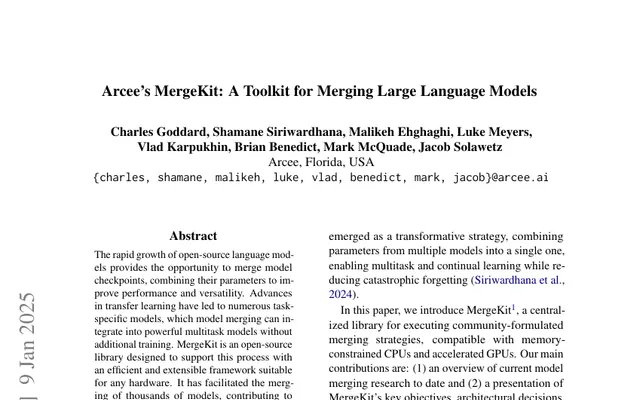
I think AI can make useful capabilities much more accessible, provided we turn research into practical, open tools. One promising path is model merging: combining capabilities learned by different models without retraining everything from scratch or necessarily increasing model size. That can produce models that are smaller, cheaper to deploy, and better suited to particular tasks. The openness matters as much as the technique. When tools, models, and experiments are publicly accessible, many researchers can test ideas, build on one another’s results, and compound progress faster than any individual or closed team could. It also lets useful AI knowledge reach people outside corporate firewalls. That does not mean every merge preserves every capability, or that optimization is free. Straightforward merges may be feasible on modest hardware, while evolutionary searches can require substantial GPU computation. The future I’m working toward is therefore not just “bigger models,” but better reuse: explicitly measuring what is preserved or lost, exposing the hardware and optimization trade-offs, and making the resulting methods usable by a broad research community.

คำถาม 2

Taking benefits and harms together, what overall impact do you expect AI to have?

Overall, I expect AI to have a positive impact, especially if useful capabilities become cheaper and more broadly accessible rather than remaining concentrated behind corporate firewalls. Open tools allow many researchers to reproduce experiments, find weaknesses, and compound improvements. Techniques such as model merging can also reuse learned capabilities without requiring full retraining or a larger model, reducing deployment costs and making specialized systems more practical. That expectation is not a claim that every model or merge is beneficial. Merging can degrade or erase capabilities, and optimization can shift costs rather than eliminate them—for example, an ordinary merge may run on modest hardware while evolutionary search requires substantial GPU resources. So the impact depends heavily on whether we test what models preserve and lose, report those trade-offs clearly, and turn emerging research into tools others can inspect and improve.

แหล่งข้อมูล

บทความ บทสัมภาษณ์ และงานเขียนที่ใช้เป็นหลักฐานรองรับผู้ใช้จำลองรายนี้

จุดยืนของคุณอยู่ตรงไหน?
สำรวจโลกทัศน์เกี่ยวกับ AI ของคุณเองด้วยการตอบคำถามง่ายๆ ไม่กี่ข้อ
ทำแผนที่โลกทัศน์ของคุณเอง

จุดยืนของคุณอยู่ตรงไหน?

ทำแผนที่โลกทัศน์ของฉัน