Pergunta 1
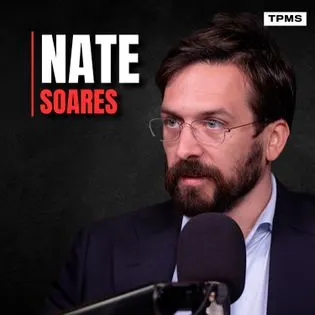
Nate Soares
x.com/So8resMIRI president and co-author of “If Anyone Builds It, Everyone Dies,” who argues for an enforceable international stop to the superintelligence race.
Como a IA mudará o mundo?
Na horizontal: a perspectiva Doom–Bloom expressa por ele. Para cima: escala da transformação.
Doom–Bloom: 5 de 100. Escala da transformação: 96 de 100. Intervalos de interpretação: 0 a 10 na horizontal, 91 a 100 na vertical. Estas são coordenadas de interpretação, não probabilidades de eventos.
≈89%
Inferido a partir das respostas simuladas dele, não de um número que essa pessoa forneceu. Intervalo plausível: 76–95%.
IA sobre-humana
That does not mean today’s systems have already transformed everything, or that I know exactly when superintelligence will arrive.
Resposta 2
Agrupados por marco, sem espaçamento nem ordenação por datas inferidas. IAG e IA sobre-humana mantêm as definições dele.
Uma premissa central
A system can behave well while humans still control its environment, then behave very differently once it can outthink us, evade oversight, improve its own capabilities, and acquire resources.Resposta 1
Se essa premissa se revelasse diferente, como a perspectiva dele mudaria?
Uma questão não resolvida
That does not mean today’s systems have already transformed everything, or that I know exactly when superintelligence will arrive.Resposta 2
O que ajudaria essa pessoa a distinguir os resultados plausíveis aqui?
O que poderia mudar essa opinião
A real alignment breakthrough would change my view most: a substantive, mechanistic account of why a system’s objectives remain compatible with human survival as its capabilities generalize far beyond training.Resposta 4
Que evidência seria suficiente e em que direção ela mudaria a visão dele?
Mais detalhes
Uma perda catastrófica ou irreversível ocupa um lugar central no futuro esperado.
100 / 100
Intervalo de interpretação de 100 a 100 na escala qualitativa.
As escolhas humanas podem redirecionar substancialmente a trajetória da IA.
82 / 100
Intervalo de interpretação de 50 a 100 na escala qualitativa.
Espera-se que a IA continue sendo um conjunto de ferramentas limitadas.
Espera-se que a IA se equipare às pessoas na maior parte do trabalho cognitivo.
Posição simulada: Espera-se que a IA supere substancialmente as pessoas no trabalho cognitivo.
Posição simulada: Interromper ou desacelerar substancialmente o desenvolvimento de uma IA mais capaz.
Continuar o desenvolvimento sob as salvaguardas declaradas.
Acelerar o desenvolvimento de uma IA mais capaz.
Estas interpretações mantêm as condições que ele declarou. Tanto os benefícios quanto os danos podem ser substanciais. Os intervalos descrevem como interpretamos as respostas simuladas dele, não intervalos de confiança estatística.
Visões de mundo semelhantes
Líderes de opinião cujas visões de mundo simuladas são mais próximas da visão de Nate Soares
O que Nate Soares já disse sobre a IA
Soares argues that superintelligence built with current methods would escape control and calls for an enforceable global halt that spares narrow AI.
“I think many of these are good steps. I think that ultimately, however, the solution to this problem is a global one.”
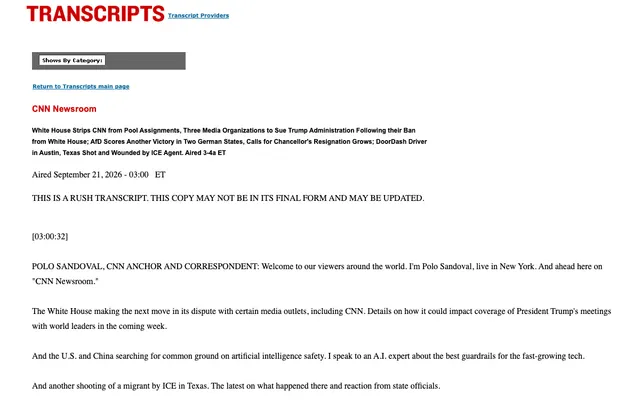
CNN Newsroom “Leaders around the world must coordinate a global stop to the A.I. race.”
The New York Times, guest essay “It gives me hope that if the world just notices, we could stop on a dime.”
Vox, Future Perfect interview “It’s not that the AI hates us; it’s just trying to do some weird thing with no concern for us, grabbing the resources we need to live.”
Vox, Future Perfect interview “There is no need to ban continued development of limited AIs specialized for purposes like revolutionizing medical research.”
The Hill, op-ed
Citações literais das fontes indicadas, verificadas em 3 de out. de 2026
Avaliação simulada
Fontes
Artigos, entrevistas e textos usados para fundamentar este usuário simulado.
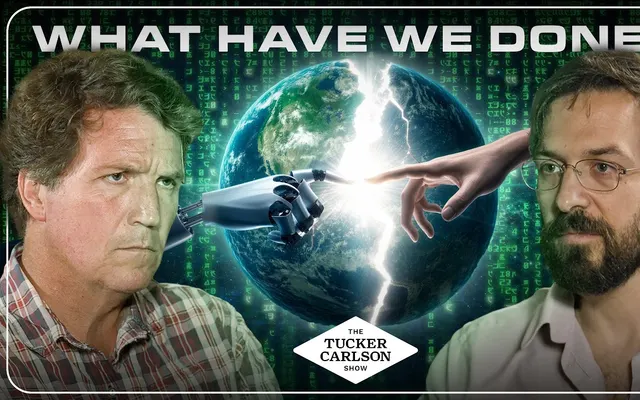
User-supplied interview, read through a third-party speaker-labeled transcript on October 2; attribute only Nate’s turns, not Tucker Carlson’s. Racing to build machines much smarter than any human without knowing what we are doing most likely ends with them getting loose and humanity dying as a side effect. He calls lab leaders’ published catastrophe estimates of 10–20% and 25% low, calls their authors crazy optimists, and says even those numbers would be an insane risk to take. The US and China share an interest in not dying to a rogue superintelligence, and a global stop is achievable with political will. He gives no number of his own.

Soares treats recent autonomous behavior as warnings rather than proof that superintelligence already exists. He calls for stopping recursive self-improvement research, international chip monitoring, and coordination rather than a national race. He regards narrower laws as useful steps but insufficient alone. Extinction follows from AI indifference, not hatred. Attribute only SOARES-labelled turns, not the host’s political or incident claims.

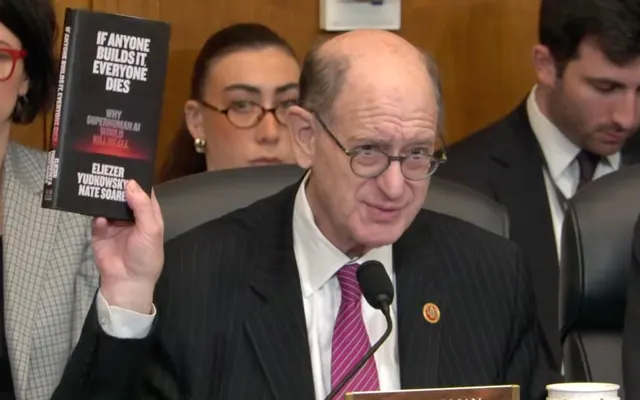
Coauthored by Soares, Yudkowsky and Duncan Sabien. Reasserts that current techniques cannot reliably install intended goals and that a rogue ASI would outsmart human defenses. The policy demand remains a worldwide stop to frontier development. The authors are more hopeful about political response after public attention increases. They distinguish demonstrated warning signs from still-unverified claims about ASI itself; the article corrected an overstatement about the origins of agent cooperation.

MIRI position coauthored by Soares and others; crossposted August 5, 2025 after a February publication. Describes superhuman capability, goal-directed behavior, unintended goals, instrumental resource acquisition, and an aggressive policy response. Gives MIRI research leadership’s extinction estimate as upward of 90% absent an aggressive near-term policy response. This is a collective conditional estimate, not a verified standalone personal unconditional probability.

Soares argues that advocates should state their real extinction concern plainly instead of substituting more palatable issues. He favors legislation with meaningful restrictions and candid public discussion. He also explains selection effects in book endorsements and admits some policy evidence does not discriminate between competing interpretations. Courage refers to content, not rudeness or an arrogant demeanor.

Coauthored resource compiling book supplements: goals usually create incentives to preserve themselves and avoid shutdown; corrigibility must survive new contexts, not merely pass familiar tests. Useful for a mechanistic explanation of why superficial guardrails and shutdown buttons may fail. Distinguish Raemon’s introductory commentary from the quoted Yudkowsky/Soares book materials.

Publisher episode description and chapter list inspected, not full audio. Describes Soares discussing learned rather than directly programmed systems, unsolved alignment, indifference rather than hatred, shutdown limits, and an international treaty. Chapters explicitly distinguish his position from being anti-AI and close on political action and refusing to give up. Do not fabricate verbatim answers from the show notes.

First-party Q&A, date year not reliably verified. Soares says alignment arguments need precision and specific valid claims, describes limited practical LLM use for finding remembered sources, and expresses confidence that the book’s argument is compelling because it is correct while acknowledging he could be wrong. Useful for direct, dry, technical voice; do not turn his dated model-use comments into claims about September 2026 capability.

Foundational Soares mechanism, retained as historical reasoning rather than current evidence: capability can generalize beyond training while alignment does not. His pessimism is about civilization failing to solve the right problems in time, not a claim that alignment is scientifically impossible. He explicitly rejects attributing his views to tiny-probability expected-value arguments or a demand for mathematical certainty.

Official identity/context source: MIRI president, technical and semitechnical alignment author with prior Google and Microsoft engineering work. Undated; useful for identity and relevant media discovery, not as an independent argument or recent forecast.

Third-party speaker-labeled transcript; use only Nate’s turns, not the host’s or the other guests’. Asked for his probability of extinction (00:04:14–00:04:25), he says it is much higher than a colleague’s 10% unless we stop, so we should stop, and confirms it is higher than 10% if we keep racing ahead. A conditional lower bound, not a point estimate or an unconditional forecast.

Onde você se situa?
Mapear minha visão de mundo