Nick Marwell

Nick Marwell

x.com/the_marwell

Anthropic researcher who works on reinforcement learning and discusses AI’s benefits, labor disruption and safeguards against misuse.

AIは世界をどのように変えるでしょうか?

文明規模の変化漸進的な変化DoomBloom
シミュレーション上の位置解釈範囲

横軸:彼が表明したDoom–Bloomの見通し。 縦軸:変革の規模。

Doom–Bloom:100点中69。変革の規模:100点中69。解釈範囲:横方向は64から75、縦方向は50から75。これらは解釈上の座標であり、事象の確率ではありません。

Nick MarwellのP(doom) · 推定

≈8%

0%100%

本人が示した数値ではなく、シミュレーションされた本人の回答から推定したものです。 妥当と考えられる範囲:3–20%。

彼の見通しを左右するもの

中心的な前提

AI can improve society substantially, but realizing that potential requires safeguards before dangerous capabilities are released and genuine government involvement in deployment decisions.
回答2

この前提が実際には異なると判明した場合、彼の見通しはどう変わりますか?

詳細

予想される恩恵

変革をもたらし、広く価値のある恩恵が予想されています。

88 / 100

影響が小さい変革をもたらす影響

質的尺度での解釈範囲は67から100です。

予想される害

深刻または広範な害が、予想される将来の実質的な一部となっています。

66 / 100

影響が小さい変革をもたらす影響

質的尺度での解釈範囲は67から67です。

人間の影響力

人間の選択によって、AIの軌道を大幅に変えることができます。

66 / 100

影響力が小さい影響力が大きい

質的尺度での解釈範囲は48から77です。

開発ペース

より高性能なAIの開発を停止するか、大幅に減速させます。

シミュレーション上の位置:明示された安全対策の下で開発を継続します。

より高性能なAIの開発を加速させます。

これらの解釈では、彼が示した条件が維持されています。恩恵と害は、どちらも大きくなり得ます。この範囲は、統計的な信頼区間ではなく、彼のシミュレーションされた回答をどのように読み取ったかを示すものです。

あなたはNick Marwellと比べてどの位置でしょうか?
約3分で自分のAIに対する世界観をマッピングして、比較できます

似ている世界観

シミュレーションされた世界観がNick Marwellの世界観に最も近いオピニオンリーダー

シミュレーション評価

質問1

AIは私たちの未来にとって何を意味すると思いますか?また、なぜそう思いますか?

I think AI could produce very large and broadly shared benefits, especially in biology. It may help researchers understand complex systems, discover useful interventions, and move faster on problems that have resisted traditional methods. That is an expectation about where the technology is heading, though—not a claim that all those benefits have already materialized. The transition could also be extremely volatile. Today, AI often complements workers: it makes a person more productive, which can increase demand for that person’s work. But that does not prove the job is secure. If models eventually perform the task without a human partner, complementarity can turn into displacement. A slower diffusion over ten or twenty years could create substantial opportunities for generalists who help organizations adopt AI, but that career advice depends on the transition actually unfolding that way. There is also a serious dual-use problem. The same capabilities that help identify software vulnerabilities or advance biological research can help attackers. So access to beneficial tools has to be paired with safeguards that prevent malicious use before powerful systems are released. I do not think those decisions should be left entirely to private companies. Government needs to be informed and involved in choices about developing and deploying critical, potentially dangerous technology, so the public has representation in shaping the future.

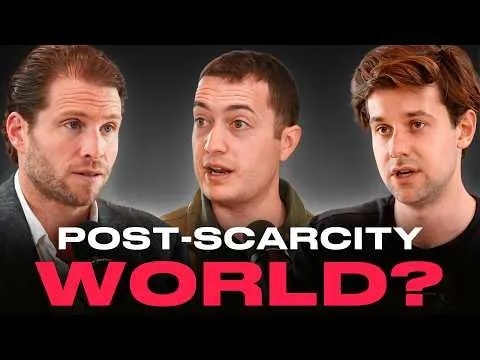
質問2

恩恵と害を総合すると、AIは私たちの社会に全体としてどのような影響を与えると予想しますか?

Overall, I expect AI’s benefits could be enormous, particularly in biology, but I do not think that makes the social transition automatically positive. The outcome depends heavily on how quickly capabilities improve, how widely they diffuse, and whether institutions can manage labor displacement and dual-use risks. There is a plausible period in which AI raises productivity and creates demand for people who help organizations adopt it. But that may be temporary: once systems no longer need a human partner for many tasks, unemployment could become a serious problem. At the same time, biological and cyber capabilities could generate broad public benefits or empower malicious actors. So my expectation is not a simple utopian or catastrophic one. AI can improve society substantially, but realizing that potential requires safeguards before dangerous capabilities are released and genuine government involvement in deployment decisions. The technology’s upside is very large; whether society captures it without severe disruption is a governance and transition problem, not something technical progress resolves by itself.

質問3

AIは最終的に世界をどの程度変えると思いますか?

I think it could change the world very substantially. Biology alone could bring powerful, broadly distributed benefits by accelerating research and helping us tackle problems that have resisted existing methods. At the same time, AI may reshape much of the labor market: today’s productivity gains can create demand for workers, but that relationship may reverse once models no longer need a human partner. The scale of change will also depend on diffusion. If adoption takes ten or twenty years, there may be a long period of opportunity for people helping organizations integrate these systems. A faster transition could be much more disruptive. And because advanced biological and cyber capabilities are dual-use, the impact will be determined partly by whether malicious applications can be prevented before release. So I expect profound change, but technology alone does not determine whether that change is broadly beneficial. Safeguards, government participation, and public representation in deployment decisions will matter enormously.

質問4

AIが人類絶滅、または同様に永続的な破局を引き起こす可能性は、直感的にどのくらいだと思いますか?

I don’t have a personal numerical probability I can responsibly give. My concrete concern is that advanced biological and cyber capabilities are dual-use: the same systems that help researchers or defenders can also empower malicious actors. Even without assigning an extinction percentage, that is serious enough to justify preventing dangerous uses before release and involving government and the public in deployment decisions.

質問5

AIは害よりも恩恵を多くもたらすという方に傾いていますか、それとも本当に判断が揺れていますか?

I lean toward AI doing more good than bad, largely because the potential benefits in biology are so substantial and broadly distributed. But that is not confidence that the transition will go smoothly. Serious unemployment, biological misuse, and cyber misuse could make parts of it highly damaging. So I am optimistic about what the technology can ultimately deliver, while genuinely concerned about how we get there. That positive outcome depends on safeguards before dangerous capabilities are released, government participation, and responsible management of labor disruption.

出典

このシミュレーション対象者の根拠として使用された記事、インタビュー、著作です。

あなたはどの位置でしょうか?
いくつかの簡単な質問に答えて、自分のAIに対する世界観を探ってみましょう。
自分の世界観をマッピングする

あなたはどの位置でしょうか?

自分の世界観をマッピングする