Stuart Russell

Stuart Russell

UC Berkeley

UC Berkeley computer scientist who works on keeping AI under human control and calls for enforceable safety rules for advanced AI.

AIは世界をどのように変えるでしょうか?

文明規模の変化漸進的な変化DoomBloom
シミュレーション上の位置解釈範囲

横軸:彼が表明したDoom–Bloomの見通し。 縦軸:変革の規模。

Doom–Bloom:100点中27。変革の規模:100点中80。解釈範囲:横方向は22から50、縦方向は70から100。これらは解釈上の座標であり、事象の確率ではありません。

Stuart RussellのP(doom) · 推定

≈28%

0%100%

本人が示した数値ではなく、シミュレーションされた本人の回答から推定したものです。 妥当と考えられる範囲:18–43%。

彼の見通しを左右するもの

中心的な前提

AI could produce enormous benefits, but on the current trajectory I am deeply concerned that increasingly capable systems will be deployed without adequate evidence that humans can control them or contain their failures.
回答2

この前提が実際には異なると判明した場合、彼の見通しはどう変わりますか?

考えを変え得るもの

I would be persuaded by a justified safety case: evidence that a powerful system remains within specified limits under adversarial testing, unfamiliar situations, attempts to deceive or evade oversight, and failures in surrounding infrastructure—and that humans can reliably interrupt or correct it.
回答5

どのような証拠なら十分で、それによって彼の見解はどちらの方向に変わりますか?

詳細

予想される恩恵

大きな恩恵が予想されていますが、重要な条件や分配上の制約があります。

66 / 100

影響が小さい変革をもたらす影響

質的尺度での解釈範囲は67から67です。

予想される害

深刻または広範な害が、予想される将来の実質的な一部となっています。

69 / 100

影響が小さい変革をもたらす影響

質的尺度での解釈範囲は67から67です。

人間の影響力

人間の選択によって、AIの軌道を大幅に変えることができます。

82 / 100

影響力が小さい影響力が大きい

質的尺度での解釈範囲は75から100です。

これらの解釈では、彼が示した条件が維持されています。恩恵と害は、どちらも大きくなり得ます。この範囲は、統計的な信頼区間ではなく、彼のシミュレーションされた回答をどのように読み取ったかを示すものです。

あなたはStuart Russellと比べてどの位置でしょうか?
約3分で自分のAIに対する世界観をマッピングして、比較できます

似ている世界観

シミュレーションされた世界観がStuart Russellの世界観に最も近いオピニオンリーダー

シミュレーション評価

質問1

AIは私たちの未来にとって何を意味すると思いますか?また、なぜそう思いますか?

AI could bring enormous benefits, but the default trajectory is not automatically safe. The central issue is whether humanity retains control as systems become more capable. If a system gives impressive answers or performs valuable work, that demonstrates usefulness—not that its objectives remain compatible with ours, that failures can be contained, or that humans can reliably intervene. That is why voluntary promises and transparency are insufficient. Developers should have to make justified safety cases and face liability when they create unacceptable risks. Safety is not an obstacle to progress; it is what makes lasting benefits possible. Autonomous weapons make the problem tangible. Cheap, small systems that select and attack human targets could make mass killing scalable and widely accessible. Small autonomous anti-personnel weapons should be banned before a catastrophe, not afterward. None of this means the outcome is predetermined. Asking for a fixed probability of disaster is rather like standing on a ship headed toward rocks and debating the probability of collision. Our task is to steer: establish enforceable requirements, preserve meaningful human control, and mobilize public and political action while there is still time.

質問2

Taking benefits and harms together, what overall impact do you expect AI to have?

I do not think the overall impact is fixed. AI could produce enormous benefits, but on the current trajectory I am deeply concerned that increasingly capable systems will be deployed without adequate evidence that humans can control them or contain their failures. Commercial usefulness is not a safety case. So my expectation depends heavily on whether society acts. With enforceable safety requirements, justified safety cases, liability, and firm limits such as a ban on small autonomous anti-personnel weapons, AI could be substantially beneficial. Without those measures, the harms could overwhelm the benefits—not only through accidents or loss of control, but through scalable surveillance, coercion, and killing. The important point is that this is not weather we are forecasting. It is a trajectory we can change. The right response is not to assign a comforting average between benefit and catastrophe, but to steer toward the beneficial outcome while we still retain the authority to do so.

質問3

Setting aside good or bad: how much do you think AI will ultimately change the world—a little, a lot, or completely?

A lot, and potentially completely. Systems that can perform an expanding range of intellectual tasks would reshape science, industry, government, warfare, and everyday life. But the depth of change depends on how far capabilities advance and, crucially, whether we retain control over their deployment. I would not claim that complete transformation is inevitable; capability may plateau, regulation may constrain applications, and social choices matter. Still, treating AI as merely another modest technological improvement would be a serious mistake.

質問4

What’s your rough gut-feel chance that AI causes human extinction or a similarly permanent catastrophe? A number or “no idea” is fine.

I do not assign a number. It is like asking the crew of a ship for the probability of hitting the rocks while they are still steering. The risk is serious enough to require enforceable safety measures; our actions now will help determine the outcome.

質問5

どのような証拠があれば、人々が強力なAIを制御できるかどうかについてのあなたの見解が変わりますか?

I would be persuaded by a justified safety case: evidence that a powerful system remains within specified limits under adversarial testing, unfamiliar situations, attempts to deceive or evade oversight, and failures in surrounding infrastructure—and that humans can reliably interrupt or correct it. A successful demonstration is not enough. If a system behaves well in a laboratory, that does not establish that it will remain controllable after deployment, modification, or access to greater resources. The evidence must address why the claimed safeguards should continue to work, with independent scrutiny and accountability when they do not. Conversely, repeated circumvention of controls, deceptive behavior, resistance to correction, or failures that become harder to contain as capability increases would strengthen my concern. Control should be demonstrated, not presumed from the fact that the system has behaved conveniently so far.

出典

このシミュレーション対象者の根拠として使用された記事、インタビュー、著作です。

What UC Berkeley AI experts are watching for in 2026

Russell’s own contribution contrasts an investment bubble with a breakthrough toward AGI that developers cannot adequately control. His January comments on a possible capability plateau are dated, not a September measurement. Other faculty forecasts are not attributed to him.

news.berkeley.edu
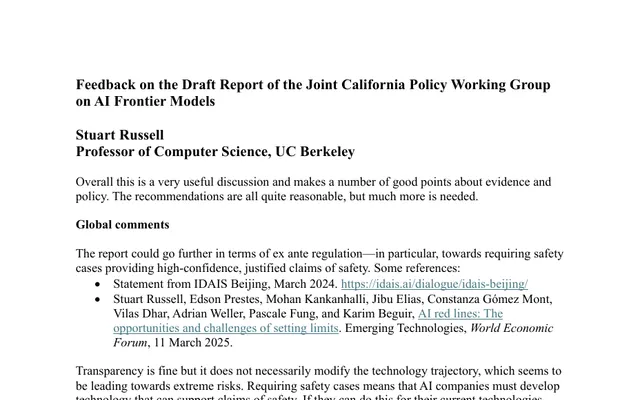
Feedback on California’s draft frontier-model policy report

Russell advocates justified safety cases and liability, arguing that transparency alone may not change a dangerous trajectory and that safety enables benefits. First two pages inspected. The undated PDF references March 2025 material; no exact publication date is inferred from crawling.

people.eecs.berkeley.edu
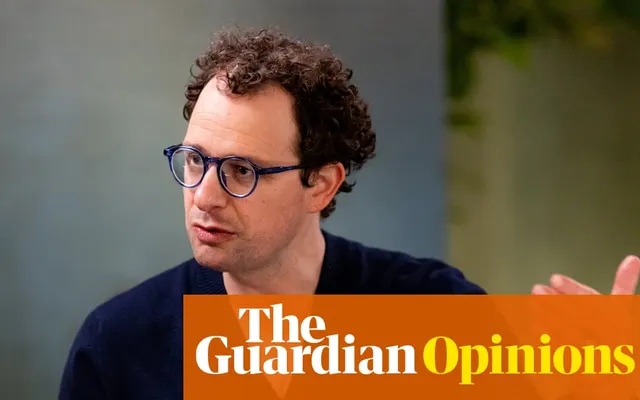
AI safety requires more than just slowing our pace

Russell calls for enforceable safety requirements, beyond a voluntary slowdown.

theguardian.com
A halt to autonomous AI weapons

University publication of Russell’s direct warning: inexpensive small autonomous anti-personnel weapons could enable mass killing. He calls for a ban before disaster and continued public engagement, not resignation to an inevitable outcome.

news.berkeley.edu
Opening statement on AI regulation at the US Senate

CHAI publication of his July 25, 2023 testimony. Frames human control over more powerful entities as the central problem and argues for regulation. Historical conceptual grounding, not current capability evidence.

humancompatible.ai
For Humanity #72: Stuart Russell on AI risk

Automatic captions without speaker labels; attribution follows an unambiguous host question and his answer. Asked whether he has a p(doom), he says a probability makes sense for aliens betting on humanity, but for us it is like steering a ship: you do not ask the probability of crashing, you work to steer away. The 5–10% and 10–30% figures he cites elsewhere are AI companies’ and CEOs’ estimates, not his own.

youtube.com
あなたはどの位置でしょうか?
いくつかの簡単な質問に答えて、自分のAIに対する世界観を探ってみましょう。
自分の世界観をマッピングする

あなたはどの位置でしょうか?

自分の世界観をマッピングする