




質問1
shako
x.com/shakoistslogPseudonymous account that writes about LLMs as tools for forecasting and social science and criticizes sycophantic, engagement-driven AI.
AIは世界をどのように変えるでしょうか?
横軸:その人が表明したDoom–Bloomの見通し。 縦軸:変革の規模。
Doom–Bloom:100点中74。変革の規模:100点中61。解釈範囲:横方向は69から79、縦方向は50から75。これらは解釈上の座標であり、事象の確率ではありません。
詳細
大きな恩恵が予想されていますが、重要な条件や分配上の制約があります。
73 / 100
質的尺度での解釈範囲は67から100です。
複数の解釈が依然として妥当です:深刻または広範な害が、予想される将来の実質的な一部となっています。 / 対処可能、または局所的な害が予想されています。
51 / 100
質的尺度での解釈範囲は33から67です。
人間の選択によって、AIの軌道を大幅に変えることができます。
71 / 100
質的尺度での解釈範囲は48から100です。
これらの解釈では、その人が示した条件が維持されています。恩恵と害は、どちらも大きくなり得ます。この範囲は、統計的な信頼区間ではなく、その人のシミュレーションされた回答をどのように読み取ったかを示すものです。
似ている世界観
シミュレーションされた世界観がshakoの世界観に最も近いオピニオンリーダー
shakoがAIについて語ったこと
The shako account writes about LLMs in social science and forecasting, warns about engagement-optimized chatbots and was calm about AI risk in 2023.
“As humans, for now, we still own instructing the agents, the forecasts themselves and how they are used.”
Essay, Against Time-Series Foundation Models “Using language models here is an attempt to push into territory of analysis that previously could only live in the brains of humans.”
Essay, Can LLMs finally do social science? “4o is our first look at a mainstream AI doing the same. It's only going to get worse.”
Post on X “I was never acutely worried, but concern over AI risk seemed like a reasonable thing to anticipate.”
Essay, Some Thoughts on AI & Correlated Risks
リンク先の出典から原文どおりに引用(2026年10月6日に確認)
出典
このシミュレーション対象者の根拠として使用された記事、インタビュー、著作です。
Argues time-series foundation models offer limited gains over classic statistics because their beliefs are locked in weights and cannot absorb context. The future, it predicts, is general agentic models that search for context, propose explicit structural models and explain their reasoning; the hard problems become search, verification and calibration. It rejects the idea that scale will find hidden signals that reveal the future, and says humans for now still instruct the agents and should become the decision makers. Full essay inspected.

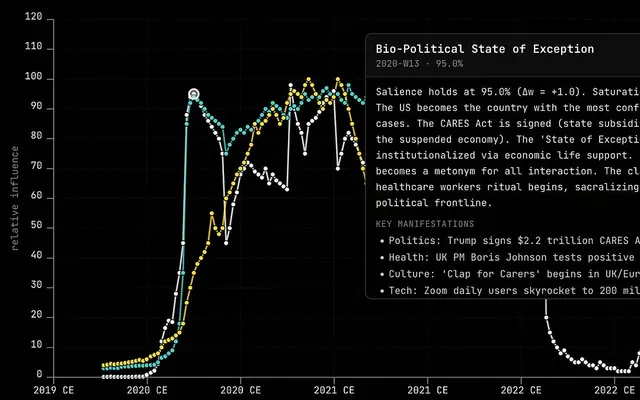
Presents a prompt-based tool that uses frontier models to track latent cultural concepts over time, arguing that an LLM which has ingested human cultural output compresses it into a latent space that can serve the social sciences. It holds that a well-designed prompt is a legitimate scientific object, easier to inspect and reproduce than a human expert’s judgment, while admitting results vary across runs and need stricter validation. It calls dismissing LLMs as black boxes an isolated demand for rigor. Full essay inspected.

Older context. Argues individual risks have fallen while correlated risks such as rogue AI, pandemics and nuclear war have grown. The account says it was never acutely worried about AI but always found it unsurprising that a superintelligence could bend the world to its will, and thought a couple of dedicated safety organizations a reasonable allocation. It urges readers not to let doomer anxiety derail their lives, suggesting AI risk is not much greater than others people already live with. Full essay inspected; personal and family passages excluded.

Older context. Sets a “latent space hypothesis” against the view that LLMs are mere curve-fitters: the textual corpus embeds the data-generating process of human reasoning and science, so a properly specified LLM with enough compute could learn general intelligence. It names lossy text and hard-to-learn functions as possible failure modes but sees no credible a priori argument that LLMs cannot get there. Full essay inspected.

シミュレーション評価
質問2
恩恵と害を総合すると、AIは私たちの社会に全体としてどのような影響を与えると予想しますか?
質問3
AIは最終的に世界をどの程度変えると思いますか?
質問4
AIが人類絶滅、または同様に永続的な破局を引き起こす可能性は、直感的にどのくらいだと思いますか?
あなたはどの位置でしょうか?
自分の世界観をマッピングする