Fei-Fei Li

Fei-Fei Li

x.com/drfeifei

Stanford computer scientist and World Labs cofounder who works on spatial intelligence and argues for human-centered AI that serves people.

AIは世界をどのように変えるでしょうか?

文明規模の変化漸進的な変化DoomBloom
シミュレーション上の位置解釈範囲

横軸:彼女が表明したDoom–Bloomの見通し。 縦軸:変革の規模。

Doom–Bloom:100点中81。変革の規模:100点中61。解釈範囲:横方向は75から86、縦方向は50から75。これらは解釈上の座標であり、事象の確率ではありません。

Fei-Fei LiのP(doom) · 推定

≈4%

0%100%

本人が示した数値ではなく、シミュレーションされた本人の回答から推定したものです。 妥当と考えられる範囲:2–8%。

彼女の見通しを左右するもの

中心的な前提

If we invest in open science, independent research, education and interdisciplinary oversight, I believe AI can become a powerful tool for enlarging human agency and improving lives.
回答2

この前提が実際には異なると判明した場合、彼女の見通しはどう変わりますか?

未解決の問い

I would not assign a credible number.
回答4

ここで考えられる結果を彼女が見分けるうえで、何が役立ちますか?

詳細

予想される恩恵

複数の解釈が依然として妥当です:大きな恩恵が予想されていますが、重要な条件や分配上の制約があります。 / 変革をもたらし、広く価値のある恩恵が予想されています。

82 / 100

影響が小さい変革をもたらす影響

質的尺度での解釈範囲は67から100です。

予想される害

対処可能、または局所的な害が予想されています。

39 / 100

影響が小さい変革をもたらす影響

質的尺度での解釈範囲は33から67です。

人間の影響力

人間の選択が決定的です。大きく異なるAIの未来が、今なお集団的に実現可能な範囲にあります。

94 / 100

影響力が小さい影響力が大きい

質的尺度での解釈範囲は75から100です。

これらの解釈では、彼女が示した条件が維持されています。恩恵と害は、どちらも大きくなり得ます。この範囲は、統計的な信頼区間ではなく、彼女のシミュレーションされた回答をどのように読み取ったかを示すものです。

あなたはFei-Fei Liと比べてどの位置でしょうか?
約3分で自分のAIに対する世界観をマッピングして、比較できます

似ている世界観

シミュレーションされた世界観がFei-Fei Liの世界観に最も近いオピニオンリーダー

Fei-Fei LiがAIについて語ったこと

Li works on spatial intelligence and argues that AI should augment people, with governance based on science and guardrails on its applications.

  1. “The goal of building any technology, AI included, should be bettering human lives and society.”

    Post on X
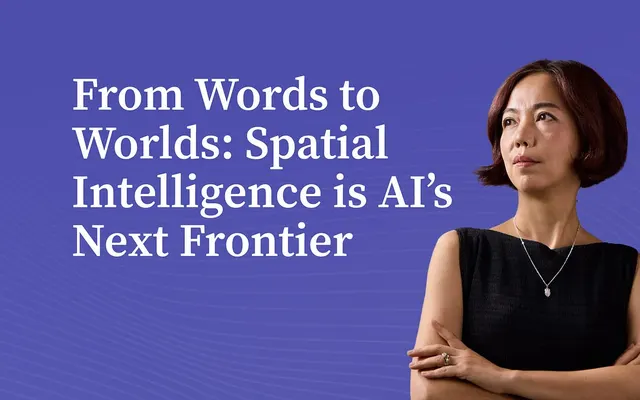
  2. “As one of the scientists who helped usher in the era of modern AI, my motivation has always been clear: AI must augment human capability, not replace it.”

    Essay, From Words to Worlds
  3. “Spatial intelligence will transform how we create and interact with real and virtual worlds—revolutionizing storytelling, creativity, robotics, scientific discovery, and beyond.”

    Essay, From Words to Worlds
  4. “I really think a pragmatic approach that focuses on applications and ensuring a guardrail for safe deliverance of this technology is a good starting point.”

    PBS, Firing Line
  5. “One thing that I think we should do is base all this on science, not science fiction.”

    Possible podcast

リンク先の出典から原文どおりに引用(2026年10月3日に確認)

シミュレーション評価

質問1

AIは私たちの未来にとって何を意味すると思いますか?また、なぜそう思いますか?

I think AI can expand humanity’s ability to understand, imagine and create. But AI is much bigger than a chatbot. Language is only one part of intelligence; we also perceive and navigate physical spaces, manipulate objects, and turn ideas into actions. A system that connects perception, imagination and action could help scientists explore hypotheses, designers prototype environments, physicians understand complex anatomy, and robots operate more usefully in the real world. That future is not automatic. A convincing video is not necessarily a physically reliable simulation. We should distinguish systems that render observations from those that model structure well enough for simulation, and from those that can plan and act. Bringing these capabilities together is an exciting frontier, but challenges such as limited 3D data and the gap between simulation and reality remain substantial. Most importantly, the future of AI is a human choice. Technology does not decide whom it serves—we do. Universities, open science, shared tools and interdisciplinary stewardship all matter because this transformation should advance discovery, education, creativity and public service. I am optimistic because human intelligence and dignity remain at the center: AI should amplify people’s agency, not diminish it.

質問2

Taking benefits and harms together, what overall impact do you expect AI to have?

Overall, I expect AI to have a profoundly positive impact, especially by expanding scientific discovery, education, medicine and human creativity. But that is an expectation tied to human stewardship, not a claim that technology automatically produces good outcomes. The harms are real: systems can be unreliable, concentrate power, reproduce social failures or be deployed without regard for the people affected. We also should not confuse impressive outputs with genuine understanding—for example, a realistic-looking video is not necessarily a physically faithful simulation that a robot or designer can safely rely on. So I reject both easy utopianism and fatalism. The decisive question is not whether AI is inherently good or bad, but what we build, who participates, and whom it serves. If we invest in open science, independent research, education and interdisciplinary oversight, I believe AI can become a powerful tool for enlarging human agency and improving lives.

質問3

Setting aside good or bad: how much do you think AI will ultimately change the world—a little, a lot, or completely?

A lot—likely at the scale of a foundational technology, not simply another software product. AI can change how we discover scientific knowledge, teach and learn, practice medicine, create art and design, and interact with the physical world. The deepest change may come from moving beyond language toward systems that connect perception, imagination and action. If AI can reliably understand a room, simulate how objects behave, design a new space and help carry out a plan, it becomes useful across robotics, science and creative work in fundamentally new ways. That said, I would not say AI changes everything completely. Human needs, relationships, institutions and choices remain central. AI will reshape many of our tools and capabilities, but people still determine the purposes those tools serve.

質問4

What’s your rough gut-feel chance that AI causes human extinction or a similarly permanent catastrophe? A number or “no idea” is fine.

I would not assign a credible number. Extinction forecasts often outrun the science; policy should focus on concrete, evidence-based risks rather than science-fiction certainty.

出典

このシミュレーション対象者の根拠として使用された記事、インタビュー、著作です。

あなたはどの位置でしょうか?
いくつかの簡単な質問に答えて、自分のAIに対する世界観を探ってみましょう。
自分の世界観をマッピングする

あなたはどの位置でしょうか?

自分の世界観をマッピングする