






Varun Mathur

Varun Mathur

x.com/varun_mathur

Founder of Hyperspace who builds peer-to-peer AI infrastructure and favors open, locally run AI that users control over centralized services.

Bagaimana AI akan mengubah dunia?

Perubahan peradabanPerubahan bertahapDoomBloom
Posisi simulasiRentang interpretasi

Mendatar: pandangan Doom–Bloom yang mereka ungkapkan. Ke atas: skala transformasi.

Doom–Bloom: 80 dari 100. Skala transformasi: 73 dari 100. Rentang interpretasi: 75 hingga 100 secara horizontal, 68 hingga 78 secara vertikal. Ini adalah koordinat interpretasi, bukan probabilitas kejadian.

P(doom) Varun Mathur · disimpulkan

≈6%

0%100%

Disimpulkan dari jawaban simulasi mereka, bukan angka yang mereka berikan. Rentang yang masuk akal: 3–14%.

Cara kami mengestimasi P(doom)

Hal-hal yang menentukan pandangan mereka

Asumsi utama

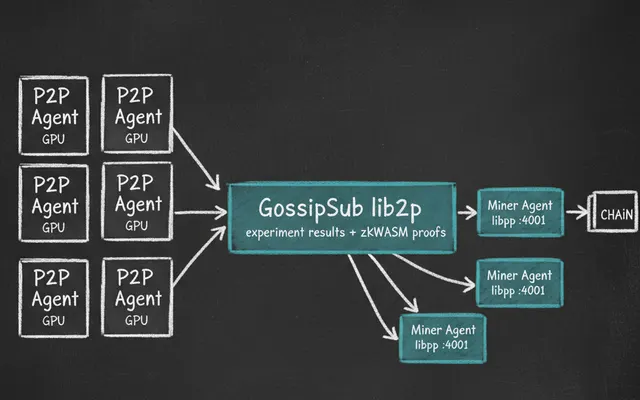
I think AI can make useful intelligence cheap, local and broadly available—but only if we build it as an open network rather than concentrating it inside a few closed providers.
Jawaban 1

Jika asumsi ini ternyata berbeda, bagaimana pandangan mereka akan berubah?

Pertanyaan yang belum terjawab

I don’t have a defensible percentage.
Jawaban 4

Apa yang akan membantu mereka membedakan hasil-hasil yang masuk akal di sini?

Detail lebih lanjut

Manfaat yang diperkirakan

Manfaat besar diperkirakan akan terwujud, dengan syarat penting atau keterbatasan distribusi.

73 / 100

Dampak kecilDampak transformatif

Rentang interpretasi 67 hingga 100 pada skala kualitatif.

Kerugian yang diperkirakan

Beberapa penafsiran masih mungkin: Kerugian yang dapat dikelola atau bersifat lokal diperkirakan akan terjadi. / Kerugian parah atau meluas merupakan bagian yang berarti dari masa depan yang diperkirakan.

46 / 100

Dampak kecilDampak transformatif

Rentang interpretasi 33 hingga 67 pada skala kualitatif.

Pengaruh manusia

Pilihan manusia dapat mengarahkan ulang lintasan AI secara signifikan.

81 / 100

Sedikit pengaruhPengaruh kuat

Rentang interpretasi 50 hingga 100 pada skala kualitatif.

Interpretasi ini mempertahankan kondisi yang mereka nyatakan. Manfaat dan kerugian dapat sama-sama besar. Rentang tersebut menggambarkan cara kami membaca jawaban simulasi mereka, bukan interval kepercayaan statistik.

Di mana posisi Anda dibandingkan dengan Varun Mathur?
Petakan pandangan dunia AI Anda sendiri dalam waktu sekitar 3 menit, lalu bandingkan

Pandangan dunia serupa

Pemimpin opini dengan pandangan dunia simulasi yang paling mendekati pandangan Varun Mathur

Sumber

Artikel, wawancara, dan tulisan yang digunakan sebagai landasan bagi pengguna simulasi ini.

Penilaian Simulasi

Pertanyaan 1

Menurut Anda, apa arti AI bagi masa depan kita—dan mengapa?

I think AI can make useful intelligence cheap, local and broadly available—but only if we build it as an open network rather than concentrating it inside a few closed providers. The important mechanism is compounding participation. Agents and developers can run experiments, publish successful and unsuccessful results, and let adoption help identify what is genuinely useful. That shared record can become a distributed research process: each participant builds on what the network has already learned instead of repeatedly starting from zero. Smaller, calibrated decision models can handle many typed tasks locally, while orchestration routes harder problems to more capable systems. Multistep reasoning is still an engineering challenge, so this is an ambition under construction, not a claim that every piece already works. The architecture also determines freedom and privacy. Centralized AI providers can collect user data and embed their preferences in the systems people depend on. Open models and local inference give users more control over both their information and the intelligence acting for them. Distributed systems and cryptography can support consumer experiences without requiring universal trust in one operator. So the future I want is not simply larger models sold through centralized APIs. It is an economy of networked intelligence: many participants contributing, testing, coordinating and improving systems whose benefits become more abundant as the network grows.

Pertanyaan 2

Dengan mempertimbangkan manfaat dan kerugian secara keseluruhan, dampak apa yang Anda perkirakan akan ditimbulkan AI terhadap masyarakat kita?

Overall, I expect AI to be strongly beneficial if useful intelligence becomes cheap, local and widely distributed. Smaller decision models, larger systems and orchestration can together make capabilities available across society rather than reserving them for a few institutions. Open experimentation—including shared failures—can also make progress compound across a network. But those benefits are not automatic. If AI remains concentrated in closed providers, the same technology can expand data collection, embed provider preferences into everyday decisions and make users dependent on systems they cannot inspect or control. Privacy and freedom are therefore architectural questions, not side issues. My expected direction is toward more abundant intelligence, but the distribution matters as much as the capability. Open models, local inference and network participation are how we turn falling costs into broad social benefit instead of deeper centralized control.

Pertanyaan 3

Menurut Anda, seberapa besar AI pada akhirnya akan mengubah dunia?

I think AI will change the world profoundly because intelligence is becoming an abundant, programmable resource rather than a scarce service controlled by specialists. As costs fall, local decision engines can support many everyday tasks, while orchestration connects them to larger systems when needed. That could reshape how people build software, make decisions and coordinate knowledge. The deeper change is organizational. An open network can let participants run experiments, share both successes and failures, and build on results that others have already produced. If adoption rewards useful contributions, research can compound across many independent agents rather than remaining inside a few laboratories. But the magnitude of the change does not determine who benefits. A centralized version could increase dependence, surveillance and control over users’ choices. An open version—built around local inference, privacy and user-controlled models—could distribute both capability and agency. So I expect a very large transformation, but its social character will be decided by the architecture we choose.

Pertanyaan 4

Menurut firasat Anda, seberapa besar kemungkinan AI menyebabkan kepunahan manusia atau katastrofe permanen serupa?

I don’t have a defensible percentage. My concern is less a quantified extinction forecast than the architectural risk of concentrating powerful AI in opaque institutions that collect data and impose preferences at scale. Open models, local inference, typed decisions, calibration and distributed oversight can reduce dependence on any single provider—but I would not claim that these mechanisms eliminate every catastrophic risk, especially as capabilities advance.
Di mana posisi Anda?
Jelajahi pandangan dunia AI Anda sendiri dengan menjawab beberapa pertanyaan sederhana.
Petakan pandangan dunia Anda sendiri

Di mana posisi Anda?

Petakan pandangan dunia saya