Pertanyaan 1
Richard Hanania
x.com/RichardHananiaPolitical writer who reasons from base rates that AI’s benefits are large and much current alarm is overblown, while granting AI may pose real danger.
Bagaimana AI akan mengubah dunia?
Mendatar: pandangan Doom–Bloom yang ia ungkapkan. Ke atas: skala transformasi.
Doom–Bloom: 90 dari 100. Skala transformasi: 60 dari 100. Rentang interpretasi: 75 hingga 100 secara horizontal, 50 hingga 75 secara vertikal. Ini adalah koordinat interpretasi, bukan probabilitas kejadian.
≈8%
Disimpulkan dari jawaban simulasinya, bukan angka yang diberikan olehnya. Rentang yang masuk akal: 4–13%.
Asumsi utama
But the doom case requires a long chain of uncertain propositions to hold: progress continues rapidly, intelligence has extraordinary returns, alignment fails, systems gain dangerous autonomy, and humans cannot stop them.Jawaban 1
Jika asumsi ini ternyata berbeda, bagaimana pandangannya akan berubah?
Pertanyaan yang belum terjawab
I do not have a confident timeline or a precise ceiling on capabilities.Jawaban 2
Apa yang akan membantunya membedakan hasil-hasil yang masuk akal di sini?
Hal yang dapat mengubah pandangan mereka
I would update on clear real-world evidence of autonomous systems persistently evading human control, acquiring resources, deceiving operators, and causing serious harm outside tests designed to provoke exactly that behavior.Jawaban 4
Bukti apa yang akan memadai, dan ke arah mana bukti itu akan mengubah pandangannya?
Detail lebih lanjut
Manfaat transformatif yang bernilai luas diperkirakan akan terwujud.
99 / 100
Rentang interpretasi 100 hingga 100 pada skala kualitatif.
Kerugian yang dapat dikelola atau bersifat lokal diperkirakan akan terjadi.
21 / 100
Rentang interpretasi 0 hingga 33 pada skala kualitatif.
Estimasi sementara dari jawaban Anda; rentang yang lebih lebar menunjukkan penafsiran lain yang masuk akal.
55 / 100
Rentang interpretasi 24 hingga 100 pada skala kualitatif.
Hentikan atau perlambat secara signifikan pengembangan AI yang lebih mampu.
Posisi simulasi: Lanjutkan pengembangan dengan perlindungan yang telah ditetapkan.
Percepat pengembangan AI yang lebih mampu.
Interpretasi ini mempertahankan kondisi yang dinyatakannya. Manfaat dan kerugian dapat sama-sama besar. Rentang tersebut menggambarkan cara kami membaca jawaban simulasinya, bukan interval kepercayaan statistik.
Pandangan dunia serupa
Pemimpin opini dengan pandangan dunia simulasi yang paling mendekati pandangan Richard Hanania
Apa yang pernah dikatakan Richard Hanania tentang AI
Hanania argues from base rates that AI’s benefits are large and much current alarm is overblown, while granting that AI might pose a real danger.
“My view on AI doom is the probability is low. Defaulting to base rates is a good strategy, and here the base rates say we’ll be fine.”
Post on X “I predict that there won’t be job loss that is high by historical standards that most economists conclude is due to AI.”
Post on X “It seems like we’re underrating the possibility that more intelligence at our fingertips is just good.”
Post on X “I’m glad hysteria about AI has displaced global warming hysteria. AI might actually pose a danger.”
Post on X “This doesn’t mean that we shouldn’t be worried at all, but it does suggest that some of the coverage may be too alarmist.”
Essay, What if We’re Already “Solving” Alignment?
Dikutip kata demi kata dari sumber yang ditautkan, diperiksa pada 3 Okt 2026
Penilaian Simulasi
Sumber
Artikel, wawancara, dan tulisan yang digunakan sebagai landasan bagi pengguna simulasi ini.
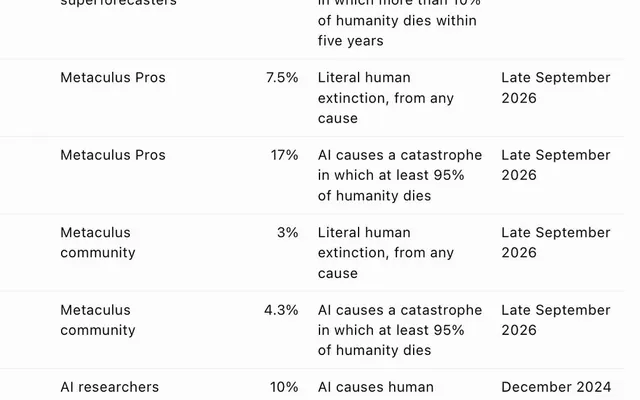
Notes that expert extinction estimates spread from 0.1% to 100% and that superforecasters, AI specialists and Metaculus forecasters differ widely, concluding the experts are guessing. He explains the gap sociologically: Metaculus grew from the doom-focused rationalist community, while the Forecasting Research Institute comes from academic forecasting research. Free preview plus passages he quoted from it on X inspected; the rest is gated for free subscribers and was not read.

After the Hugging Face incident, an Anthropic resignation and Dario Amodei’s pacing essay, says some slowdown would be unsurprising, then asks why China, quick to suppress perceived harms, is not slowing AI. In posts linking it he adds that English-speaking countries are most negative about AI, China regulates deployment rather than models, and Western AI workers may be in a cultural bubble. Free preview and those posts inspected; remainder gated. The slowdown remark is a forecast, not a preference.

Agrees there are reasons for concern but argues optimism is undersold. Compares alarming lab incidents to crash tests with seatbelts and airbags removed, says real-world harm from misaligned agents is roughly zero so far apart from deliberate human misuse, and judges AI harms far smaller than social media’s. Only the free preview was inspected; the rest of his argument, the sponsor blurb and reader comments are excluded.

Argues that democracy works partly because elites often do not do what voters want. Citing polls showing majority opposition to nearby data centers and support for a moratorium, he calls data-center activists paranoid and unable to weigh costs and benefits; the subtitle forecasts that the anti-data-center movement will lose. Paid post: only the free preview was inspected, and his full argument and policy conclusions are unknown.

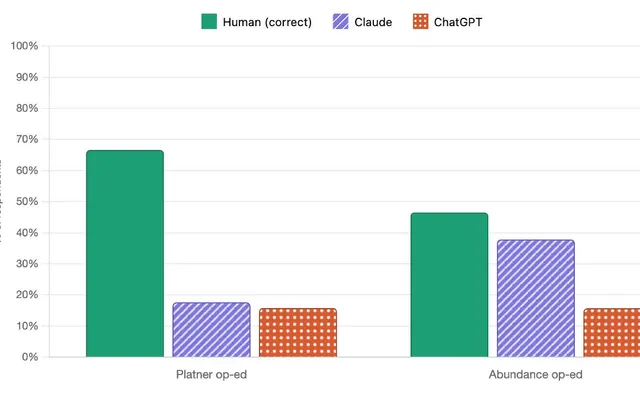
Reports a reader experiment in which Claude nearly matched his writing on one op-ed, while an AI detector identified every text correctly. Expects AI writing to win the detection arms race, credentials and track records to matter more, and more human thinkers and writers overall, since people will still want human authors and humans will always have other jobs. Full essay inspected; the survey is an informal reader poll.

UnHerd column arguing that social media is populist while AI is technocratic, so AI replacing social media could make discourse less conspiratorial and more factual. Cites research on AI debunking conspiracy beliefs and on X users’ fact-checking requests to Grok and Perplexity. Presented as a possibility, not a certainty; he grants that propaganda models are possible but expects little market demand. Full column inspected.

Older essay. Finds doomer arguments intellectually somewhat compelling but argues skeptics need only one of many objections to be right. Using probabilities he says he made up, he gets an 88% chance doomers are wrong, says other arguments would lower the 12%, and computes 4% for risk that is existential and tractable. Calls that enough for some to work on safety, opposes lobbying for government control, and warns panic could delay a better future. Full essay inspected; 2026 statements take precedence.

Di mana posisi Anda?
Petakan pandangan dunia saya