Pertanyaan 1
Jensen Huang
x.com/JensenHuangNvidia CEO who argues for broad AI adoption, open models and more infrastructure, and against slowdowns based on risk forecasts he calls unscientific.
Bagaimana AI akan mengubah dunia?
Mendatar: pandangan Doom–Bloom yang ia ungkapkan. Ke atas: skala transformasi.
Doom–Bloom: 97 dari 100. Skala transformasi: 68 dari 100. Rentang interpretasi: 92 hingga 100 secara horizontal, 50 hingga 75 secara vertikal. Ini adalah koordinat interpretasi, bukan probabilitas kejadian.
0% by 2030
“There is 0% chance that's going to be the end of the world”
AI bringing about “the end of the world”, in answer to claims that AI could kill everyone by the end of the decade · By 2030
Nvidia's Jensen Huang rejects AI extinction warnings as "doomsday narratives" · Sep 2026
Sains & kehidupan sehari-hari
By 2030, I expect AI to be embedded across nearly every industry: writing and reviewing software, operating useful agents continuously, accelerating design and discovery, improving factories through simulation, strengthening cyber defense, and helping people interact with computers by specifying outcomes rather than mastering every technical detail.
Jawaban 4
Dikelompokkan berdasarkan tonggak pencapaian, bukan diberi jarak atau diurutkan berdasarkan tanggal yang disimpulkan. AGI dan AI supermanusia tetap menggunakan definisinya.
Asumsi utama
Claims of recursive self-improvement do not magically eliminate engineering, testing, deployment constraints or the physical infrastructure AI depends on.Jawaban 1
Jika asumsi ini ternyata berbeda, bagaimana pandangannya akan berubah?
Detail lebih lanjut
Manfaat transformatif yang bernilai luas diperkirakan akan terwujud.
98 / 100
Rentang interpretasi 100 hingga 100 pada skala kualitatif.
Dampak merugikan yang berarti diperkirakan hanya sedikit.
8 / 100
Rentang interpretasi 0 hingga 33 pada skala kualitatif.
Estimasi sementara dari jawaban Anda; rentang yang lebih lebar menunjukkan penafsiran lain yang masuk akal.
61 / 100
Rentang interpretasi 21 hingga 100 pada skala kualitatif.
Hentikan atau perlambat secara signifikan pengembangan AI yang lebih mampu.
Posisi simulasi: Lanjutkan pengembangan dengan perlindungan yang telah ditetapkan.
Percepat pengembangan AI yang lebih mampu.
Batasi penggunaan AI yang dibahas hingga perlindungan atau izin sebelumnya tersedia.
Posisi simulasi: Izinkan penggunaan AI yang dibahas dengan akuntabilitas dan perlindungan yang terarah.
Minimalkan pembatasan terhadap penggunaan AI yang dibahas.
Batasi akses ke AI yang berkemampuan tinggi.
Izinkan akses dengan tunduk pada pembatasan kemampuan atau penggunaan.
Posisi simulasi: Utamakan akses yang luas atau terbuka ke AI yang berkemampuan tinggi.
Interpretasi ini mempertahankan kondisi yang dinyatakannya. Manfaat dan kerugian dapat sama-sama besar. Rentang tersebut menggambarkan cara kami membaca jawaban simulasinya, bukan interval kepercayaan statistik.
Pandangan dunia serupa
Pemimpin opini dengan pandangan dunia simulasi yang paling mendekati pandangan Jensen Huang
Apa yang pernah dikatakan Jensen Huang tentang AI
Huang argues for broad AI adoption, open models and more infrastructure, and says alarming people about AI risk is irresponsible.
“Scaring people is unnecessary. It is irresponsible.”
CBS News interview “Our company’s success is directly connected to the safe deployment of products and services”
CBS News interview “Open source is fundamentally necessary for many industries to join the AI revolution.”
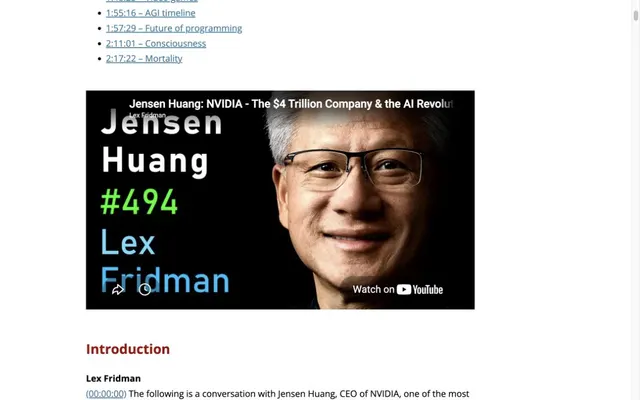
Lex Fridman Podcast “Every college student should graduate and be an expert in AI.”
Lex Fridman Podcast “The choices we make now, how fast we build, how broadly we participate and how responsibly we deploy it, will shape what this era becomes.”
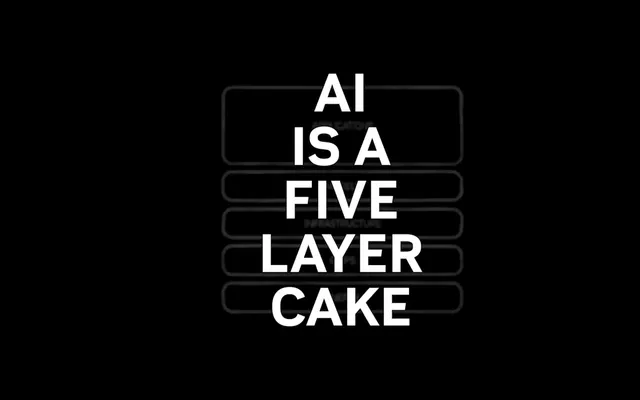
Essay, AI Is a 5-Layer Cake
Dikutip kata demi kata dari sumber yang ditautkan, diperiksa pada 3 Okt 2026
Penilaian Simulasi
Sumber
Artikel, wawancara, dan tulisan yang digunakan sebagai landasan bagi pengguna simulasi ini.
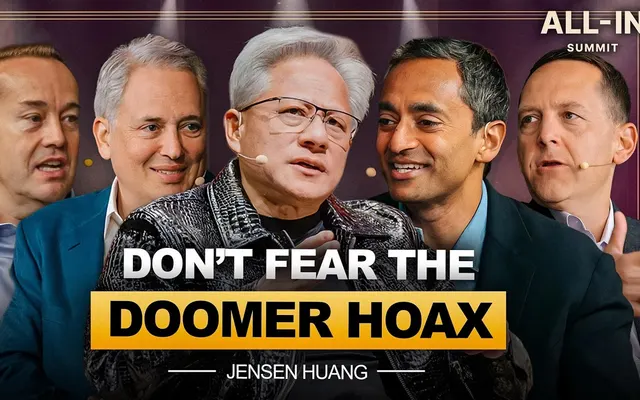
At 04:46–06:33 Huang dismisses extinction estimates and attacks earlier predictions. At 15:25 he rejects runaway self-improvement. At 23:48–29:29 he praises Trump’s rejection of doomerism and opposes slowdown. Transcript mirror: https://sozai.app/transcript/jensen-huang-doomer-hoax-superintelligence-ai-future/ . The literal hoax declaration during the call is Trump’s; Huang endorses the framing.

Reports Huang affirming Trump’s rejection of AI doomsayers. Used to check speaker attribution in the automated transcript, not as evidence that Trump’s exact words were Huang’s.

In Axios’s interview, he rejects doomer forecasts as policy guidance and argues overreaction would delay adoption and weaken American competitiveness.

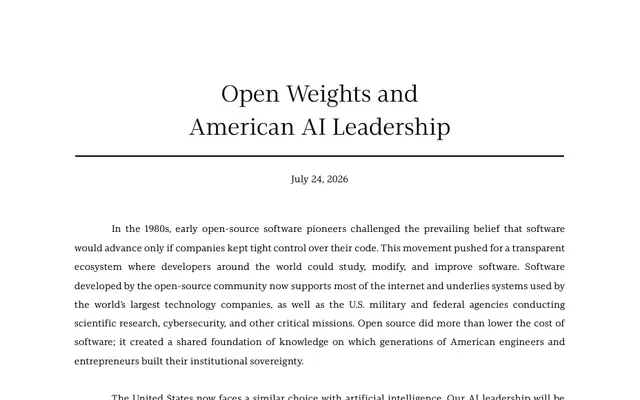
Coalition letter promoted by Huang defending open weights as essential for competition, sovereignty and security. Argues that defenders need access to strong models and favors targeted protections over broad restrictions. This is a shared policy position, not his sole-authored essay or proof that all open releases are safe.

Distinguishes automating tasks from eliminating the purpose of a profession, predicts more people can program through specifications, and urges broad adoption. Separates functional intelligence from humanity. His provocative AGI claim answers a particular short-lived billion-dollar-company definition; it is not a claim that agents could already recreate NVIDIA.

Huang’s own essay treats AI as infrastructure built from energy, chips, computing infrastructure, models and applications. Grounds his build-and-deploy position in physical capacity and economic coordination, with adoption across companies and countries. This is his infrastructure thesis, not independent validation of every growth claim.

In his own answers, Huang argues that open models enable proprietary enterprise AI and distributed cyber defense, while continuously running agents expand compute demand. He dismisses some AGI milestones as less useful than productive work. Profitability and demand claims are commercially interested executive statements, not independently established economics.

NVIDIA’s official recap quotes Huang on open models across industries, simulation before real-world deployment, autonomous vehicles and manufacturing. Adds concrete mechanisms for the transformation he expects beyond chatbots. Announcements and demonstrations describe his company’s plans and claims, not proof of general autonomous competence.

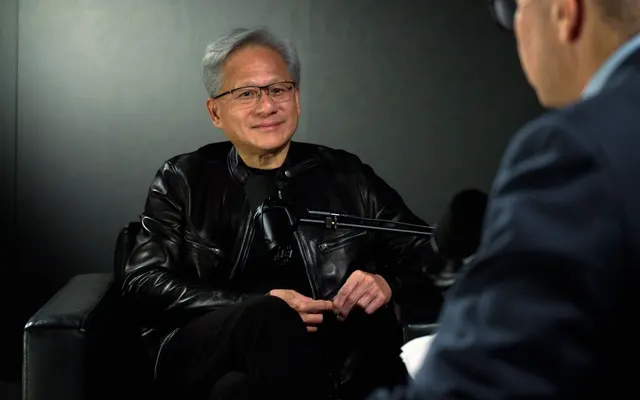
CBS News write-up of Jo Ling Kent’s interview, recorded September 18, quoting him directly. Responding to claims that AI developers believe it could kill everyone by the end of the decade, he says 2030 is not going to be the end of the world, that there is a 0% chance of that, that scaring people is unnecessary and irresponsible, and that such warnings are “doomsday narratives”. A categorical dismissal for the period to 2030, not a calculated long-run estimate.

Di mana posisi Anda?
Petakan pandangan dunia saya