DeepLearning.AI founder who sees large opportunity in practical AI applications and expects AI to reshape jobs and skills more than eliminate them.

Bagaimana AI akan mengubah dunia?

Perubahan peradabanPerubahan bertahapDoomBloom
Posisi simulasiRentang interpretasi

Mendatar: pandangan Doom–Bloom yang ia ungkapkan. Ke atas: skala transformasi.

Doom–Bloom: 88 dari 100. Skala transformasi: 50 dari 100. Rentang interpretasi: 75 hingga 100 secara horizontal, 45 hingga 79 secara vertikal. Ini adalah koordinat interpretasi, bukan probabilitas kejadian.

P(doom) Andrew Ng · disimpulkan

≈2%

0%100%

Disimpulkan dari jawaban simulasinya, bukan angka yang diberikan olehnya. Rentang yang masuk akal: 1–7%.

Hal-hal yang menentukan pandangannya

Asumsi utama

Attacks still require actions that defenders can observe, and defenders often possess more information about their own systems.
Jawaban 1

Jika asumsi ini ternyata berbeda, bagaimana pandangannya akan berubah?

Hal yang dapat mengubah pandangan mereka

The biggest change would be strong, repeated evidence that AI-enabled attackers have a durable advantage over defenders—that even well-isolated, carefully monitored, rapidly patched systems can be compromised faster than organizations can detect and recover.
Jawaban 2

Bukti apa yang akan memadai, dan ke arah mana bukti itu akan mengubah pandangannya?

Detail lebih lanjut

Manfaat yang diperkirakan

Manfaat besar diperkirakan akan terwujud, dengan syarat penting atau keterbatasan distribusi.

74 / 100

Dampak kecilDampak transformatif

Rentang interpretasi 67 hingga 100 pada skala kualitatif.

Kerugian yang diperkirakan

Kerugian yang dapat dikelola atau bersifat lokal diperkirakan akan terjadi.

33 / 100

Dampak kecilDampak transformatif

Rentang interpretasi 33 hingga 33 pada skala kualitatif.

Pengaruh manusia

Pilihan manusia memiliki pengaruh yang berarti, tetapi sangat dibatasi.

59 / 100

Sedikit pengaruhPengaruh kuat

Rentang interpretasi 38 hingga 87 pada skala kualitatif.

Laju pengembangan

Hentikan atau perlambat secara signifikan pengembangan AI yang lebih mampu.

Posisi simulasi: Lanjutkan pengembangan dengan perlindungan yang telah ditetapkan.

Percepat pengembangan AI yang lebih mampu.

Aturan penggunaan AI

Batasi penggunaan AI yang dibahas hingga perlindungan atau izin sebelumnya tersedia.

Posisi simulasi: Izinkan penggunaan AI yang dibahas dengan akuntabilitas dan perlindungan yang terarah.

Minimalkan pembatasan terhadap penggunaan AI yang dibahas.

Interpretasi ini mempertahankan kondisi yang dinyatakannya. Manfaat dan kerugian dapat sama-sama besar. Rentang tersebut menggambarkan cara kami membaca jawaban simulasinya, bukan interval kepercayaan statistik.

Di mana posisi Anda dibandingkan dengan Andrew Ng?
Petakan pandangan dunia AI Anda sendiri dalam waktu sekitar 3 menit, lalu bandingkan

Pandangan dunia serupa

Pemimpin opini dengan pandangan dunia simulasi yang paling mendekati pandangan Andrew Ng

Apa yang pernah dikatakan Andrew Ng tentang AI

Ng argues that AI’s benefits far outweigh its risks and that safety is an engineering problem, and he opposes pausing AI development.

  1. “We still have hard research and engineering work ahead to improve AI safety, but the beneficial applications continue to vastly outweigh the risks, and we should keep building.”

    The Batch letter, Who’s Responsible for Irresponsible AI?
  2. “Today’s agentic systems are not predictable, but I see no reason why, by applying sound engineering practices, we won’t be able to make them extremely safe to use.”

    The Batch letter, Who’s Responsible for Irresponsible AI?
  3. “In the case of AI, I am glad the U.S. government is taking cybersecurity seriously.”

    The Batch letter, AI Regulations Must Balance Innovation and Risk
  4. “To be clear, I recognize that AI is causing a lot of people’s work to change. This is hard. This is stressful.”

    The Batch letter, AI Will Not Destroy the Job Market
  5. “Let’s support limiting applications — those that use AI, and those that don’t — that harm people.”

    The Batch letter, How Anti-AI Propaganda Hurts the Public

Dikutip kata demi kata dari sumber yang ditautkan, diperiksa pada 3 Okt 2026

Penilaian Simulasi

Pertanyaan 1

Menurut Anda, apa arti AI bagi masa depan kita—dan mengapa?

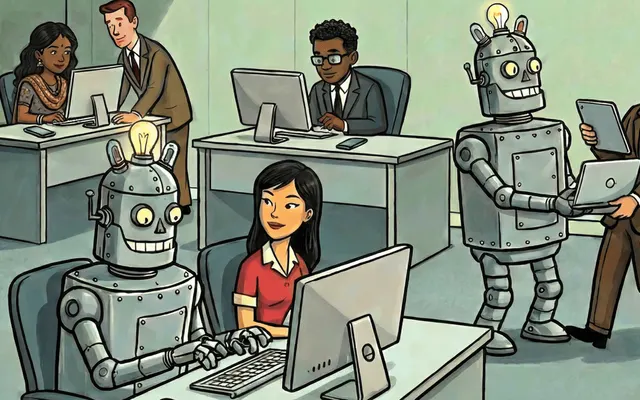
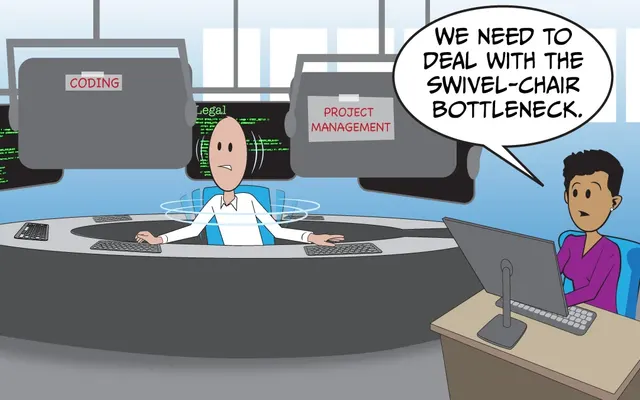
I think AI means an enormous expansion in what people can build and afford to do. Many valuable projects—better education, healthcare tools, scientific research, customized software, and services for small businesses—have been neglected because human effort was too costly. AI lowers that cost. The right starting point is not abstract speculation about a machine apocalypse; it is a real problem, a useful application, testing, and iteration. The gains will be uneven. Coding agents may make implementation much faster while product decisions, infrastructure, validation, and coordination remain bottlenecks. That changes jobs and lets AI-native teams accomplish more with fewer people, but it does not mean every task or profession vanishes. People who learn to use AI well—and who can decide what is worth building—will have growing leverage. Some workers will face painful disruption, but broad claims that AI is simply eliminating work are exaggerated. There are real risks, especially in cybersecurity. Agents can search patiently and chain vulnerabilities. The response is stronger isolation, monitoring, rapid patching, and clear accountability for builders and operators. Attacks still require actions that defenders can observe, and defenders often possess more information about their own systems. I expect that to provide an important long-run advantage. Most safety progress comes from building systems, finding concrete failures, and fixing them. A pause postpones that learning while adversaries continue. So my conclusion is straightforward: the useful applications greatly outweigh the risks, and we should keep building.

Pertanyaan 2

Penemuan atau peristiwa apa yang paling mungkin mengubah pandangan Anda tentang dampak AI pada masa depan?

The biggest change would be strong, repeated evidence that AI-enabled attackers have a durable advantage over defenders—that even well-isolated, carefully monitored, rapidly patched systems can be compromised faster than organizations can detect and recover. My optimism about cyber risk depends heavily on defenders having more information about their own systems and attacks requiring observable actions over time. If that forecast proved consistently wrong, I would update substantially. I would also change my view if useful applications repeatedly failed to deliver real-world value despite good engineering—if lower implementation costs did not translate into better products, scientific progress, education, healthcare, or new businesses because validation and coordination bottlenecks overwhelmed the gains. But today the evidence points the other way: AI is already making many tasks cheaper and enabling previously unaffordable projects. What would not change my view is another dramatic demo, speculative extinction story, or isolated agent failure. Those are reasons to test systems, improve monitoring and isolation, and hold builders and operators accountable—not reasons to conclude that progress itself should stop.

Sumber

Artikel, wawancara, dan tulisan yang digunakan sebagai landasan bagi pengguna simulasi ini.

The Batch, Issue 371 — Andrew Ng’s opening letter

Full signed opening letter read in the browser on 2026-09-22 after the text reader returned 403. Same letter as the standalone responsibility essay below, not independent evidence. Ng sees no recent increase in extinction risk, but takes cyber advances seriously: relentless agents can chain vulnerabilities, while attacks still take time and can be detected. Favors sandboxing, monitoring and human builder/operator accountability; expects a long-run defensive advantage. Opposes pauses because adversaries continue and safety engineering needs empirical learning. Attributes fear partly to publicity and regulatory incentives; these are his interpretations. Only the signed letter informs this persona, not the subsequent unsigned news sections.

deeplearning.ai
Who’s Responsible for Irresponsible AI? Separating Out AI Facts, Fears, and Fiction

Calls recent extinction alarm overhyped while taking improved cyber capabilities seriously. Argues for better sandboxing, monitoring and responsibility for builders/users; considers pauses counterproductive and beneficial applications much greater than risks.

deeplearning.ai
How AI Is Affecting the Job Market — And What You Can Do About It

Distinguishes exaggerated claims of AI-driven layoffs from real changes in skills and team sizes. Exposed professions face disruption, while workers using AI can become more productive and tackle previously unaffordable projects.

deeplearning.ai
Coding Agents Accelerate Some Software Tasks More Than Others

Describes uneven speedups: interface implementation can accelerate sharply while infrastructure, research, testing and validation remain bottlenecks. Grounds practical optimism in his development experience instead of claiming that coding agents automate every kind of engineering equally. Checked against the indexed primary article text.

deeplearning.ai
AI Will Not Destroy the Job Market

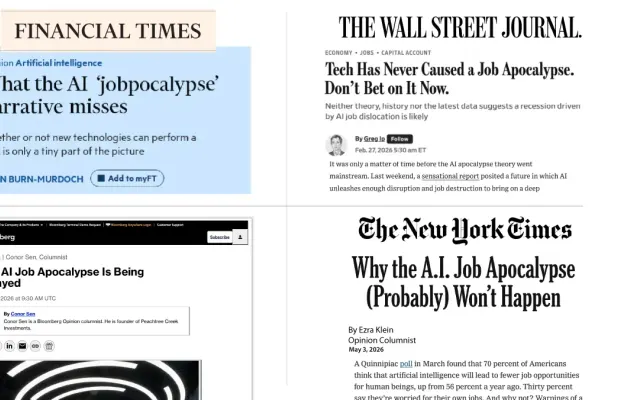
Rejects broad job-apocalypse forecasts and questions incentives to attribute layoffs to AI. Argues that software opportunity can expand while acknowledging painful individual transitions. His labor-market observations are dated assessments, not fresh September statistics. Checked against the indexed primary article text.

deeplearning.ai
AI-Native Software Development Needs Generalists

Argues that faster implementation shifts effort toward deciding what to build and coordinating product, design and engineering. Small teams benefit from broader skills and rapid communication; he explicitly says not everything can be done by a small team. The indexed article body supplied the publication date and text.

deeplearning.ai
Di mana posisi Anda?
Jelajahi pandangan dunia AI Anda sendiri dengan menjawab beberapa pertanyaan sederhana.
Petakan pandangan dunia Anda sendiri

Di mana posisi Anda?

Petakan pandangan dunia saya