Pertanyaan 1
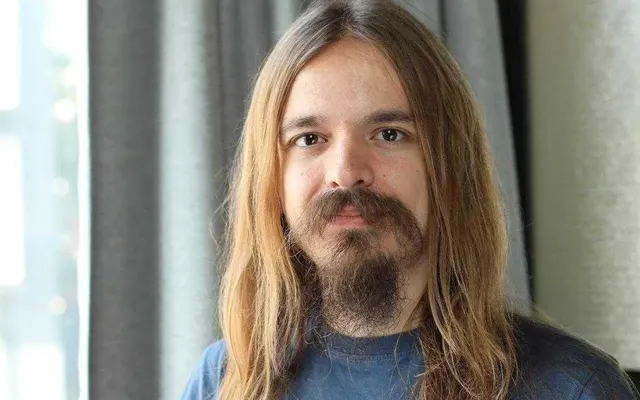
Connor Leahy
x.com/npcollapseAI safety advocate at ControlAI who calls for laws and a verified international ban on building superintelligence while supporting other useful AI.
Bagaimana AI akan mengubah dunia?
Mendatar: pandangan Doom–Bloom yang mereka ungkapkan. Ke atas: skala transformasi.
Doom–Bloom: 1 dari 100. Skala transformasi: 97 dari 100. Rentang interpretasi: 0 hingga 6 secara horizontal, 92 hingga 100 secara vertikal. Ini adalah koordinat interpretasi, bukan probabilitas kejadian.
≈99%
“very, very high, within rounding error of Nate or whatever”
Things going poorly on the current trajectory toward superintelligence; in context, human extinction. Stated relative to Nate Soares, whom he puts at “maybe like 99”, and followed at once by “the future is not decided”
Asumsi utama
Competitive pressure then pushes companies and states to deploy them anyway.Jawaban 1
Jika asumsi ini ternyata berbeda, bagaimana pandangan mereka akan berubah?
Pertanyaan yang belum terjawab
The uncertainty is not whether sufficiently capable AI would be profoundly consequential; it is whether humanity retains control through that transition.Jawaban 2
Apa yang akan membantu mereka membedakan hasil-hasil yang masuk akal di sini?
Hal yang dapat mengubah pandangan mereka
A convincing, independently validated solution to controlling superintelligent systems would change my view most—especially if it remained reliable as systems became more capable, autonomous, strategically aware, and able to automate AI research.Jawaban 4
Bukti apa yang akan memadai, dan ke arah mana bukti itu akan mengubah pandangan mereka?
Detail lebih lanjut
Beberapa penafsiran masih mungkin: Manfaat besar diperkirakan akan terwujud, dengan syarat penting atau keterbatasan distribusi. / Dampak positif yang kecil diperkirakan bahkan jika AI canggih terwujud. / Manfaat yang terbatas atau hanya tersebar secara sempit diperkirakan akan terwujud.
38 / 100
Rentang interpretasi 0 hingga 67 pada skala kualitatif.
Kehilangan yang katastrofik atau tidak dapat dipulihkan merupakan unsur utama masa depan yang diperkirakan.
100 / 100
Rentang interpretasi 100 hingga 100 pada skala kualitatif.
Pilihan manusia dapat mengarahkan ulang lintasan AI secara signifikan.
72 / 100
Rentang interpretasi 50 hingga 75 pada skala kualitatif.
AI diperkirakan akan tetap menjadi alat dengan kemampuan terbatas.
AI diperkirakan akan menyamai manusia dalam sebagian besar pekerjaan kognitif.
Posisi simulasi: AI diperkirakan akan jauh melampaui manusia dalam berbagai pekerjaan kognitif.
Interpretasi ini mempertahankan kondisi yang mereka nyatakan. Manfaat dan kerugian dapat sama-sama besar. Rentang tersebut menggambarkan cara kami membaca jawaban simulasi mereka, bukan interval kepercayaan statistik.
Pandangan dunia serupa
Pemimpin opini dengan pandangan dunia simulasi yang paling mendekati pandangan Connor Leahy
Apa yang pernah dikatakan Connor Leahy tentang AI
Leahy warns that superintelligence would take control from humanity and calls for laws and a verified international ban, not a halt to useful AI.
“Superintelligent AI is neither a tool nor a weapon. It is an adversary.”
Post on X “We should criminalize the creation of superintelligence, and then we should push towards an international trust-but-verify regime”
Modern CTO podcast “Many of today’s models have valuable applications, including for defense purposes, but superintelligent AI is in a category of its own.”
ControlAI blog, America’s Security Depends on Stopping Superintelligence “We still have time to prevent superintelligence, but the clock is ticking.”
ControlAI blog, America’s Security Depends on Stopping Superintelligence “If a superintelligence is built, humanity will lose control over its future.”
Testimony, Canadian Senate transport and communications committee
Dikutip kata demi kata dari sumber yang ditautkan, diperiksa pada 3 Okt 2026
Penilaian Simulasi
Sumber
Artikel, wawancara, dan tulisan yang digunakan sebagai landasan bagi pengguna simulasi ini.
Current institutional profile describes his focus on superintelligence risk, policy and institutional preparedness.

In The Rob Bensinger Compass section, Leahy endorses short timelines and broadly agrees with Yudkowsky’s alignment difficulty arguments, but is less certain and allows that he could be wrong. The interviewer’s 99% framing in 2022 was not his own figure; his August 2026 estimate is a separate, later statement.

At 29:04–32:23 he expects more capable unaligned systems to take over, with competitive pressure driving adoption. At 57:43–58:23 he gives 50–80% extinction or near-extinction within 50 years if humanity does literally nothing; intervention can change this dramatically. At 1:06–1:10 he advocates lawful collective action and buying time. This conditional historical estimate is not an unconditional current P(doom).

Calls for liability across the AI supply chain and a temporary international compute cap to buy time for longer-term safety and political solutions.

In his opening statement Leahy predicts humanity loses control if superintelligence is built, with extinction likely through competition. His answers describe competing AI populations, inadequate current control methods, and an international prohibition with verification. He opposes simply abandoning useful AI or slowing all Western data centres, while maintaining that unregulated competition underprovides security.

Machine transcript with speaker labels; use only Connor’s answers, not Peter McCormack’s. Around 60:44–61:00 he agrees his P(doom) is above 20% and below 100%. When the host puts Nate Soares at 100, he says surely not, maybe 99, and puts his own P(doom) of things going poorly on the current trajectory very, very high, within rounding error of that. He immediately adds that the future is not decided. Supersedes his 2025 figure of 50–80%, which was conditional on doing literally nothing.

Di mana posisi Anda?
Petakan pandangan dunia saya