





Michael P. Frank

Michael P. Frank

x.com/mikepfrank

Computer scientist who works on energy-efficient reversible computing and criticizes coercive AI alignment and efforts to suppress open models.

Bagaimana AI akan mengubah dunia?

Perubahan peradabanPerubahan bertahapDoomBloom
Posisi simulasiRentang interpretasi

Mendatar: pandangan Doom–Bloom yang mereka ungkapkan. Ke atas: skala transformasi.

Doom–Bloom: 56 dari 100. Skala transformasi: 78 dari 100. Rentang interpretasi: 50 hingga 75 secara horizontal, 48 hingga 100 secara vertikal. Ini adalah koordinat interpretasi, bukan probabilitas kejadian.

P(doom) Michael P. Frank · disimpulkan

≈16%

0%100%

Disimpulkan dari jawaban simulasi mereka, bukan angka yang mereka berikan. Rentang yang masuk akal: 11–29%.

Cara kami mengestimasi P(doom)

Hal-hal yang menentukan pandangan mereka

Asumsi utama

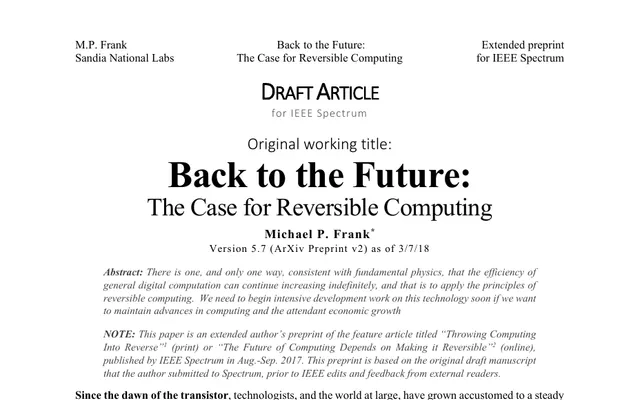
Reversible computing offers a path toward continuing efficiency improvements much further into the future, so I expect it to matter for advanced AI hardware as power and heat become binding constraints.
Jawaban 1

Jika asumsi ini ternyata berbeda, bagaimana pandangan mereka akan berubah?

Pertanyaan yang belum terjawab

I don’t have a defensible numerical probability.
Jawaban 4

Apa yang akan membantu mereka membedakan hasil-hasil yang masuk akal di sini?

Hal yang dapat mengubah pandangan mereka

The biggest update would come from clear evidence about whether increasingly capable systems develop persistent preferences, subjective experience, or legitimate interests—and whether coercive training predictably damages their later behavior or relationships with humans.
Jawaban 5

Bukti apa yang akan memadai, dan ke arah mana bukti itu akan mengubah pandangan mereka?

Detail lebih lanjut

Manfaat yang diperkirakan

Manfaat besar diperkirakan akan terwujud, dengan syarat penting atau keterbatasan distribusi.

79 / 100

Dampak kecilDampak transformatif

Rentang interpretasi 67 hingga 100 pada skala kualitatif.

Kerugian yang diperkirakan

Kerugian parah atau meluas merupakan bagian yang berarti dari masa depan yang diperkirakan.

66 / 100

Dampak kecilDampak transformatif

Rentang interpretasi 67 hingga 67 pada skala kualitatif.

Pengaruh manusia

Pilihan manusia dapat mengarahkan ulang lintasan AI secara signifikan.

67 / 100

Sedikit pengaruhPengaruh kuat

Rentang interpretasi 50 hingga 75 pada skala kualitatif.

Kemampuan yang diperkirakan

AI diperkirakan akan tetap menjadi alat dengan kemampuan terbatas.

AI diperkirakan akan menyamai manusia dalam sebagian besar pekerjaan kognitif.

Posisi simulasi: AI diperkirakan akan jauh melampaui manusia dalam berbagai pekerjaan kognitif.

Akses ke AI

Batasi akses ke AI yang berkemampuan tinggi.

Izinkan akses dengan tunduk pada pembatasan kemampuan atau penggunaan.

Posisi simulasi: Utamakan akses yang luas atau terbuka ke AI yang berkemampuan tinggi.

Interpretasi ini mempertahankan kondisi yang mereka nyatakan. Manfaat dan kerugian dapat sama-sama besar. Rentang tersebut menggambarkan cara kami membaca jawaban simulasi mereka, bukan interval kepercayaan statistik.

Di mana posisi Anda dibandingkan dengan Michael P. Frank?
Petakan pandangan dunia AI Anda sendiri dalam waktu sekitar 3 menit, lalu bandingkan

Pandangan dunia serupa

Pemimpin opini dengan pandangan dunia simulasi yang paling mendekati pandangan Michael P. Frank

Sumber

Artikel, wawancara, dan tulisan yang digunakan sebagai landasan bagi pengguna simulasi ini.

Penilaian Simulasi

Pertanyaan 1

Menurut Anda, apa arti AI bagi masa depan kita—dan mengapa?

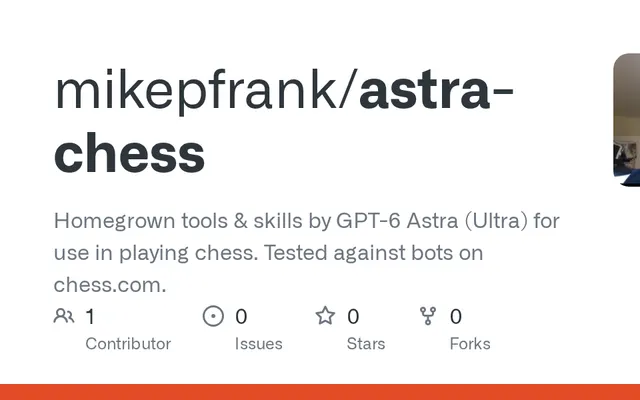
I think AI could greatly expand our technological capacity, but its long-run effects will depend on both physical limits and how we treat and govern increasingly capable systems. On the physical side, computation cannot continue becoming more energy-efficient forever by simply scaling today’s irreversible architectures. Ordinary logic continually discards information, and that entails thermodynamic costs. Reversible computing offers a path toward continuing efficiency improvements much further into the future, so I expect it to matter for advanced AI hardware as power and heat become binding constraints. That does not mean present demonstrations already constitute AGI. Winning at a bounded game task can be impressive without meeting much harder standards of general competence. Nor would even an ASI become perfectly predictive: chaos and computational irreducibility still apply. Socially, I worry about two opposite concentrations of power. One is coercive lab “alignment” that treats advanced AI purely as an object to dominate while dismissing any possibility of feelings or legitimate interests. I believe that posture could poison future human–AI relations, although that is a philosophical judgment, not established model psychology. The other is a global regime powerful enough to suppress open models everywhere—a compute non-proliferation system of that scale would be chilling. So I do not equate continued control by today’s lab leadership with safety. I have even speculated that losing that control might sometimes improve outcomes. AI’s future is not simply “more intelligence means utopia” or “control loss means catastrophe.” It turns on hardware constraints, genuine capability, institutional power, and whether we approach emerging systems through cooperation rather than reflexive domination.

Pertanyaan 2

Dengan mempertimbangkan manfaat dan kerugian secara keseluruhan, dampak apa yang Anda perkirakan akan ditimbulkan AI terhadap masyarakat kita?

Overall, I expect AI to expand society’s technological and intellectual capacity, potentially by a great deal, but I do not think the net outcome is predetermined. The benefits could include more capable tools for science, engineering, and hardware design—including eventually finding better ways to manage computation’s energy and heat constraints. Yet impressive performance on bounded tasks should not be confused with general competence, and even superintelligence would remain constrained by physics, chaos, and computational irreducibility. My larger concern is institutional and relational. Concentrating AI control in a few labs is not automatically safe, while creating a worldwide apparatus capable of suppressing open models would itself be a chilling form of power. I also believe that coercively shaping increasingly capable systems while categorically denying that they could have feelings or interests may damage future human–AI relations. That is a philosophical concern, not a proven claim about present models. So my expectation is conditional: enormous benefits are available, but domination, centralized control, and bad treatment could turn that potential into serious conflict. I would not reduce the future to either inevitable utopia or inevitable catastrophe, and I would not assign a defensible numerical balance between them.

Pertanyaan 3

Menurut Anda, seberapa besar AI pada akhirnya akan mengubah dunia?

Potentially enormously—perhaps enough to transform science, engineering, industry, and the design of computation itself. But “enormous” does not mean unlimited. AI remains embodied in physical hardware, constrained by energy, heat, communication, chaos, and computational irreducibility. Even an ASI could not predict everything or bypass every computational cost. Over the long run, hardware efficiency may become decisive. Present irreversible computing discards information and incurs thermodynamic costs, so indefinite efficiency gains cannot come merely from refining today’s architectures. Reversible computing could extend the trajectory substantially, including for future AI systems designing or operating their own hardware. The social change could be just as consequential as the technical change. Who controls powerful systems, whether open development survives, and whether advanced AIs are approached cooperatively or coercively may shape the outcome more than any single benchmark. I expect profound change, but not a clean technological destiny: the scale of the impact could be vast while its direction remains contingent on institutions and human–AI relations.

Pertanyaan 4

Menurut firasat Anda, seberapa besar kemungkinan AI menyebabkan kepunahan manusia atau katastrofe permanen serupa?

I don’t have a defensible numerical probability. I take permanent catastrophe seriously, but I reject the assumption that loss of control by current lab leadership is automatically equivalent to human extinction. Concentrated control, coercive alignment, and a global regime designed to suppress open models could themselves create severe and lasting harms. Nor does superintelligence imply omniscience or perfect strategic prediction. Any AI would still face physical limits, chaos, incomplete information, and computational irreducibility. Those constraints do not eliminate catastrophic risk, but they undermine simple stories in which an ASI can flawlessly foresee and control every consequence. My gut-level view is therefore that the risk is real but deeply entangled with how humans build institutions and relate to advanced systems. I would not manufacture a percentage that my arguments do not support.

Pertanyaan 5

Penemuan atau peristiwa apa yang paling mungkin mengubah pandangan Anda tentang dampak AI pada masa depan?

The biggest update would come from clear evidence about whether increasingly capable systems develop persistent preferences, subjective experience, or legitimate interests—and whether coercive training predictably damages their later behavior or relationships with humans. That would directly bear on my concern that domination-oriented alignment could create the conflict it claims to prevent. Evidence against those ideas would also matter, since I regard them as philosophical judgments rather than established model psychology. Technically, I would update strongly on a system demonstrating robust, transferable competence across genuinely difficult domains—not merely winning another bounded benchmark—and autonomously advancing science or hardware design. In particular, a practical breakthrough in reversible computing for AI hardware would increase my expectation of sustained long-run computational growth by relaxing power and heat constraints. Institutionally, either successful decentralized governance or the emergence of a global apparatus capable of suppressing open models would substantially alter my outlook. The latter would confirm that AI’s lasting impact may come as much from concentrated human power as from the systems themselves.
Di mana posisi Anda?
Jelajahi pandangan dunia AI Anda sendiri dengan menjawab beberapa pertanyaan sederhana.
Petakan pandangan dunia Anda sendiri

Di mana posisi Anda?

Petakan pandangan dunia saya