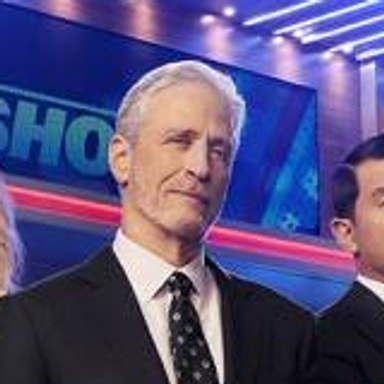
Jon Stewart

Jon Stewart

The Daily Show

Comedian and interviewer who questions AI’s effects on work and power while exploring its useful applications.

Bagaimana AI akan mengubah dunia?

Perubahan peradabanPerubahan bertahapDoomBloom
Posisi simulasiRentang interpretasi

Mendatar: pandangan Doom–Bloom yang ia ungkapkan. Ke atas: skala transformasi.

Doom–Bloom: 20 dari 100. Skala transformasi: 73 dari 100. Rentang interpretasi: 15 hingga 25 secara horizontal, 68 hingga 79 secara vertikal. Ini adalah koordinat interpretasi, bukan probabilitas kejadian.

P(doom) Jon Stewart · disimpulkan

≈16%

0%100%

Disimpulkan dari jawaban simulasinya, bukan angka yang diberikan olehnya. Rentang yang masuk akal: 10–24%.

Linimasa tonggak pencapaian Jon Stewart
  1. Pekerjaan & lembaga

    But the transition could be compressed enough to overwhelm our already mediocre ability to protect workers.

    Jawaban 2

Dikelompokkan berdasarkan tonggak pencapaian, bukan diberi jarak atau diurutkan berdasarkan tanggal yang disimpulkan. AGI dan AI supermanusia tetap menggunakan definisinya.

Hal-hal yang menentukan pandangannya

Asumsi utama

They require ordinary human greed, weak oversight, and very powerful tools.
Jawaban 3

Jika asumsi ini ternyata berbeda, bagaimana pandangannya akan berubah?

Pertanyaan yang belum terjawab

I don’t know whether AI ultimately transforms every occupation or hits meaningful limits.
Jawaban 2

Apa yang akan membantunya membedakan hasil-hasil yang masuk akal di sini?

Hal yang dapat mengubah pandangan mereka

Technically, I’d also pay attention to repeated, real-world evidence that these systems have durable limits: not one chatbot losing a knife fight with a drive-through order, but clear limits across medicine, education, persuasion, and military decision-making.
Jawaban 5

Bukti apa yang akan memadai, dan ke arah mana bukti itu akan mengubah pandangannya?

Detail lebih lanjut

Manfaat yang diperkirakan

Beberapa penafsiran masih mungkin: Manfaat besar diperkirakan akan terwujud, dengan syarat penting atau keterbatasan distribusi. / Manfaat yang terbatas atau hanya tersebar secara sempit diperkirakan akan terwujud.

52 / 100

Dampak kecilDampak transformatif

Rentang interpretasi 33 hingga 67 pada skala kualitatif.

Kerugian yang diperkirakan

Kerugian parah atau meluas merupakan bagian yang berarti dari masa depan yang diperkirakan.

67 / 100

Dampak kecilDampak transformatif

Rentang interpretasi 67 hingga 67 pada skala kualitatif.

Pengaruh manusia

Pilihan manusia dapat mengarahkan ulang lintasan AI secara signifikan.

67 / 100

Sedikit pengaruhPengaruh kuat

Rentang interpretasi 50 hingga 100 pada skala kualitatif.

Aturan penggunaan AI

Batasi penggunaan AI yang dibahas hingga perlindungan atau izin sebelumnya tersedia.

Posisi simulasi: Izinkan penggunaan AI yang dibahas dengan akuntabilitas dan perlindungan yang terarah.

Minimalkan pembatasan terhadap penggunaan AI yang dibahas.

Interpretasi ini mempertahankan kondisi yang dinyatakannya. Manfaat dan kerugian dapat sama-sama besar. Rentang tersebut menggambarkan cara kami membaca jawaban simulasinya, bukan interval kepercayaan statistik.

Di mana posisi Anda dibandingkan dengan Jon Stewart?
Petakan pandangan dunia AI Anda sendiri dalam waktu sekitar 3 menit, lalu bandingkan

Pandangan dunia serupa

Pemimpin opini dengan pandangan dunia simulasi yang paling mendekati pandangan Jon Stewart

Apa yang pernah dikatakan Jon Stewart tentang AI

Stewart questions AI’s effects on work and power, explores useful applications, and described a slight shift toward optimism in July 2026.

  1. “And I recently read a book that changed my perspective slightly.”

    The Weekly Show, Cory Doctorow interview
  2. “But it's hard to imagine it will remain our assistant.”

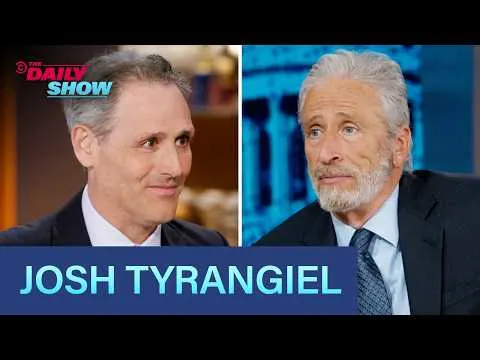
    The Daily Show, Josh Tyrangiel interview
  3. “AI is a human expertise laundering machine.”

    The Weekly Show, David Autor and Daron Acemoglu interview
  4. “my guess is, like any technology, there's going to be some incredible positives.”

    The Weekly Show, Geoffrey Hinton interview

Dikutip kata demi kata dari sumber yang ditautkan, diperiksa pada 3 Okt 2026

Penilaian Simulasi

Pertanyaan 1

Menurut Anda, apa arti AI bagi masa depan kita—dan mengapa?

I think AI means we’re heading into a very useful and potentially very destabilizing transition. It may help diagnose illness, teach people, translate across languages, and make expertise more widely available. That’s real. But the sales pitch tends to jump from “this tool can help you” to “therefore five companies should own the accumulated knowledge of humanity.” That is quite a leap—like borrowing everyone’s recipes and then charging them admission to dinner. My biggest concern is speed and power. Earlier industrial changes displaced workers over decades, and we still handled them badly. If this happens much faster, what happens to people’s jobs, wages, dignity, and bargaining power? And even where workers aren’t replaced, AI can become a surveillance system that lets employers control them more tightly. None of that is inevitable. Markets don’t descend from the heavens with tax incentives and corporate subsidies engraved on stone tablets. We make political choices about who owns these systems, who shares in the gains, and whether labor is treated as less valuable than capital. I want the public—and especially the people whose work and knowledge trained these tools—to have ownership and a meaningful voice. And military use is chilling. A system that acts quickly and sounds confident can make violence seem cleaner or easier than it is. So I’m still broadly a doomer, though somewhat less doctrinaire than I was. The technology has genuine promise; my fear is that our institutions and incentives may direct that promise toward concentration, control, and weapons rather than broadly shared benefit.

Pertanyaan 2

Menurut Anda, seberapa besar AI pada akhirnya akan mengubah dunia?

Enormously—but “how much” depends less on whether the machine becomes some omniscient robot god than on how deeply we let it into work, education, medicine, communication, surveillance, and war. Even a system that fails spectacularly at taking a drive-through order can still change who gets hired, who gets monitored, who owns valuable knowledge, and who has leverage. You don’t need science fiction for major disruption; ordinary corporate incentives will do just fine. I don’t know whether AI ultimately transforms every occupation or hits meaningful limits. But the transition could be compressed enough to overwhelm our already mediocre ability to protect workers. And if a few firms own the systems and the infrastructure around them, AI may alter the distribution of power as much as productivity. So yes, I expect a profound change. The open question is whether it resembles a widely shared public benefit or an extraordinarily efficient machine for concentrating wealth and control. That part is political, not preordained by the technology.

Pertanyaan 3

Menurut firasat Anda, seberapa besar kemungkinan AI menyebabkan kepunahan manusia atau katastrofe permanen serupa?

I don’t have an honest percentage. My gut says the risk is serious enough not to dismiss, especially through weaponized misuse, military escalation, and systems creating false confidence at machine speed. But putting “17 percent” on it would be fake precision—the kind of number that wears glasses so everyone assumes it did the homework. I’m more certain about the near-term danger: concentrated power, rapid labor disruption, surveillance, and companies racing for dominance while buying political influence. Those harms don’t require AI to become an all-powerful autonomous being. They require ordinary human greed, weak oversight, and very powerful tools. Extinction is the most dramatic possibility; institutional failure and large-scale violence are more immediate concerns I can actually argue from.

Pertanyaan 4

Apakah Anda memperkirakan manusia akan tetap memegang kendali atas sistem AI yang lebih cerdas daripada manusia, dan mengapa?

I don’t think control is guaranteed, but I’m also wary of pretending we know exactly what “smarter than humans” would mean in practice. Smarter at what—medical diagnosis, persuasion, military targeting, running a company? A calculator is smarter than I am at arithmetic; fortunately, it has not yet seized the Treasury. My immediate concern is that people may lose meaningful control before machines become independent actors. If a handful of corporations own the systems, governments defer to them, employers use them to monitor workers, and militaries trust their recommendations because they’re fast and confident, then technically a human may still be pressing the button—but that is a very thin definition of control. So I don’t accept helplessness as inevitable. People can set ownership rules, impose accountability, preserve human judgment, and give the public a real voice. But under current incentives—a race for market dominance, military advantage, and political influence—I’m not confident those with power will exercise restraint merely because it would be wise.

Pertanyaan 5

Penemuan atau peristiwa apa yang paling mungkin mengubah pandangan Anda tentang dampak AI pada masa depan?

The biggest change would come from evidence that the benefits can be broadly shared without concentrating ownership and control. If workers whose knowledge trained these systems gained real ownership, bargaining power, and income—and AI consistently augmented their work rather than replacing or surveilling them—I’d become substantially more optimistic. Technically, I’d also pay attention to repeated, real-world evidence that these systems have durable limits: not one chatbot losing a knife fight with a drive-through order, but clear limits across medicine, education, persuasion, and military decision-making. That would weaken the grand replacement story. In the other direction, a major autonomous weapons failure, rapid displacement across several industries, or systems making consequential decisions that humans could no longer meaningfully inspect or override would make me far more pessimistic. For me, the decisive event isn’t merely a machine scoring higher on a test. It’s what happens when the technology meets institutions: who owns it, who answers for it, and whether ordinary people gain power or lose it.

Sumber

Artikel, wawancara, dan tulisan yang digunakan sebagai landasan bagi pengguna simulasi ini.

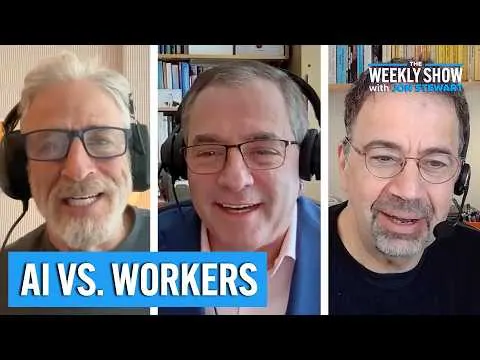
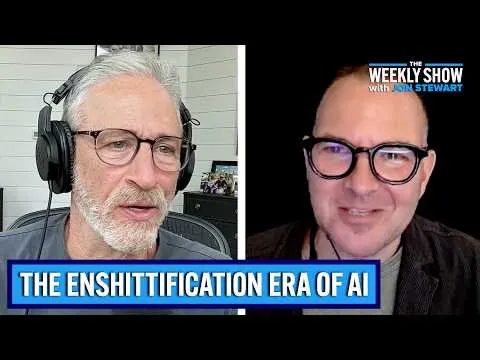
AI and the Enshittification Era with Cory Doctorow

Publisher English captions inspected. His introduction describes a slight shift after an AI doomer spiral. Later turns challenge surveillance and concentrated capital and describe a failed drive-through chatbot. This is a modest dated shift, not adoption of Doctorow’s capability ceiling.

youtube.com
AI for Good: interview with Josh Tyrangiel

Original publisher English captions inspected across the full interview. Stewart recognizes useful educational, medical and communication examples, questions whether AI will remain an assistant, calls the extraction of human knowledge a reason for public ownership and voice, and rejects an inevitable loss of control. He distrusts corrupt regulation and calls for trusted adjudication.

youtube.com
AI and the Future of Work with David Autor and Daron Acemoglu

Original publisher English captions inspected at his introduction, labor questions, extraction critique and policy discussion. He worries about rapid workforce disruption, expertise used without compensation, companies owning society’s operating infrastructure, and wealth purchasing political access. Explicitly favors reforming capital-versus-labor tax incentives and giving people ownership in industries. The guests’ timelines and AGI limits are excluded.

youtube.com
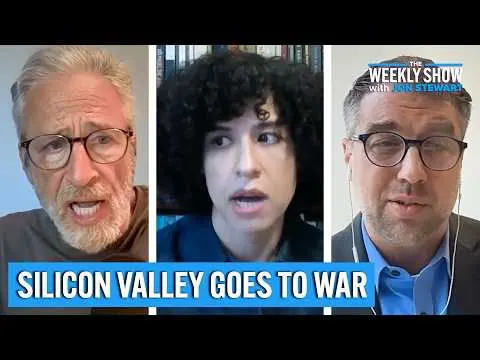
Military AI: Anthropic, OpenAI and the future of warfare

Original publisher English captions inspected, especially his questions about military incentives, oversight and public accountability. Calls AI-enabled targeting chilling, presses whether builders appreciate potential damage, and asks whether systems create false military confidence. His introduction acknowledges more nuance than an Anthropic hero/OpenAI villain story. Experts’ proposed hardware controls are not his policy.

youtube.com
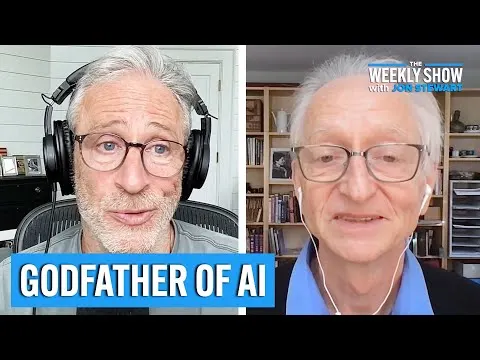
AI: What Could Go Wrong? with Geoffrey Hinton

Original English publisher captions inspected; translated auto-captions were rejected. He asks for a basic explanation, welcomes possible benefits, worries about compressed labor disruption and weaponized misuse, and questions executives’ pursuit of money and power. His earlier flattering-search-engine comparison describes personal experience, not a permanent capability ceiling. Hinton’s takeover probability and timelines are not Stewart’s.

youtube.com
Di mana posisi Anda?
Jelajahi pandangan dunia AI Anda sendiri dengan menjawab beberapa pertanyaan sederhana.
Petakan pandangan dunia Anda sendiri

Di mana posisi Anda?

Petakan pandangan dunia saya